Hong Kong Mother Threatens Legal Action After School Confiscates Food Delivery for Form 1 Son
SingTao · 1 SOURCES1 day ago2 MIN
Summary
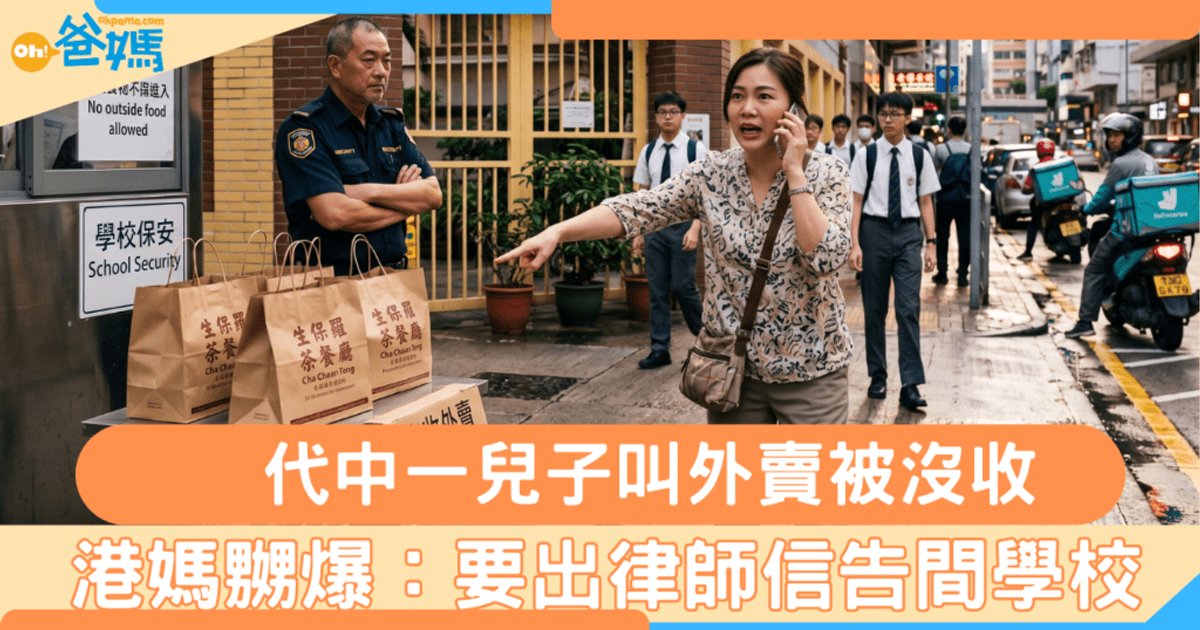
A working mother in Hong Kong has clashed with her son's secondary school after staff confiscated a food delivery that she ordered for her child who recently started Secondary 1. The school, which prohibits Form 1 students from eating meals off-campus, stopped a Foodpanda delivery driver at the gate last week and seized the lunch until after school. The incident has ignited heated online discussion about parental rights, school authority, and work-life balance for dual-income families.
Key Points
- The Secondary 1 student began classes in September 2026 and dislikes the school's lunchbox supplier's inconsistent food quality
- The mother, who works full-time, arranged daily Foodpanda deliveries to the school's designated "parent delivery collection point" near the entrance
- School security intercepted the delivery driver last week, and teachers confiscated the food until dismissal, warning that food delivery orders would always be seized
- The furious mother threatened to spend thousands of dollars on a lawyer's letter, claiming the school had no right to confiscate her private property
- A relative intervened by suggesting an AI-written parent letter with four arguments: no added administrative burden, violation of private property rights, food safety risks, and consideration for working families' difficulties
- Online reactions were divided, with some supporting the mother's position while others emphasized school management challenges and concerns about parental indulgence
Why It Matters
This incident reflects the growing tension between traditional school management practices and the reality of modern dual-income households in Hong Kong, where parents often cannot personally deliver meals due to work commitments. The case raises important questions about student welfare, property rights, and how schools should adapt their policies to accommodate contemporary family structures and food delivery culture.
This incident reflects the growing tension between traditional school management practices and the reality of modern dual-income households in Hong Kong, where parents often cannot personally deliver meals due to work commitments. The case raises important questions about student welfare, property rights, and how schools should adapt their policies to accommodate contemporary family structures and food delivery culture.