Edible Textbook Snacks Surge Among Students as Regulators Warn of Additive Hazards
SingTao · 2 SOURCESabout 3 hours ago2 MIN
Summary
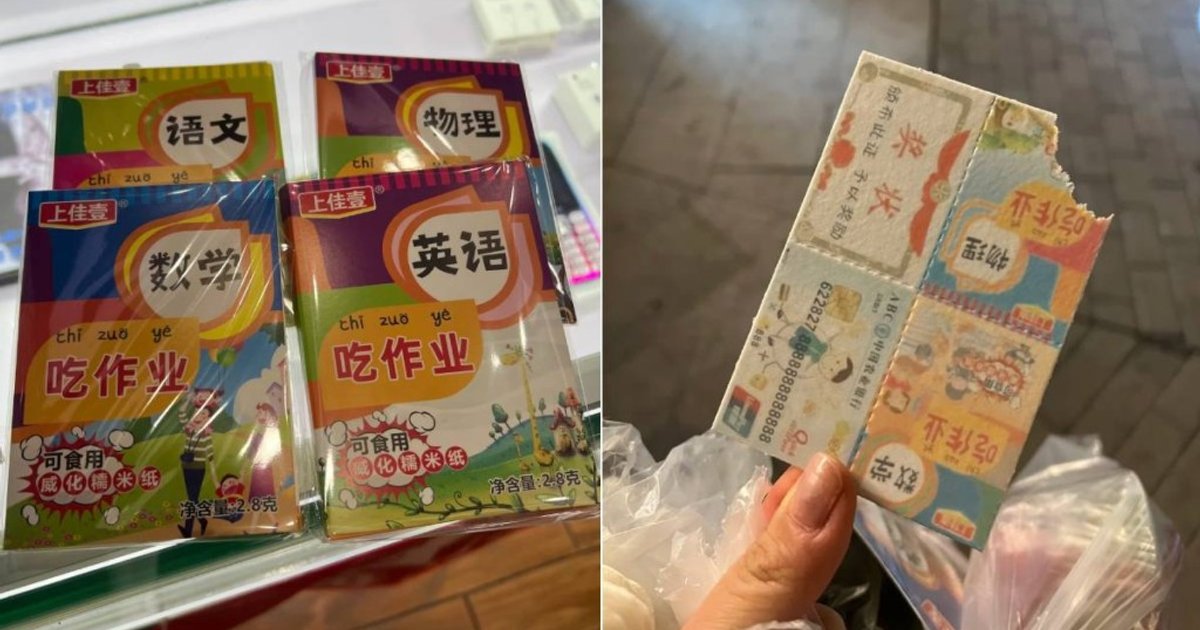
A novel rice paper snack designed to look like miniature school textbooks has exploded in popularity among mainland China's primary and secondary school students, with merchants promoting the products using the stress-relief appeal of "eating up knowledge" and "finishing homework by eating it." The State Administration for Market Regulation has detected serious food safety hazards in these products, including excessive food additives. Market supervision departments in Guangzhou, Karamay in Xinjiang, and Dingxi in Gansu have all issued food safety alerts urging parents and students to avoid purchasing these items out of curiosity. Local authorities have also ordered food vendors near schools to conduct self-inspections and immediately cease sales of these potentially hazardous products.
Key Points
- Online retailers currently list multiple "edible textbook" snack products replicating the appearance of Chinese, mathematics, and English textbooks
- Individual snacks cost approximately 5 yuan while bundled sets retail between 15 to 39 yuan per package on e-commerce platforms
- These snacks consist primarily of rice paper, syrup, food coloring, and sweeteners, with some sets bundled with popping candy
- The Guangzhou Zengcheng District market regulator warned that certain products use non-food-grade printing processes that may cause stomach discomfort and metabolic burden
- The Guangzhou Nansha Street Market Supervision Office has launched special food safety inspections for the new semester, targeting these products as a key enforcement focus
Why It Matters
This incident highlights the growing trend of social media-driven food products targeting children without adequate safety oversight, raising concerns about regulatory gaps in the rapidly expanding e-commerce marketplace. For Hong Kong parents, this serves as a reminder to exercise caution when purchasing trendy snacks from mainland online platforms, as similar products could easily cross the border. The case also underscores the need for Greater Bay Area regulators to coordinate food safety standards to protect youth from potentially harmful marketing gimmicks.
This incident highlights the growing trend of social media-driven food products targeting children without adequate safety oversight, raising concerns about regulatory gaps in the rapidly expanding e-commerce marketplace. For Hong Kong parents, this serves as a reminder to exercise caution when purchasing trendy snacks from mainland online platforms, as similar products could easily cross the border. The case also underscores the need for Greater Bay Area regulators to coordinate food safety standards to protect youth from potentially harmful marketing gimmicks.