Hong Kong Students Win Inaugural Aviation Design Contest with Solar-Hydrogen Plane
AM730 · 2 SOURCESabout 18 hours ago5 MIN
Summary
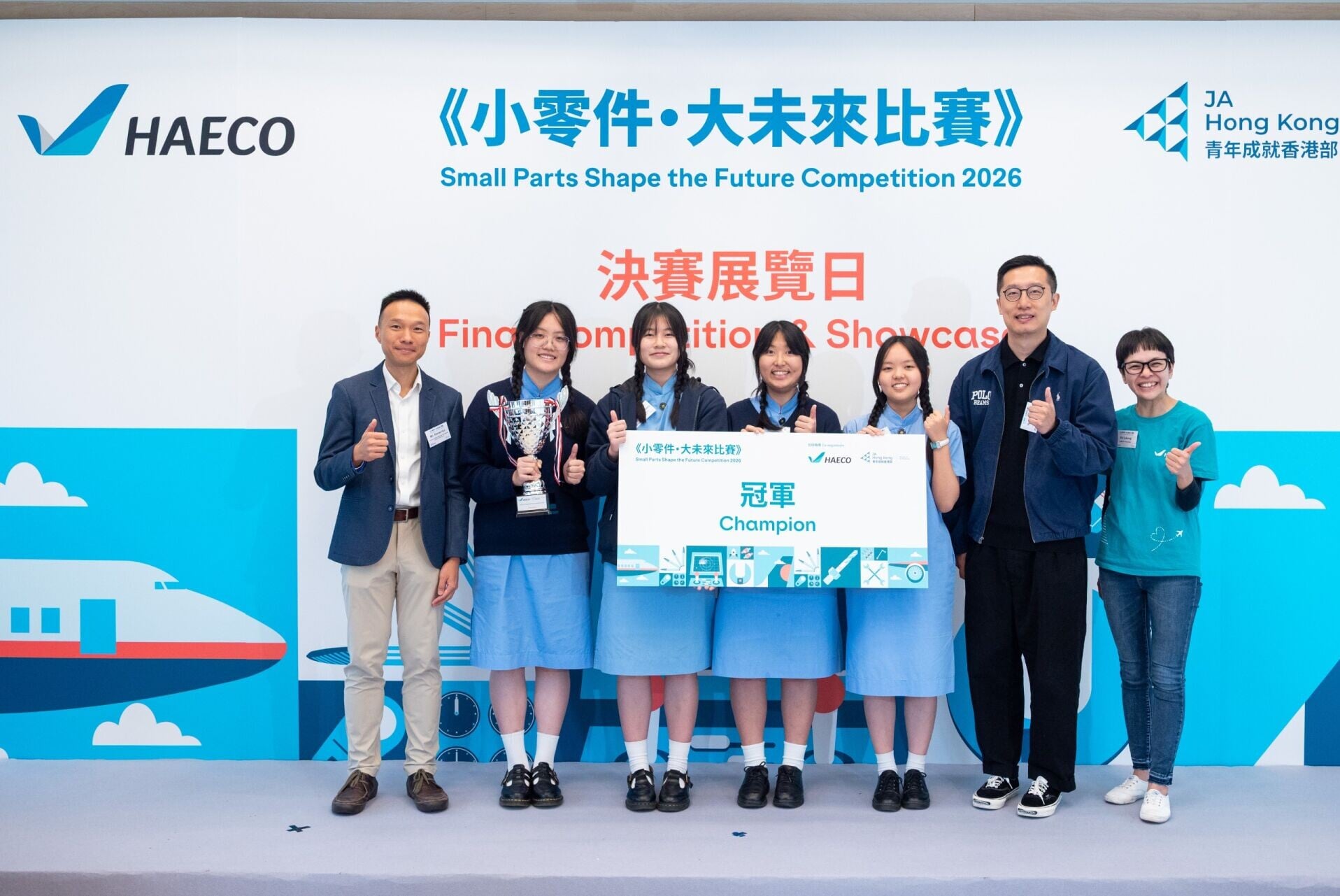
The inaugural "Small Part, Big Future" (小零件·大未來) aviation design competition concluded with True Light Middle School's team "TrueLight Airways" taking the championship. The competition, organized by Junior Achievement Hong Kong and HAECO Group, attracted over 300 students from 58 secondary schools. The winning design featured an "Integrated Auxiliary Power System" combining transparent solar windows, USB-C charging ports, hydrogen fuel cells, and modular components. The inspiration reportedly struck when a flight attendant instructed the students to raise their window shades during a flight's descent.
Key Points
- The competition drew participants from S3 to S6 across 58 schools, with eight finalist teams presenting sustainable aviation designs including hydrogen propulsion and shark-skin drag reduction
- True Light Middle School's "TrueLight Airways" won with a system using transparent solar windows that power USB-C ports and adjust cabin lighting and air conditioning
- Team member Leung Nga-kwan (梁雅琝) has dreamed of becoming a pilot since age six after watching Canadian documentary "Mayday" on aviation accidents
- Second place went to St. Francis of Assisi's College for a "Metal Sacrificial Layer" anti-corrosion design that could last 3.5 years before replacement
- Third place was claimed by La Salle College with modular seating that could boost passenger capacity by 10-15% and reduce carbon emissions per passenger by 9%
Why It Matters
This competition highlights Hong Kong's potential to nurture future aviation talent, with HAECO executives noting that students' creative concepts have even inspired their own engineering teams. The success of young innovators like Leung, who pursued aviation studies through applied learning courses, demonstrates how early exposure to industry realities can transform childhood curiosity into viable career paths in sustainable aviation technology .
This competition highlights Hong Kong's potential to nurture future aviation talent, with HAECO executives noting that students' creative concepts have even inspired their own engineering teams. The success of young innovators like Leung, who pursued aviation studies through applied learning courses, demonstrates how early exposure to industry realities can transform childhood curiosity into viable career paths in sustainable aviation technology .