HKSTP Brings 23 Startups to Construction Expo
Bastillepost · 3 SOURCESabout 5 hours ago5 MIN
Summary
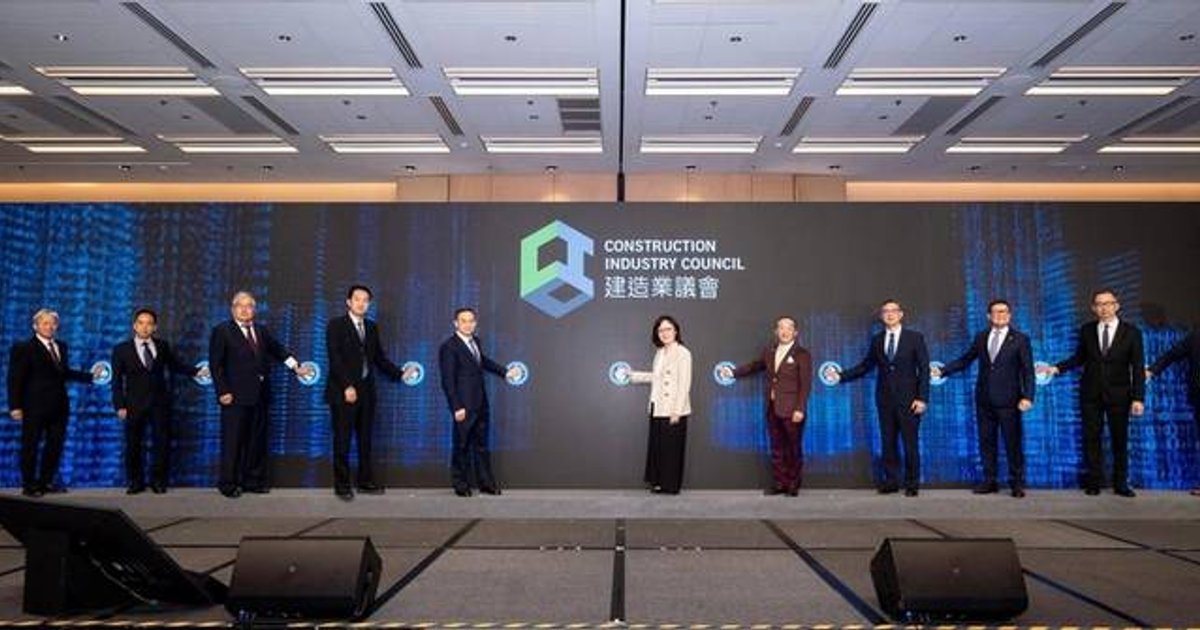
Construction Innovation Expo 2026 opened on Monday for a three-day run at the Hong Kong Convention and Exhibition Centre, drawing more than 190 exhibitors from around the world and showcasing robotics, advanced machinery, building materials, artificial intelligence, smart construction, safety and sustainability. The event is the flagship finale of International Infrastructure Week 2026 and is jointly organised by the Development Bureau, the Ministry of Housing and Urban-Rural Development's Centre of Science and Technology and Industrialization Development, and the Construction Industry Council. Hong Kong Science and Technology Parks Corporation joined the expo with 23 innovation and technology companies, including a 3D concrete-printing firm that said Hong Kong can serve as a springboard for mainland-background enterprises seeking overseas markets. At the opening ceremony, Secretary for Development Bernadette Linn Hon-ho announced further support for construction technology adoption, including an additional HK$1 billion for the Construction Innovation and Technology Fund.
Key Points
- The three-day expo began on November 23 at the convention centre, with over 190 exhibitors and five international conferences featuring more than 50 speakers
- The expo theme is “Building the Future, Innovating Excellence”, with displays spanning AI, robotics, construction safety, advanced machinery and sustainable building solutions.
- HKSTP presented 23 technology companies, including a 3D concrete-printing exhibitor that said labour shortages make printed construction a future trend in Hong Kong and the mainland
- The exhibitor said Hong Kong's modular integrated construction sector is already mature, and suggested special approval pathways to certify new technologies and build demonstration cases
- The company, whose technology originated from a Tsinghua University research institution, entered Hong Kong Science Park in 2023 and said HKSTP had helped it secure funding, industry links and overseas exposure
- Beyond the HKSTP pavilion, exhibitors demonstrated site-inspection robots, portable battery energy storage systems as low-carbon temporary power supplies, and recycled “eco-permeable materials” and paving bricks made from waste. The Hong Kong Construction Association also launched a digital platform for its Smart Low-Carbon Site Label Scheme, using a 4M1E framework covering manpower, machinery, materials, methods and environment, and 41 carbon-reduction measures to help contractors quantify site emissions cuts. Linn said the government had already injected HK$2.2 billion into the Construction Innovation and Technology Fund before this year, supporting more than 700 AI projects and over 400 construction-robotics projects. She added that the government would inject another HK$1 billion and the Construction Industry Council would contribute HK$400 million more, bringing fresh support of HK$1.4 billion with a focus on helping small and medium-sized enterprises adopt innovation
- Linn also said the government wants smart design, smart manufacturing, smart site execution and smart connectivity to run through the full construction cycle. She cited award-winning examples including the government's Integrated Capital Works Platform, the SmartEye real-time AI site-monitoring system, a U-shaped tunnel boring machine used in the Yuen Long South New Development Area, and the Tseung Kwan O Cross Bay Link, which used the national S690 high-strength steel standard during construction. On standards and industrial land, she said the Hong Kong Institute of Construction Technology was set up in 2024, published the world's first technical standard for remote-control tower crane systems in May, and issued standards this month for painting and drilling robots. She also said 30 hectares had been reserved in the Northern Metropolis for an advanced construction industry park, with authorities planning to invite expressions of interest shortly for the first roughly 10-hectare site in Yuen Long South and aiming to tender the first batch of land no later than the first half of 2028
Why It Matters
For Hong Kong readers, the expo shows how construction technology is being tied to two local priorities at once: easing labour shortages and pushing the industry toward lower-carbon, data-driven building methods. It also points to Hong Kong's intended role as both a testing ground for new construction standards and a platform for mainland-linked firms to reach overseas buyers through local funding, certification and market connections.