7-Year-Old Hong Kong Boy Spots Two Scientific Errors at Shenzhen Natural Museum
SingTao · 1 SOURCESabout 2 hours ago2 MIN
Summary
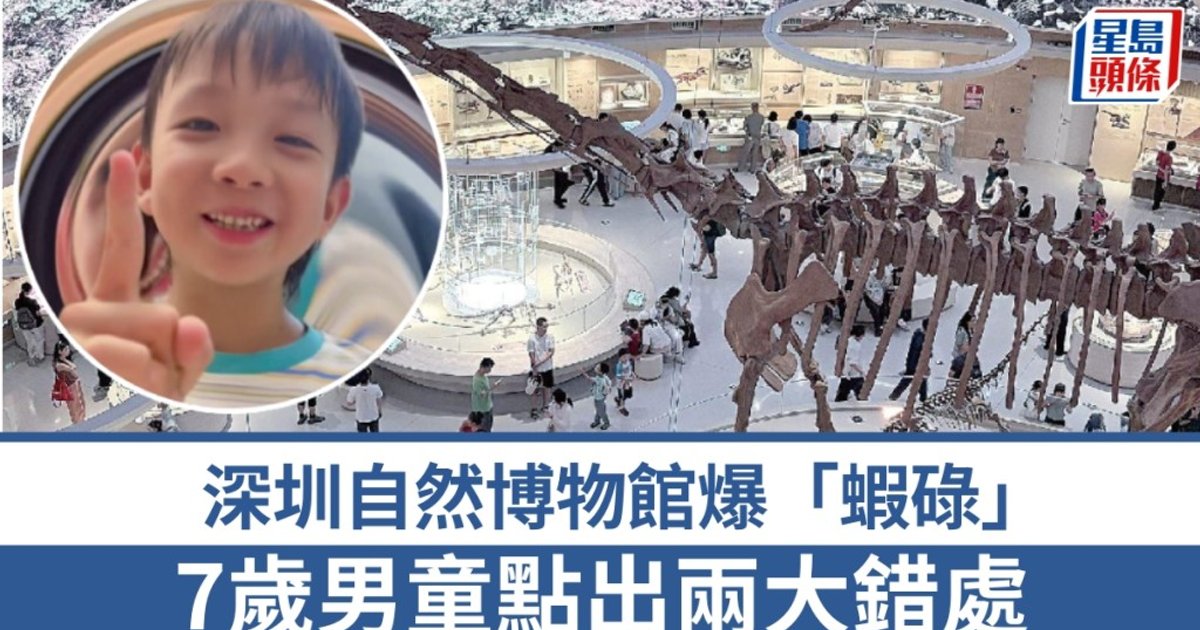
A 7-year-old Hong Kong boy named Zhu Zixu has successfully challenged the scientific accuracy of the newly opened Shenzhen Natural Museum, identifying two significant errors in the exhibits and guided explanations. The museum, which opened less than half a month ago and has quickly become a popular destination for Hong Kong families visiting Shenzhen, responded graciously by thanking the young "paleontology expert" and promising corrections. The incident, shared online by Zhu's family, has generated widespread discussion and praise for both the child's knowledge and the museum's humility in accepting criticism.
Key Points
- Zhu Zixu, a 7-year-old paleontology enthusiast from Shenzhen, carefully reviewed the museum's displays and guided tours, identifying two distinct errors .
- The first error involved the museum's educational video incorrectly labeling the Devonian Period marine mass extinction as the "Silurian Period End Mass Extinction" .
- The second issue concerned a guide's analogy comparing the prehistoric marine creature ammonite to a snail, which Zhu correctly noted as taxonomically inaccurate since ammonites belong to Cephalopoda while snails are Gastropoda .
- The museum issued an official response on June 12 in the video's comment section, thanking the "little paleontologist" and confirming both issues had been recorded for correction .
- Museum representatives acknowledged the ammonite comparison lacked scientific rigor and committed to revising both the video content and guide training materials while maintaining accessibility .
Why It Matters
The museum's gracious response to a child's correction sets a positive example for public institutions, demonstrating that acknowledging errors strengthens rather than undermines credibility. For Hong Kong families considering cross-border outings, this incident highlights that the Shenzhen Natural Museum values accuracy and welcomes scrutiny, making it an even more appealing educational destination where children can learn that science is about continuous verification and improvement .
The museum's gracious response to a child's correction sets a positive example for public institutions, demonstrating that acknowledging errors strengthens rather than undermines credibility. For Hong Kong families considering cross-border outings, this incident highlights that the Shenzhen Natural Museum values accuracy and welcomes scrutiny, making it an even more appealing educational destination where children can learn that science is about continuous verification and improvement .