Caregiver's Seven-Year ALS Journey: From Despair to Renewal Through Support
HK01 · 1 SOURCES1 day ago2 MIN
Summary
This feature story follows Kathy, who spent seven years caring for her husband Wu Bojun, a former TVB actor diagnosed with motor neuron disease (ALS). After initially struggling alone and nearly reaching a breaking point, she found renewed strength through the Jockey Club Caregiver Navigation Project, a social support initiative that provided counseling, peer connections, and practical assistance. Her story has resonated widely in Hong Kong, where an aging population means more families face similar caregiving challenges.
Key Points
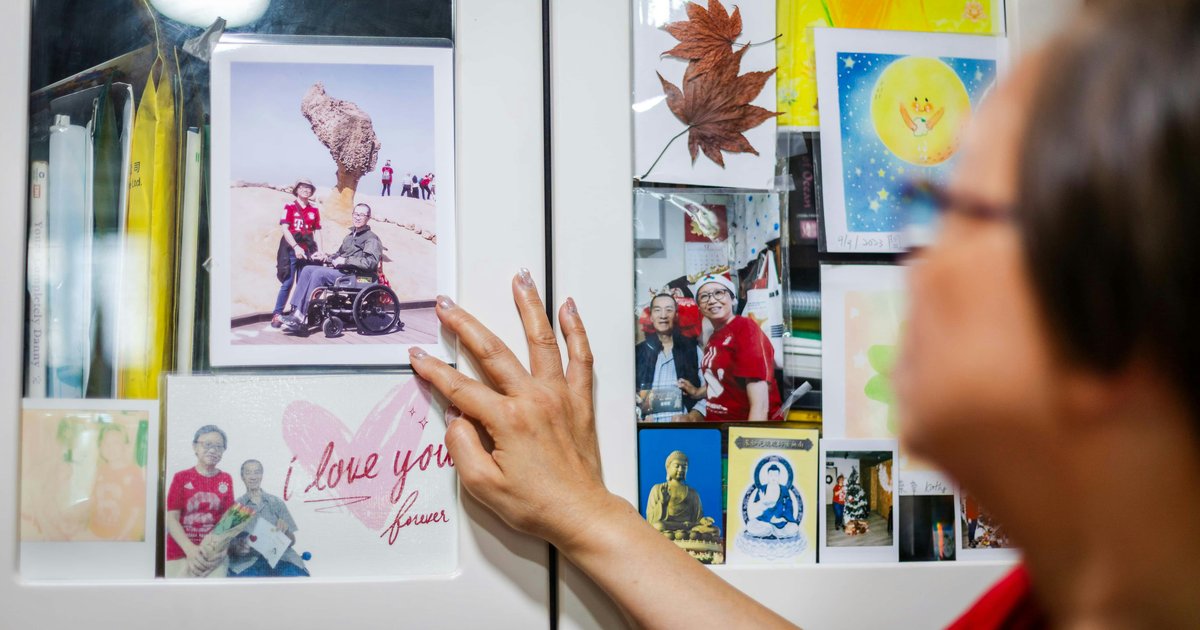
- Wu Bojun, a former television actor at TVB, was diagnosed with ALS in 2019, approximately six months after the couple visited Yehliu Geopark in Taiwan
- Kathy has lived with polio since childhood, causing limited mobility in her left hand, legs of different lengths, and progressive vision loss from glaucoma
- She resigned from her office job to become her husband's full-time caregiver after he spent one month in a residential care home where he struggled with eating and a noisy environment
- The couple traveled extensively while Wu could still move, visiting Taiwan, Ngong Ping 360, Disneyland, and the Avenue of Stars
- At her lowest point, Kathy considered self-harm and told a social worker: "If I have to be with him 24/7, I really would collapse"
- The Jockey Club Caregiver Navigation Project, funded by the Hong Kong Jockey Club Charitable Trust, provides counseling, peer support groups, care skills training, and holistic wellness activities
- Social worker Demi Ng accompanied Kathy to her cataract surgery when no family members were available
- After Wu's passing, Kathy visited his memorial plaque at The Chinese University of Hong Kong, saying she knows he would want her to live well
Why It Matters
As Hong Kong's population ages and more families navigate dementia, stroke recovery, and degenerative diseases, Kathy and Wu's story illuminates both the profound love that sustains caregivers and the systemic gaps that can push them to breaking point. The success of programs like the Jockey Club Caregiver Navigation Project suggests that targeted, proactive support can prevent crises before they occur, but the story also raises questions about whether such services reach the most isolated carers in time. For Hong Kong's stretched social services, replicating this model could mean the difference between a carer's survival and tragedy.
As Hong Kong's population ages and more families navigate dementia, stroke recovery, and degenerative diseases, Kathy and Wu's story illuminates both the profound love that sustains caregivers and the systemic gaps that can push them to breaking point. The success of programs like the Jockey Club Caregiver Navigation Project suggests that targeted, proactive support can prevent crises before they occur, but the story also raises questions about whether such services reach the most isolated carers in time. For Hong Kong's stretched social services, replicating this model could mean the difference between a carer's survival and tragedy.