Stationery Shop's MTR-Style Profane Postcards Under Investigation
HK01 · 1 SOURCESabout 2 hours ago5 MIN
Summary
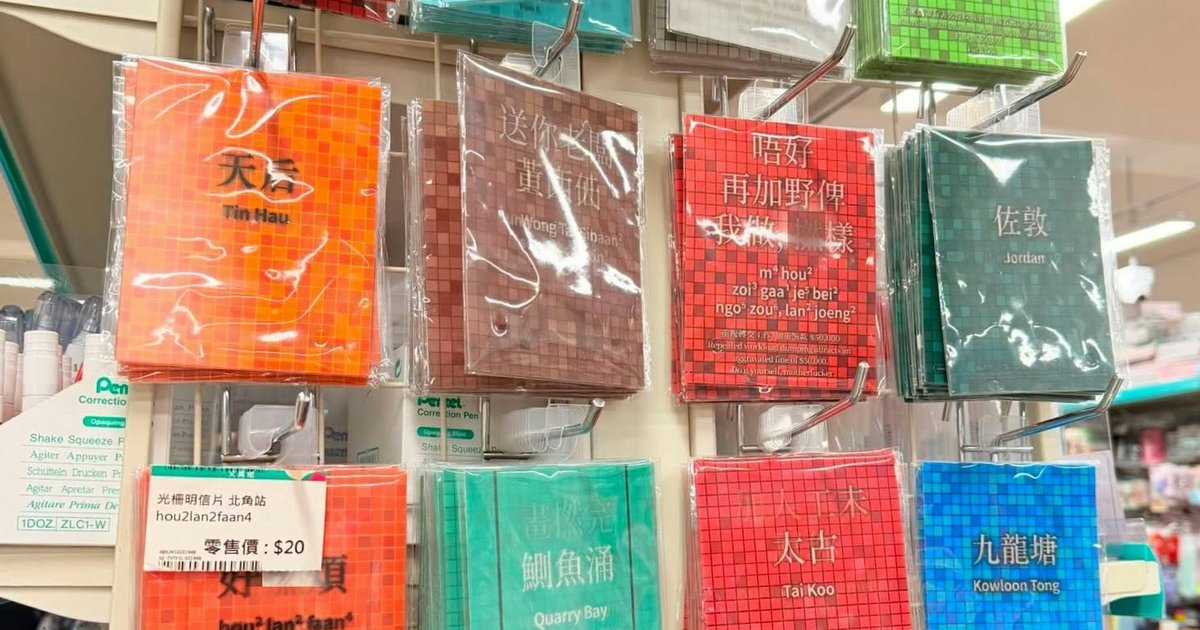
Hong Kong stationery retailer Man Zi Lao Life Department Store announced on July 22 that its popular MTR-themed postcard series has been referred for inspection by government authorities after receiving complaints that certain designs contain profanity and indecent language. The postcards, which replace authentic MTR station names with local Cantonese slang and vulgar expressions, have sparked debate between cultural authenticity and regulatory compliance. The Commerce and Economic Development Bureau confirmed it is handling the case under the Control of Obscene and Indecent Articles Ordinance (Cap. 390).
Key Points
- Man Zi Lao Life Department Store received notification from a government department that the postcard series requires inspection for potential violation of Hong Kong's obscenity laws
- The postcards feature MTR station tile designs combined with Cantonese profanity, vulgar expressions, and internet slang such as "bad boyfriend" (渣男) and "lying flat" (躺平), as well as explicit sexual terminology
- The retailer revealed that internal debates during initial procurement in June anticipated controversy, and a parent subsequently lodged a formal complaint about children being exposed to profanity
- The product development team is evaluating two solutions: sealed packaging to restrict access, or a "blind draw" mystery postcard model, with a final decision expected by early next week
- Similar profanity magnet products are also sold at popular souvenir shop Jin Xiu Tang Chao in Tsim Sha Tsui, though it remains unclear whether these have received complaints
- Under Cap. 390, items can be classified as Category I (neither obscene nor indecent), Category II (indecent), or Category III (obscene), with different distribution restrictions for each tier
Why It Matters
This case highlights the tension between preserving authentic Hong Kong street culture and maintaining regulatory standards on public-facing products, particularly as the city grapples with defining the boundaries of cultural expression in commercial retail during an era of heightened social sensitivity .
This case highlights the tension between preserving authentic Hong Kong street culture and maintaining regulatory standards on public-facing products, particularly as the city grapples with defining the boundaries of cultural expression in commercial retail during an era of heightened social sensitivity .