Study urges broader AI use across teaching cycle
SingTao · 1 SOURCESabout 1 hour ago2 MIN
Summary
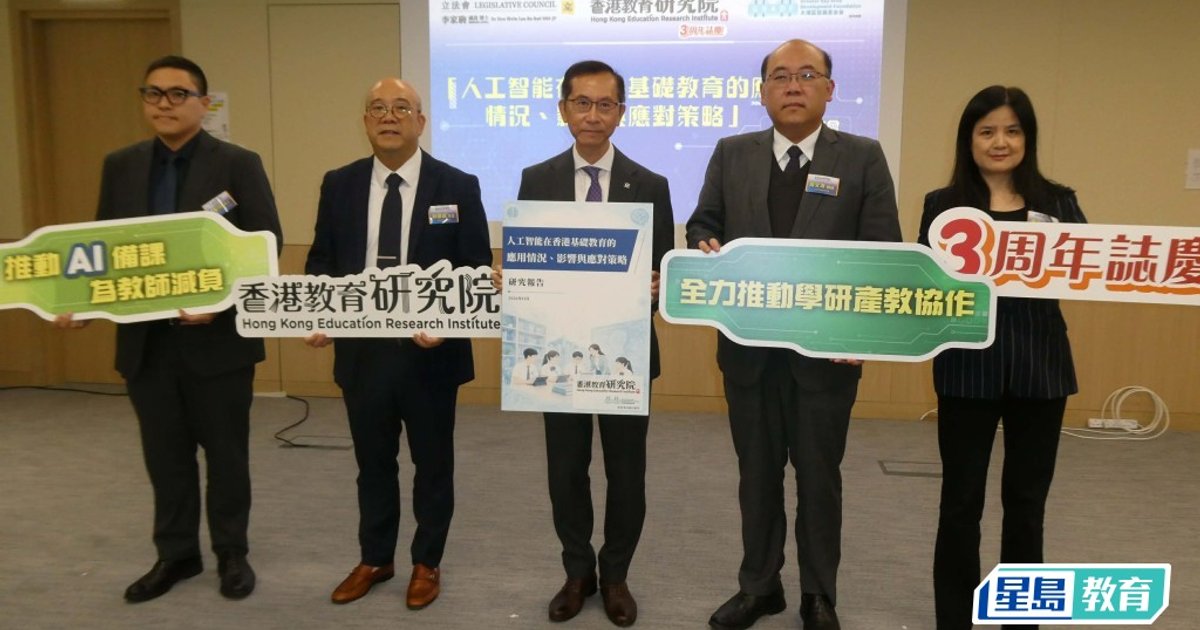
A study commissioned by the Hong Kong Education Research Institute found AI has entered everyday school practice after the release of the Blueprint for Digital Education in Primary and Secondary Schools, but teachers still use it mainly for preparation work rather than throughout learning, teaching and assessment. The research gathered 437 questionnaires from teachers and parents, and included focus-group interviews with 20 teachers and 10 parents. It found almost all surveyed teachers had used AI tools in teaching, with Gemini the most commonly used at 85.2%. Researchers and frontline educators said AI literacy and sound task design matter more than technical know-how alone, especially to stop students from outsourcing thinking to generative tools
Key Points
- The study was commissioned by the Hong Kong Education Research Institute and conducted by the Greater Bay Area Development Fund Foundation on AI use, impact and response strategies in basic education
- Researchers collected 437 questionnaires from teachers and parents, and held focus-group interviews with 20 teachers and 10 parents for the study
- Nearly all surveyed teachers had used AI tools in teaching, with Gemini the most-used platform at 85.2%, but usage was concentrated in lesson preparation
- Teachers used AI less often in classroom application, student academic assessment and school administration, showing it has not yet run through the full learning-teaching-assessment cycle
- The report proposed six policy recommendations, including AI-assisted lesson-preparation systems, AI marking and interaction tools, relevant training, and stronger roles for dedicated coordinators
Why It Matters
For Hong Kong schools, the findings point to a gap between access to AI tools and the ability to use them confidently and responsibly in day-to-day education. The concerns raised by parents and teachers suggest that future policy will need to balance efficiency gains with safeguards for students' independent thinking, reading habits and creativity