Pearl River Delta air pollutants fell over 20 years
Bastillepost · 3 SOURCES1 day ago2 MIN
Summary
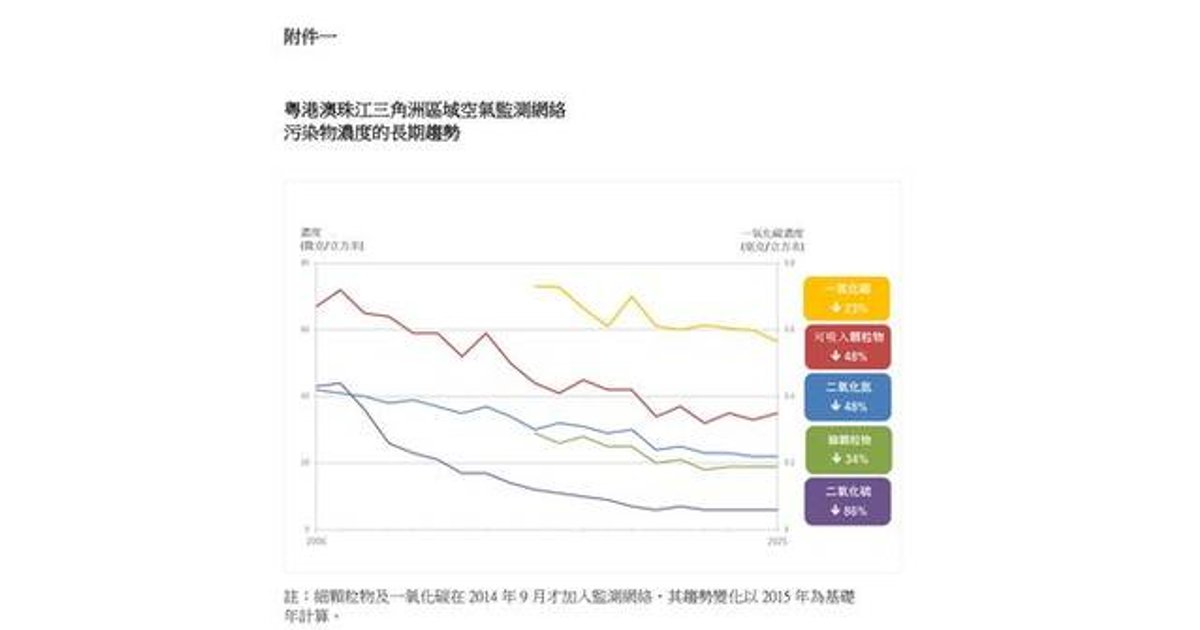
Guangdong, Hong Kong and Macao jointly released the 2025 air quality report for the Pearl River Delta regional air monitoring network on Friday, saying all major monitored pollutants continued to trend lower. The annual average concentrations recorded last year were down by between 23% and 86% from 20 years earlier, while PM2.5 fell to 19 micrograms per cubic metre, a level the authorities said was among the best nationwide.
Key Points
- The monitored pollutants were sulphur dioxide, nitrogen dioxide, carbon monoxide, respirable suspended particulates and fine suspended particulates, all of which showed sustained declines.
- The Environmental Protection Department said years of joint emission-reduction measures by Guangdong, Hong Kong and Macao had helped improve air quality across the Pearl River Delta.
- In Hong Kong, the government cited measures under the Roadmap on Popularisation of Electric Vehicles, Clean Air Plan for Hong Kong 2035, Climate Action Plan 2050 and the green transformation roadmap for public buses and taxis.
- Hong Kong is still working toward phasing out about 40,000 Euro IV diesel commercial vehicles by the end of 2027, with more than 33,700 already retired by the end of August this year.
- Since 2019, Hong Kong and mainland Greater Bay Area cities have operated a vessel emission control zone in Pearl River Delta waters, requiring ships in Hong Kong waters to use compliant fuel.
Why It Matters
For Hong Kong readers, the report offers an official cross-boundary benchmark showing that long-running controls on road transport, power generation and marine emissions are producing measurable results. It also gives added policy support for the city to keep pressing ahead with diesel vehicle replacement and cleaner shipping rules before the 2027 vehicle phase-out target.