Policy Address 2026 Unveils 350km Water Pipe Upgrade with AI-Powered Smart Water Network
HK01 · 7 SOURCESabout 21 hours ago5 MIN
Summary
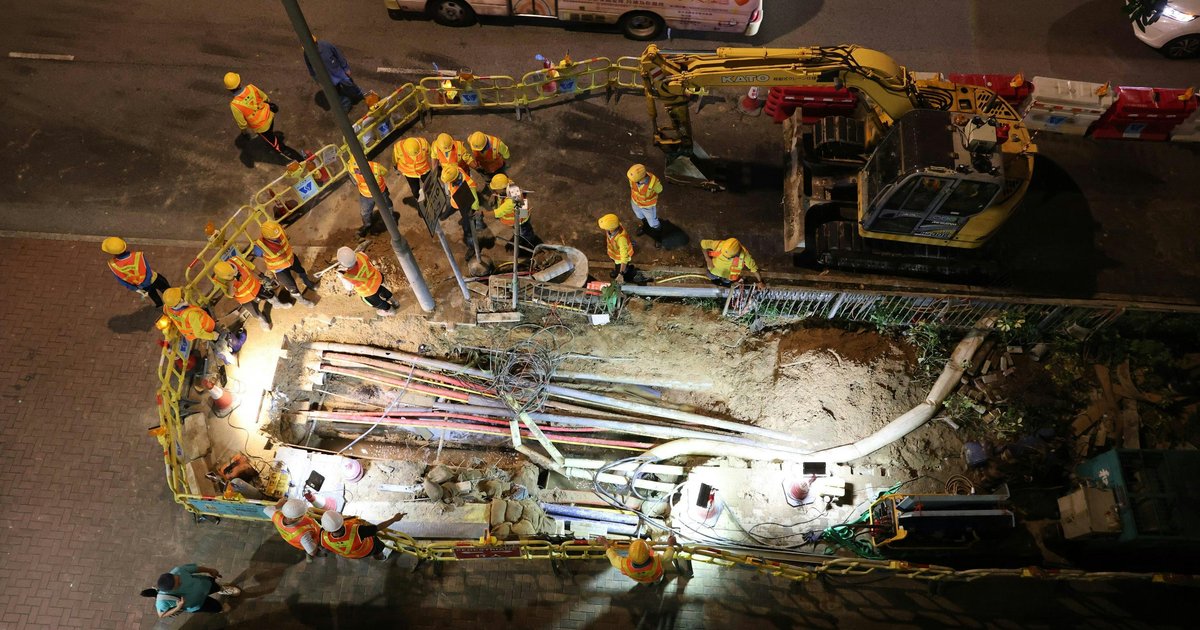
The 2026 Policy Address unveiled a comprehensive Water Supply Network Upgrade Plan, committing to replace or repair 350 kilometers of high-risk aging pipes within five years at a rate of 70 kilometers annually—double the current pace. The initiative prioritizes cast iron and asbestos pipes in densely populated districts including Shau Kei Wan, Wong Tai Sin, and Kwai Tsing, with a goal to eliminate all such materials within a decade. The government will deploy AI-powered predictive maintenance and smart water pressure regulation systems, while constructing backup cross-harbor pipelines to strengthen supply resilience.
Key Points
- The five-year plan targets 350 kilometers of high-risk aging pipes, with annual replacement of 70 kilometers—twice the 2026/27 fiscal year rate
- Five categories of pipes prioritized for replacement: asbestos pipes, large-diameter pipes exceeding 60cm, old-material pipes (galvanized iron, hard plastic), high-burst-density pipes affecting critical infrastructure, and salt water pipes
- Initial focus areas include Shau Kei Wan, Wong Tai Sin, and Kwai Tsing districts with concentrations of public housing and elderly residents
- The government aims to completely eliminate cast iron and asbestos pipes within 10 years, expecting a 20-30% reduction in pipe bursts and severe leakage cases in the first five years
- The five-year program is estimated to cost "hundreds of billions" of Hong Kong dollars, with the overall replacement plan spanning 10-15 years
Why It Matters
This represents the most ambitious modernization of Hong Kong's water infrastructure in decades, directly responding to public frustration over frequent pipe bursts that have disrupted daily life and caused property damage across multiple districts. The integration of AI-powered predictive maintenance and smart water pressure regulation systems marks a technological shift in how the government manages critical urban utilities, with the upgraded infrastructure expected to better withstand extreme weather events increasingly common in the region .
---
AI City Brain and Climate Resilience
Beyond water infrastructure, the Policy Address announced the development of an "AI City Brain" comprehensive city management system that will integrate data from public works, environmental, transportation, and emergency management departments. The system will be led by the Chief Secretary for Administration and initially connect to the Security Bureau's Emergency Monitoring and Support Center to strengthen cross-departmental response to extreme weather and major incidents .
The government also outlined 14 rainwater drainage improvement projects, including the construction of stormwater storage tanks, flood barriers, and drainage tunnels, with completion targeted by 2031. For coastal defense, 37 low-lying or wind-exposed coastal areas have been identified for improvement works, with 20 already completed and the remainder scheduled for completion by 2030 .
---
Smart Water Network and Infrastructure
The Water Supply Network Upgrade Plan includes multiple technological and engineering components. The government will collaborate with universities and enterprises to build a "Smart Water Network Closed-Loop Management Chain" featuring real-time monitoring, intelligent prediction, precise leak detection, and high-quality maintenance .
Additional measures include installing new valves to minimize disruption zones during pipe bursts, constructing two backup cross-harbor drinking water pipelines to eastern Hong Kong Island, and upgrading the salt water supply system by dividing high-pressure zones into upper and lower sections to reduce burst risks .
The existing inter-departmental task force will be upgraded to a steering committee chaired by the Development Bureau, while an International Waterworks Engineering Expert Panel comprising overseas specialists will be established to review long-term water network management strategies .
---
Integrated Utility Corridors
The Policy Address also addressed Hong Kong's extensive underground utility network, which spans approximately 110,000 kilometers—far exceeding the city's 2,200 kilometers of roads. The government is constructing integrated utility corridors in new development areas to centralize suitable public pipelines, enabling inspection and maintenance without road excavation .
The first such corridor in the Kai Tak Development Area has been completed, while the Tung Chung New Town development area corridor is expected to be completed in phases by the end of this year. In the Northern Metropolis, sections in Yuen Long South and San Tin Technopole are under construction and design respectively .
This represents the most ambitious modernization of Hong Kong's water infrastructure in decades, directly responding to public frustration over frequent pipe bursts that have disrupted daily life and caused property damage across multiple districts. The integration of AI-powered predictive maintenance and smart water pressure regulation systems marks a technological shift in how the government manages critical urban utilities, with the upgraded infrastructure expected to better withstand extreme weather events increasingly common in the region .
---
AI City Brain and Climate Resilience
Beyond water infrastructure, the Policy Address announced the development of an "AI City Brain" comprehensive city management system that will integrate data from public works, environmental, transportation, and emergency management departments. The system will be led by the Chief Secretary for Administration and initially connect to the Security Bureau's Emergency Monitoring and Support Center to strengthen cross-departmental response to extreme weather and major incidents .
The government also outlined 14 rainwater drainage improvement projects, including the construction of stormwater storage tanks, flood barriers, and drainage tunnels, with completion targeted by 2031. For coastal defense, 37 low-lying or wind-exposed coastal areas have been identified for improvement works, with 20 already completed and the remainder scheduled for completion by 2030 .
---
Smart Water Network and Infrastructure
The Water Supply Network Upgrade Plan includes multiple technological and engineering components. The government will collaborate with universities and enterprises to build a "Smart Water Network Closed-Loop Management Chain" featuring real-time monitoring, intelligent prediction, precise leak detection, and high-quality maintenance .
Additional measures include installing new valves to minimize disruption zones during pipe bursts, constructing two backup cross-harbor drinking water pipelines to eastern Hong Kong Island, and upgrading the salt water supply system by dividing high-pressure zones into upper and lower sections to reduce burst risks .
The existing inter-departmental task force will be upgraded to a steering committee chaired by the Development Bureau, while an International Waterworks Engineering Expert Panel comprising overseas specialists will be established to review long-term water network management strategies .
---
Integrated Utility Corridors
The Policy Address also addressed Hong Kong's extensive underground utility network, which spans approximately 110,000 kilometers—far exceeding the city's 2,200 kilometers of roads. The government is constructing integrated utility corridors in new development areas to centralize suitable public pipelines, enabling inspection and maintenance without road excavation .
The first such corridor in the Kai Tak Development Area has been completed, while the Tung Chung New Town development area corridor is expected to be completed in phases by the end of this year. In the Northern Metropolis, sections in Yuen Long South and San Tin Technopole are under construction and design respectively .