HKU Study Unlocks Mystery of World's Highest Ammonium Groundwater in Pearl River Delta
On.cc · 1 SOURCESabout 3 hours ago6 MIN
Summary
A University of Hong Kong (HKU) research team has discovered that microbial fermentation is likely the primary pathway generating ammonium in Pearl River Delta sediments, solving the mystery behind the region's globally unprecedented natural groundwater ammonium concentrations . The study found that some groundwater in the area is unfit for drinking without treatment due to these elevated levels .
Key Points
- The research team, led by Professor Jiao Jiuqiu (焦赳赳) of HKU's Department of Earth and Planetary Sciences, combined geochemistry and metagenomics to analyze 36 sediment samples from three drilling sites across different areas of the Pearl River Delta .
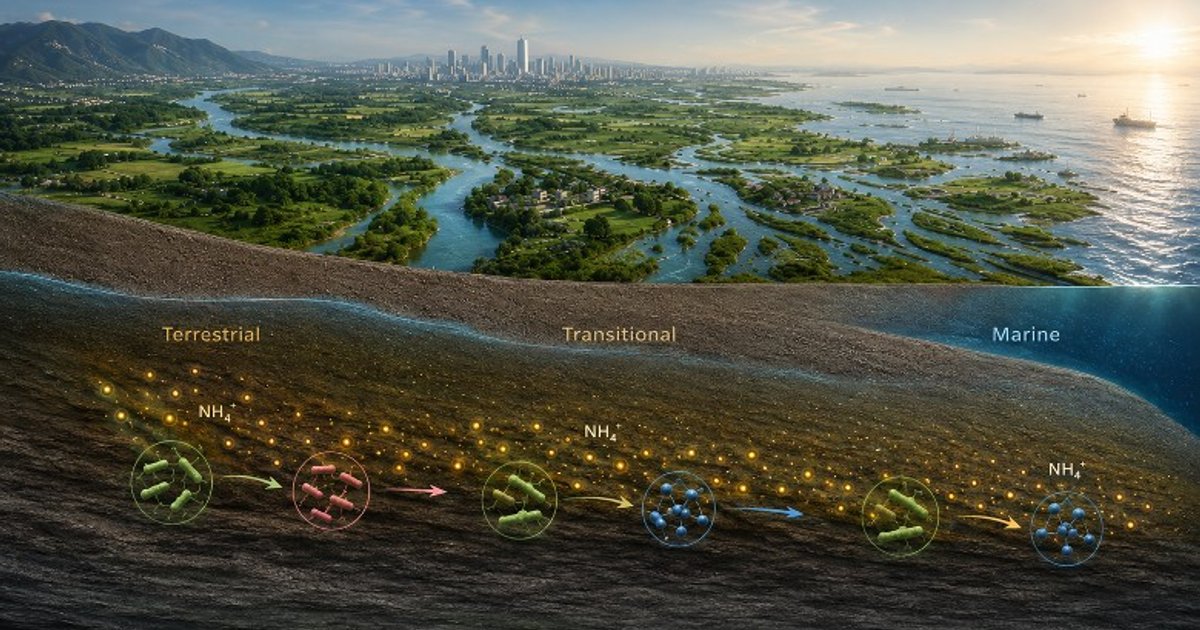
- The samples spanned various depths and recorded over 13,000 years of geological history, covering three distinct sedimentary environments: land-dominated zones, transitional zones, and sea-dominated zones .
- The team reconstructed 770 representative metagenome-assembled genomes from microbial genetic material in the sediments to identify microbial species and their metabolic functions .
- Fermentation-related genes were found to be the most abundant across all three sediment zones, indicating microbial fermentation as the main ammonium-producing pathway, with gene abundance decreasing with greater sediment depth and age .
- Archaeal and bacterial communities showed different adaptation strategies—archaea retained more stable, evolutionarily conservative functional traits, while bacteria demonstrated greater metabolic flexibility across varying sedimentary environments .
- The bacterium genus "Brevirhabdus," originating from marine environments, was identified as a potentially important group participating in the ammonium cycle .
- Alternative microbial nitrogen metabolism pathways varied by zone: nitrate reduction genes were second most abundant in land-dominated areas, while genes converting nitrite directly to ammonium were more prominent in higher-salinity transitional and sea-dominated zones .
Why It Matters
The research establishes a mechanistic framework integrating sediment evolution, groundwater geochemistry, and microbial function that can guide groundwater assessment and management in densely populated delta regions worldwide . For Hong Kong and the Greater Bay Area, these findings provide scientific grounding for identifying groundwater systems vulnerable to natural ammonium enrichment, enabling more targeted monitoring and treatment planning to protect public health .
The research establishes a mechanistic framework integrating sediment evolution, groundwater geochemistry, and microbial function that can guide groundwater assessment and management in densely populated delta regions worldwide . For Hong Kong and the Greater Bay Area, these findings provide scientific grounding for identifying groundwater systems vulnerable to natural ammonium enrichment, enabling more targeted monitoring and treatment planning to protect public health .