German Artist Creates 'Digital Camouflage' Shirt to Fool AI Surveillance
SingTao · 2 SOURCESabout 1 hour ago3 MIN
Summary
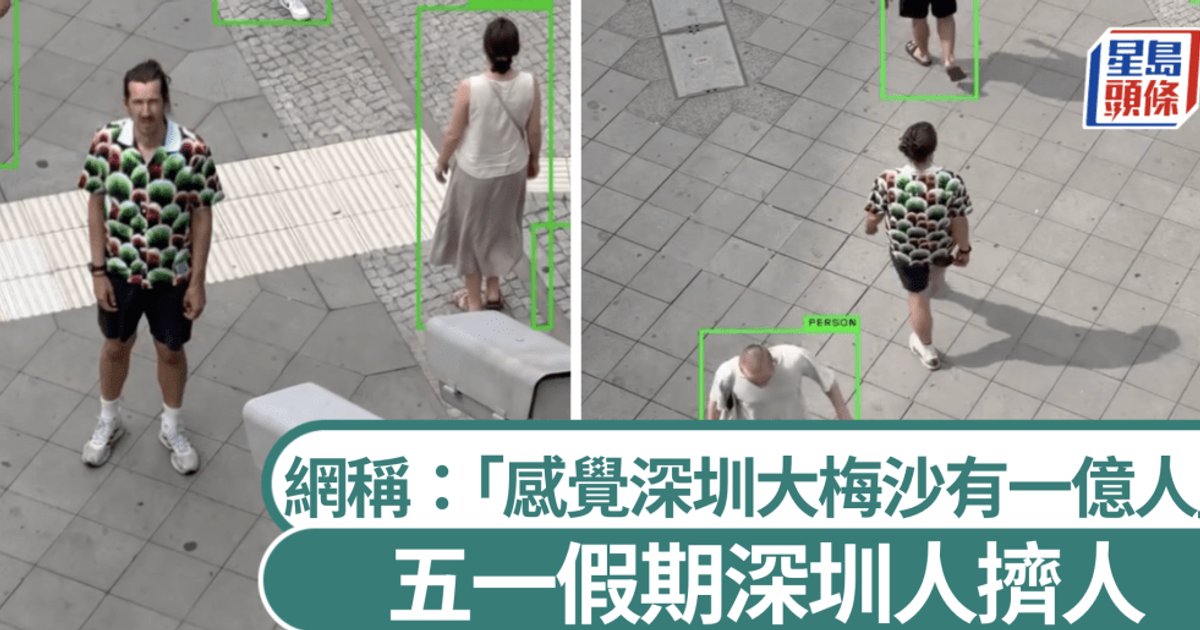
In an era of increasingly sophisticated surveillance cameras capable of recognizing individuals, German artist Simon Weckert has taken the opposite approach, designing a "Digital Camouflage" Hawaiian shirt covered in high-saturation pink, orange, and green abstract patterns that appear eye-catching to humans but can disrupt certain artificial intelligence (AI) human detection systems, preventing computers from identifying wearers as "people." However, this shirt is not a true "invisibility cloak." Weckert emphasizes that the work has only been demonstrated using the general-purpose open-source object detection system YOLO, and there is no evidence it can fool surveillance equipment actually used by police or governments .
Key Points
- The shirt's every line, color, and shape is computationally optimized specifically to target the visual features AI systems rely on when detecting human bodies
- Weckert employed an "adversarial loop" method during design, generating candidate patterns, submitting images to human detection models for analysis, measuring the system's confidence that a person exists in the frame, then adjusting colors, lines, and textures based on results before testing again—this loop continued until the detection model's confidence dropped significantly
- The shirt uses high-saturation colors and overlapping irregular patterns to input chaotic signals into the system, destroying the continuity of human body contours
- Weckert successfully tested the shirt in June 2026 in front of an operational surveillance camera at Kottbusser Tor in Berlin, confirming pedestrians wearing the shirt were not stably labeled as "people"
- The shirt is currently sold through Weckert's personal website for $88 (approximately 686 HKD), though experts note it only works under specific conditions and cannot defend against thermal imaging, radar, or multi-sensor surveillance systems
Why It Matters
The "Digital Camouflage" shirt raises important questions about public space surveillance and algorithmic transparency. Weckert points out that these systems not only film passersby but may also attempt to classify actions like hugging, dancing, arguments, or fights as "normal" or "suspicious." The most intriguing aspect of the shirt may be its visual irony: the most eye-catching item of clothing in a crowd could become the least noticeable to AI. While it may not be sufficient to help someone escape surveillance, it successfully reminds the public that even the most advanced artificial intelligence can be exposed by a piece of fabric .
The "Digital Camouflage" shirt raises important questions about public space surveillance and algorithmic transparency. Weckert points out that these systems not only film passersby but may also attempt to classify actions like hugging, dancing, arguments, or fights as "normal" or "suspicious." The most intriguing aspect of the shirt may be its visual irony: the most eye-catching item of clothing in a crowd could become the least noticeable to AI. While it may not be sufficient to help someone escape surveillance, it successfully reminds the public that even the most advanced artificial intelligence can be exposed by a piece of fabric .