Legislator Blames Oversight Lapses for Queen Mary Hospital Elevator Failures
SingTao · 2 SOURCES2 days ago5 MIN
Summary
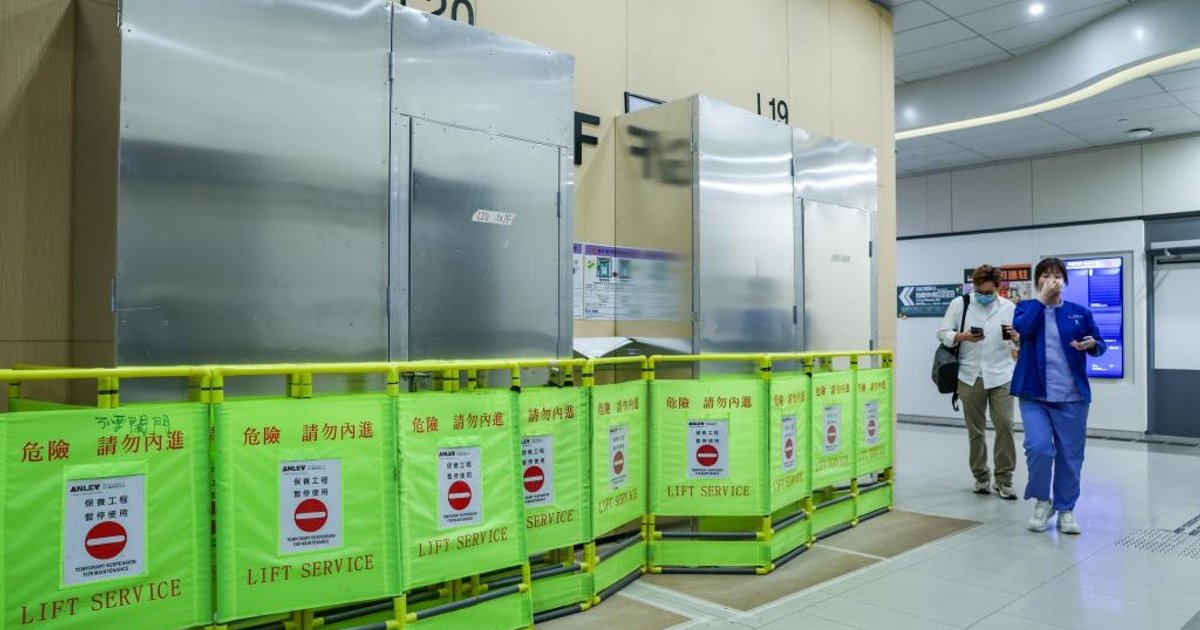
All 28 elevators in Queen Mary Hospital's newly opened Clinical Block 1 have developed faults since the facility began phased operations in November 2025. A government investigation report released last week by the Development Bureau identified four main causes of the frequent breakdowns, including deviations in elevator shaft wall dimensions and verticality. Legislative Council Development Affairs Committee Chairman Lam Siu-lu (林筱魯) criticized the oversight system on Monday, saying supervisors repeatedly observed problems but lacked the determination to follow through .
Key Points
- The Development Bureau report revealed that all 28 elevators in the new clinical building suffered from dimensional and verticality deviations in their shaft walls .
- Lam Siu-lu stated that site supervisors repeatedly discovered unauthorized chisel marks during inspections but only issued verbal warnings without pursuing disciplinary action .
- The industry practice of blindly trusting signatures — assuming that a foreman or professional's signature means compliance — has created serious oversight gaps .
- Lam recommended introducing technology such as video documentation of construction processes to enable random inspections and ensure procedural rigor .
- The government has pledged to fully renovate and deliver the remaining seven elevators by year-end, though only 17 are currently operating at partial capacity .
Why It Matters
The elevator crisis exposes systemic weaknesses in Hong Kong's construction oversight framework, where triple-layered supervision failed to prevent widespread defects. Beyond the immediate inconvenience to patients and staff, the incident raises questions about accountability and transparency in public infrastructure projects worth billions of dollars .
The elevator crisis exposes systemic weaknesses in Hong Kong's construction oversight framework, where triple-layered supervision failed to prevent widespread defects. Beyond the immediate inconvenience to patients and staff, the incident raises questions about accountability and transparency in public infrastructure projects worth billions of dollars .