World's First Simulated Drone Racing Finals Conclude in Shenzhen
SingTao · 2 SOURCESabout 2 hours ago2 MIN
Summary
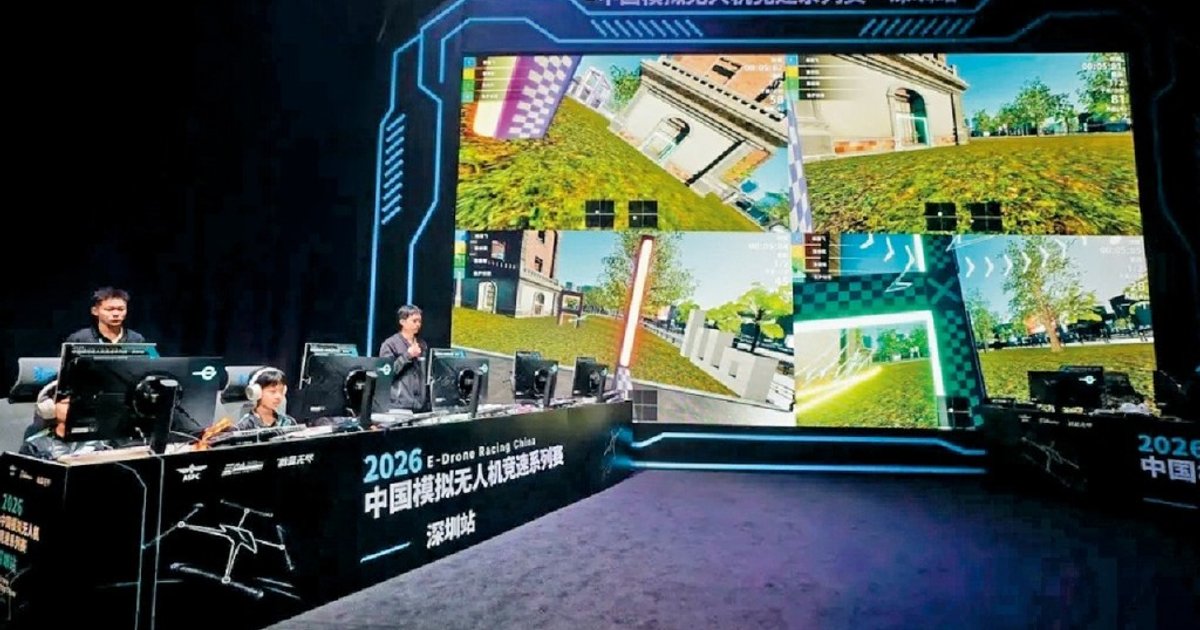
The world's first offline national-level simulated drone racing competition concluded in Shenzhen on September 19, 2026, marking a milestone in aviation sports. Sixty-four finalists, selected from 1,557 online applicants nationwide, gathered at the Sea World Cultural Art Center in Nanshan District to compete for prize money totaling tens of thousands of yuan. The event, the opening leg of the 2026 China Simulated Drone Racing Series organized by the General Administration of Sport of China and the Chinese Aero-Sports Federation, showcased the potential of simulation technology for training drone pilots and supporting the emerging low-altitude economy. Competitors ranged from teenagers to experienced enthusiasts, racing through virtual tracks using the "Blue Infinity" simulator that replicates real-world physics and control dynamics.
Key Points
- The competition adopted a two-stage format: online qualification from August 21-30 on the "Blue Infinity" platform, followed by offline finals on September 19 at Sea World Cultural Art Center in Nanshan .
- A total of 1,557 pilots registered online, with 64 advancing to the Shenzhen offline finals where they competed individually in timed races .
- Prize money was distributed among the top 16 finishers: champion 10,000 RMB, runner-up 5,000 RMB, third place 2,000 RMB, fourth through eighth place 1,000 RMB each, and ninth through sixteenth place 500 RMB each before tax .
- The "Blue Infinity" simulator became the first legally approved drone-themed video game software in China after receiving a network gaming publication number from authorities in July 2026 .
- The 2026 series comprises four stations across China, culminating in a year-end national finals, with the Shenzhen event serving as the opening leg .
Why It Matters
This event signals China's push to develop simulation technology as a low-cost entry point for cultivating drone operation talent needed in logistics, emergency rescue, and eVTOL aviation sectors . The integration of gaming technology with aviation training could accelerate personnel development for both commercial applications and national defense, addressing the talent shortage in the low-altitude economy .
This event signals China's push to develop simulation technology as a low-cost entry point for cultivating drone operation talent needed in logistics, emergency rescue, and eVTOL aviation sectors . The integration of gaming technology with aviation training could accelerate personnel development for both commercial applications and national defense, addressing the talent shortage in the low-altitude economy .