Hong Kong F&B Market Shakeout: Mainland Brands Retreat While Japanese Chains Expand
SingTao · 1 SOURCESabout 2 hours ago2 MIN
Summary
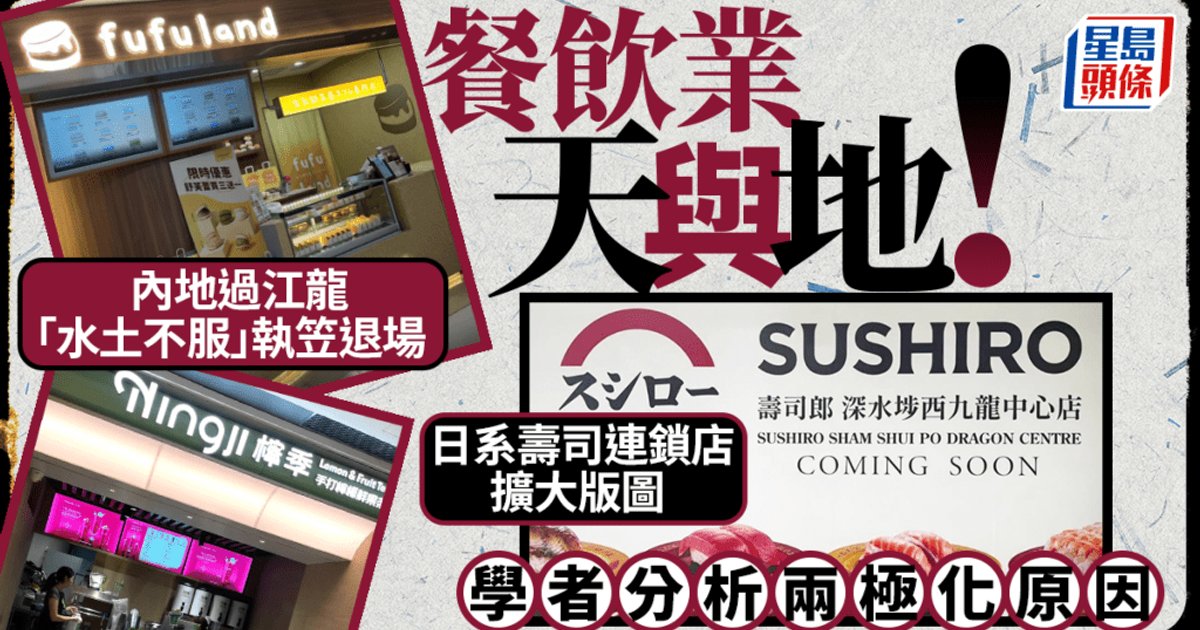
Hong Kong's food and beverage and retail markets are experiencing a major reshuffle, with mainland Chinese "cross-border" brands showing divergent performance. While some brands are retreating due to "acclimatization challenges," others are expanding against the market trend. Experts analyze that the divergence stems from fundamental differences in operating cost structures and evolving consumer preferences among younger demographics.
Key Points
- Mainland hand-shake brand "Ningji" and "fufuland" have closed all their Hong Kong stores, while "Mixue Bingcheng" has shuttered five outlets, with Taiwan brand "85℃" reportedly closing most locations
- Japanese sushi chain "Sushiro" continues to open new branches, and mainland brands "Bawang Chaji" and "Luckin Coffee" are aggressively expanding their presence in Hong Kong
- When "Bawang Chaji" launched a buy-one-get-one-free promotion, its Kowloon Tong branch saw over 1,000 cups queued for preparation
- Mainland fashion brand "W.MANAGEMENT" replaced H&M at a 30,000 sq ft flagship store on Paterson Street with a monthly rent of approximately HK$2 million
- HKBU Associate Professor Mai Cuicai explained that mainland brands benefit from lower rent and labor costs, allowing higher investment in ingredients, but Hong Kong's expensive overhead forces reduced ingredient spending, making products feel "not worth the price"
Why It Matters
This market reshuffle signals a structural transformation in Hong Kong's dining landscape, with implications for commercial real estate demand and tenant mix in shopping malls. CUHK Professor Zhuang Tailiang noted that the shift from traditional Chinese cuisine to Japanese and Korean food reflects changing consumer habits, and restaurants must adapt by offering health-conscious dishes and Instagram-worthy presentations to attract younger patrons .
This market reshuffle signals a structural transformation in Hong Kong's dining landscape, with implications for commercial real estate demand and tenant mix in shopping malls. CUHK Professor Zhuang Tailiang noted that the shift from traditional Chinese cuisine to Japanese and Korean food reflects changing consumer habits, and restaurants must adapt by offering health-conscious dishes and Instagram-worthy presentations to attract younger patrons .