Mong Kok Pedestrian Zone Revival Meets Strong Resistance
SingTao · 1 SOURCES1 day ago2 MIN
Summary
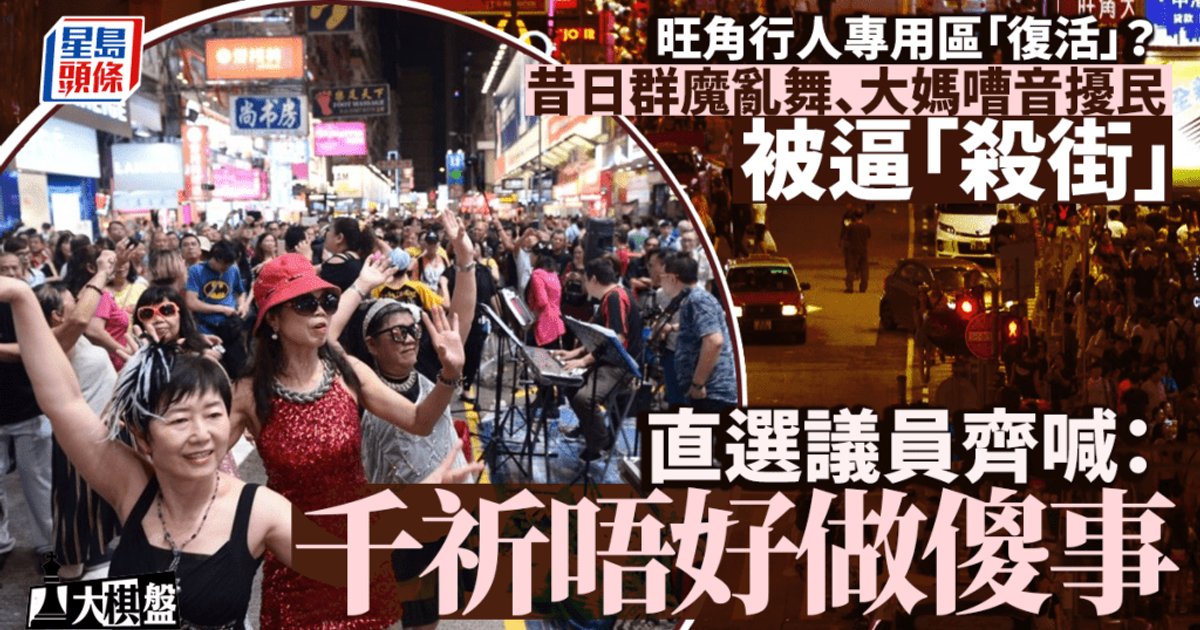
The idea of reviving the former pedestrian zone around Sai Yeung Choi Street South in Mong Kok resurfaced at the Legislative Council on November 4, when Liberal Party chairman Shiu Ka-fai raised it as a possible “culture plus tourism” measure. Secretary for Culture, Sports and Tourism Rosanna Law Shuk-pui said the government would need to be extremely cautious, citing concerns that disruptive street performances could return. Several directly elected lawmakers also opposed any quick revival, arguing that the district’s earlier experience brought serious noise, hygiene and public-order problems. The original pedestrian zone, introduced in 2000 and scrapped in August 2018, had by then become a flashpoint for residents, merchants and politicians alike.
Key Points
- The Mong Kok pedestrian zone began in 2000, with vehicle restrictions during designated periods, and its coverage and operating hours were later expanded several times.
- What started as a crowd-management and business-boosting measure later deteriorated into loud amplified singing, illegal trading, turf-fee collection and suspected sex-related activity.
- The Transport Department consulted residents and shop operators in 2018, and 97% of responses supported ending the scheme before it was terminated in August that year.
- During the Legislative Council exchange on November 4, Kowloon West lawmaker Leung Man-kwong said restoring the zone without community consensus and full supporting measures would create major conflict.
- Former Yau Tsim Mong District Council chairman and lawmaker Ip Ngo-tung said Singapore-style registration for busking could be studied, but questioned using a dense, residential-adjacent street like Sai Yeung Choi South Street.
Why It Matters
The debate goes beyond one street and tests how far Hong Kong can push “tourism everywhere” without reviving the neighbourhood conflicts that led to the zone’s closure. It also puts pressure on the government to show whether public-space activation can be managed credibly when residents, merchants and lawmakers remember the previous experiment as a failure.