Lawmakers Push for Heat Warning Reform as Record 36°C Sweeps Hong Kong
On.cc · 1 SOURCESabout 2 hours ago2 MIN
Summary
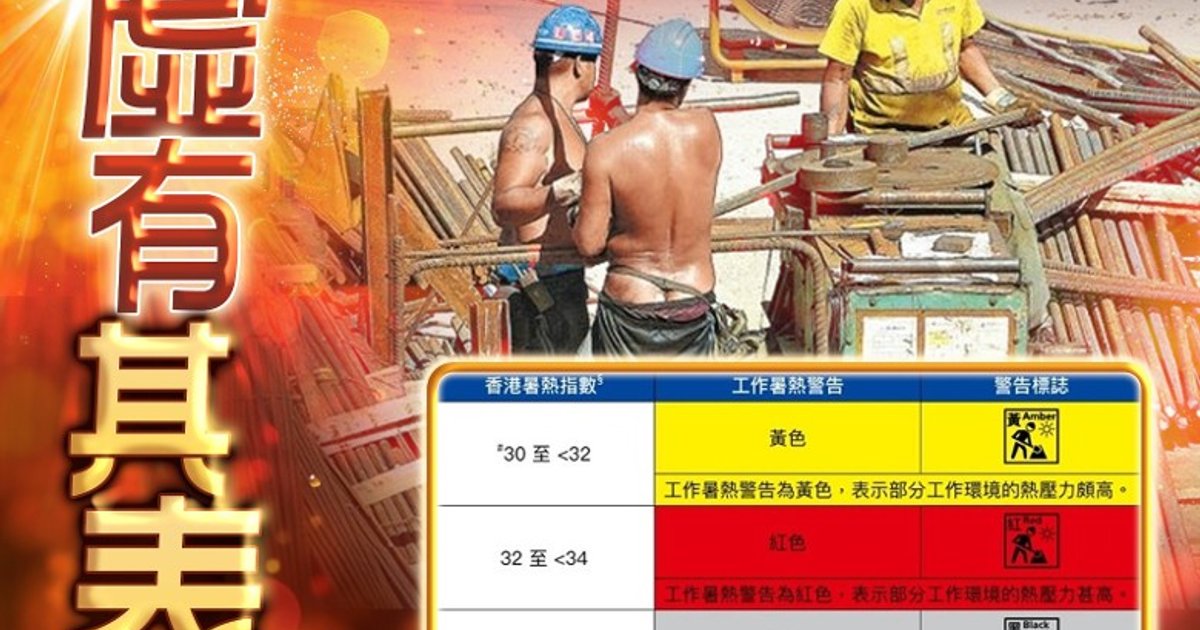
Hong Kong is experiencing extreme heat this week, with the Observatory recording a record-breaking temperature of 36 degrees Celsius. However, the Labour Department's Work Heat Stress Warning has remained at the yellow level—the lowest tier—raising questions about whether the system adequately protects outdoor workers. Legislators and industry representatives are calling for reforms, including direct links between warning levels and specific temperature thresholds, district-based heat indices for areas like airport aprons, and updates to occupational disease regulations that have remained unchanged for two decades.
Key Points
- Hong Kong's Observatory recorded a historic temperature of 36 degrees Celsius this week, yet the Work Heat Stress Warning has stayed at yellow level
- Legislator Lam Chun-sing proposed linking warnings directly to temperature: red at 35 degrees, black at 36-38 degrees, arguing employers can adjust schedules flexibly
- Aviation workers face extreme conditions: night-time felt temperatures reach 35-36 degrees on aprons; daytime temperatures can exceed 40 degrees due to sun exposure, engine heat, and lack of air conditioning in cargo holds
- The Hong Kong Civil Aviation Staff Union proposed district-based heat indices, similar to rainstorm warning signals, to account for temperature variations between urban areas and locations like the airport
- The government has not updated the statutory occupational disease schedule for 20 years; legislators are urging inclusion of heatstroke and lower limb disorders from prolonged standing
- Street cleaners work across diverse locations including rural New Territories, making centralised rest coordination difficult; industry representatives suggested adding rest points for outdoor workers
Why It Matters
These record temperatures expose gaps in Hong Kong's worker protection framework. For thousands of outdoor and aviation workers facing heat stress daily, the current warning system may be failing to trigger adequate protective measures. With climate change driving more frequent extreme heat events, reforming both the warning mechanism and occupational disease compensation could become critical to protecting Hong Kong's workforce and reducing heat-related fatalities and injuries .
These record temperatures expose gaps in Hong Kong's worker protection framework. For thousands of outdoor and aviation workers facing heat stress daily, the current warning system may be failing to trigger adequate protective measures. With climate change driving more frequent extreme heat events, reforming both the warning mechanism and occupational disease compensation could become critical to protecting Hong Kong's workforce and reducing heat-related fatalities and injuries .