Good Samaritan Helps Injured Elderly Man at Cross-Border Bus Stop, Sparks Debate on How to Assist Safely
SingTao · 1 SOURCESabout 3 hours ago3 MIN
Summary
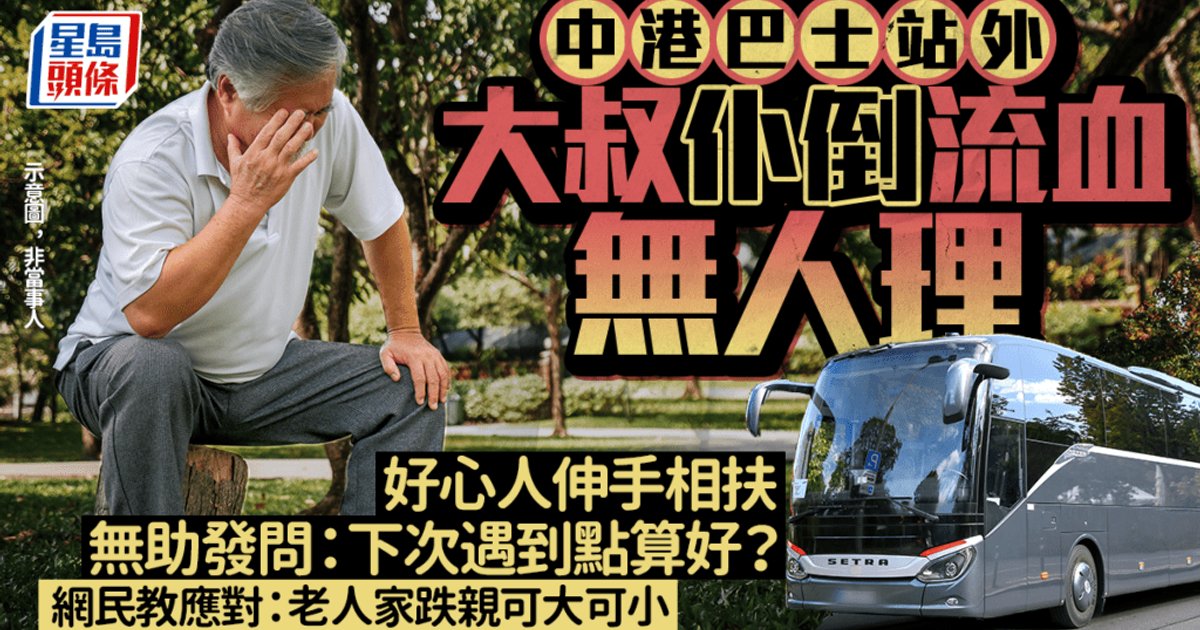
A passerby in Hong Kong recently stopped to help an elderly man who had fallen and sustained a head injury outside a cross-border bus station, while other pedestrians ignored the scene. The Samaritan later expressed uncertainty online about how to handle similar situations in the future, sparking a wider discussion about the proper way to assist injured strangers. Netizens praised the good deed while offering practical safety advice on how to help without causing further harm.
Key Points
- On September 20, 2026, a poster on social media Threads described encountering an elderly man sitting on the ground outside a cross-border bus station, bleeding from the head with no one stopping to help
- The injured man explained he had accidentally slipped and hit his head, unable to get up on his own, and asked the poster to help him stand
- The poster assisted the man to a nearby park to rest before leaving, later returned but found the man had already gone
- Netizens advised that elderly people who hit their heads should never be moved immediately, as internal bleeding or fractures could be worsened by improper handling
- The recommended approach is to call emergency services immediately and keep the injured person still, rather than attempting to lift them alone
Why It Matters
This incident highlights the growing dilemma Hong Kong residents face when deciding whether to help strangers who have fallen, particularly elderly individuals who may have sustained serious injuries. The online discussion has provided valuable public education on basic first aid protocols that balance compassion with safety, potentially encouraging more people to help while ensuring they do so correctly. Such community conversations are crucial for building a more caring society where residents feel confident assisting others without fear of causing harm or being falsely accused.
Netizens Share Safety Guidelines
Multiple netizens emphasized that moving someone who has hit their head can be dangerous, especially for elderly individuals who may have internal bleeding or fractures. They recommended calling 999 immediately and keeping the person stationary until medical help arrives. One netizen shared a doctor's advice that elderly head injuries require X-rays, as slow internal bleeding can lead to stroke or death weeks later. Some suggested gently but firmly insisting on calling an ambulance even if the injured person refuses, or helping them contact family members if they decline emergency services. Other readers shared personal experiences where calling for professional help proved life-saving, reinforcing the importance of prioritizing medical assessment over immediate physical assistance.
This incident highlights the growing dilemma Hong Kong residents face when deciding whether to help strangers who have fallen, particularly elderly individuals who may have sustained serious injuries. The online discussion has provided valuable public education on basic first aid protocols that balance compassion with safety, potentially encouraging more people to help while ensuring they do so correctly. Such community conversations are crucial for building a more caring society where residents feel confident assisting others without fear of causing harm or being falsely accused.
Netizens Share Safety Guidelines
Multiple netizens emphasized that moving someone who has hit their head can be dangerous, especially for elderly individuals who may have internal bleeding or fractures. They recommended calling 999 immediately and keeping the person stationary until medical help arrives. One netizen shared a doctor's advice that elderly head injuries require X-rays, as slow internal bleeding can lead to stroke or death weeks later. Some suggested gently but firmly insisting on calling an ambulance even if the injured person refuses, or helping them contact family members if they decline emergency services. Other readers shared personal experiences where calling for professional help proved life-saving, reinforcing the importance of prioritizing medical assessment over immediate physical assistance.