Shenzhen busts cross-border fetal blood smuggling ring
SingTao · 1 SOURCESabout 8 hours ago3 MIN
Summary
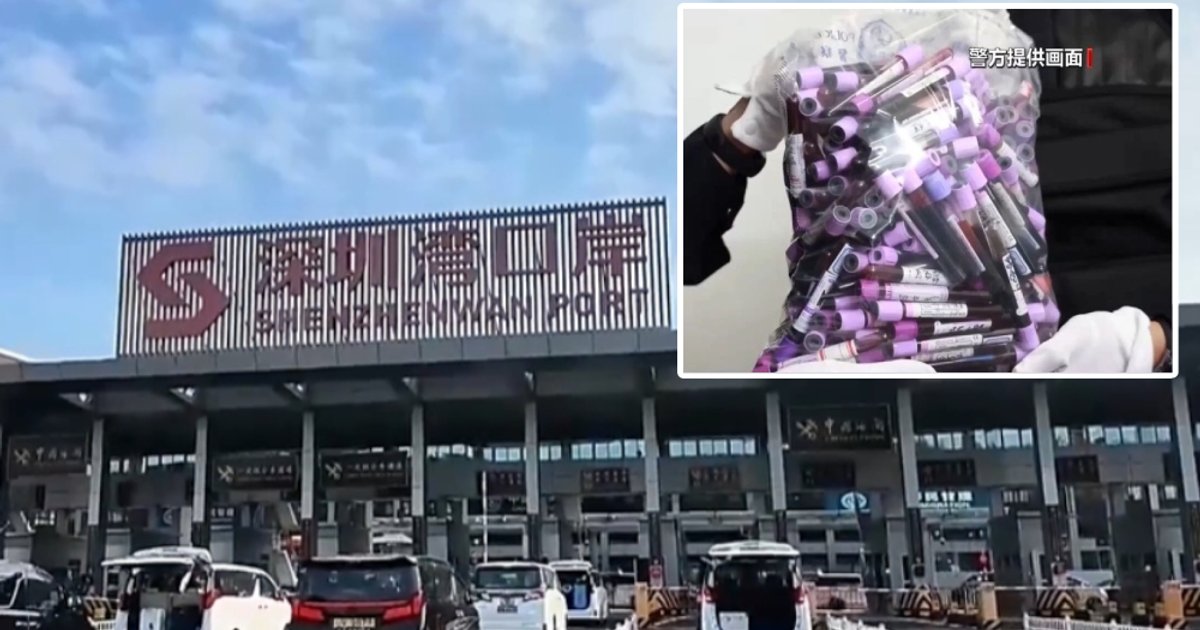
Shenzhen customs authorities said they had broken up a cross-provincial smuggling network that illegally collected pregnant women’s blood samples in mainland China and sent them to Hong Kong for fetal sex testing, a practice banned on the mainland when not medically required. The case came to light after officers at Shenzhen Bay Port found 527 sealed blood tubes hidden inside a modified car speaker in the trunk of a cross-border seven-seater vehicle. After nearly a year of follow-up investigation, authorities said they dismantled four criminal groups, arrested 37 suspects across five provinces, and verified a combined total of about 40,000 blood samples either intercepted on site or smuggled out of the country
Key Points
- China Central Television said Shenzhen customs received intelligence in March 2025 about a suspicious white vehicle planning to carry large quantities of pregnant women’s blood samples out through Shenzhen Bay Port
- Officers focused on cross-border vehicles making frequent trips without passengers, then stopped a white seven-seater whose driver, identified only as Zhao, appeared evasive during inspection
- Inspectors found a loose outer cover on an oversized modified in-car speaker in the trunk and discovered 527 sealed blood samples packed inside grey courier bags
- Authorities said each tube carried an application form from an overseas testing institution for fetal sex identification, and the driver was detained at the scene
- Investigators later traced a handler surnamed Lu who allegedly used a remote parking lot in Luohu and parcel lockers in residential estates as transfer points
- A search of a rented room in an urban village in Luohu uncovered large numbers of blood-filled test tubes and cash stored under a bed, according to the report. In January, Shenzhen customs worked with law enforcement in Guangzhou, Jiangmen and Xiamen, deploying more than 220 officers in coordinated raids across Guangdong, Hainan, Fujian, Jiangsu and Guizhou. Authorities said the operation led to 37 arrests, the takedown of four criminal groups, and the seizure of more than 2,000 blood tubes awaiting smuggling
Why It Matters
For Hong Kong readers, the case points to the city’s role in a cross-border testing chain that mainland authorities say was used to evade a ban on non-medical fetal sex identification. It also raises concern over how biological samples carrying genetic information from both mother and fetus could be moved across the boundary and handled by overseas testing institutions, with mainland investigators warning of risks to human genetic resource security