Two Workers Rescued Alive from Nepal Hydropower Tunnel Nine Days After Floods
Thestandard · 3 SOURCESabout 2 hours ago2 MIN
Summary
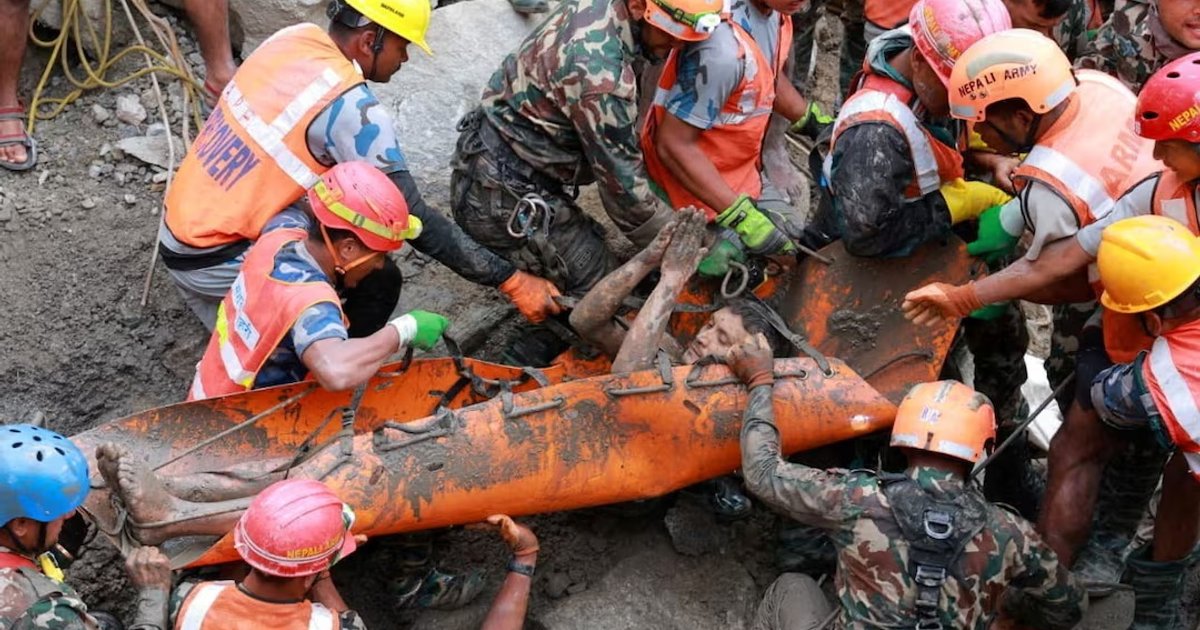
Two workers were rescued alive from a hydropower tunnel in Nepal on September 4, 2026, nine days after deadly floods triggered by a glacier collapse devastated the Himalayan region. The survivors, Sanjay Sah and Kabir Maharjan, were pulled from the Trishuli-3A Hydropower Station tunnel in Rasuwa district, where officials believe approximately 115 people remain trapped . The successful rescue has raised hopes that others may still be alive inside the tunnel network .
Key Points
- A glacier collapse on August 26 in the upper Trishuli River triggered massive ice, rock, and mudslides that swept through the Bhotekoshi River valley
- Nepal's official death toll stands at 1,252, with more than 4,200 people missing, while China reports 21 deaths and 541 missing in Tibet
- The two rescued workers are Sanjay Sah (mechanical foreman) and Kabir Maharjan (mechanical supervisor), confirmed by Energy Minister Biraj Bhakta Shrestha's office
- Kabir Maharjan cannot move his hands and legs, while Sanjay Sah's injuries are not critical; both were transported to a hospital in Kathmandu
- Search teams heard voices from inside the tunnel in the morning, and one survivor reported that more people are believed to be alive inside
- Officials believe at least 900 people were trapped inside tunnels related to six hydropower projects along the Trishuli River
Why It Matters
The rescue offers a glimmer of hope amid the widespread devastation, as one survivor indicated additional people remain alive in the tunnel, prompting continued search efforts . The disaster highlights the vulnerability of Himalayan communities to climate-induced glacial collapses, with tens of thousands displaced and entire villages swept away along Nepal's border with Tibet .
The rescue offers a glimmer of hope amid the widespread devastation, as one survivor indicated additional people remain alive in the tunnel, prompting continued search efforts . The disaster highlights the vulnerability of Himalayan communities to climate-induced glacial collapses, with tens of thousands displaced and entire villages swept away along Nepal's border with Tibet .