Trump Claims Russia-Ukraine Energy Ceasefire, Zelensky Denies Prior Knowledge
Bastillepost · 3 SOURCES1 day ago2 MIN
Summary
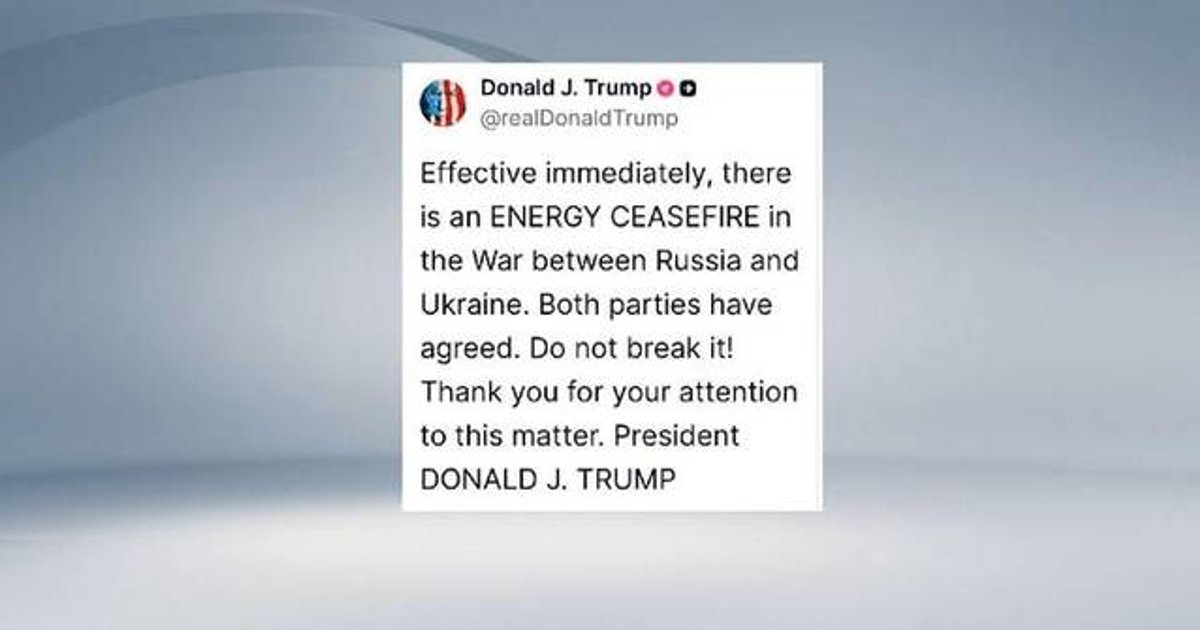
U.S. President Donald Trump announced on Sunday via his social media platform Truth Social that Russia and Ukraine have agreed to an immediate "energy ceasefire," effective immediately. However, Ukrainian President Volodymyr Zelensky told Axios the agreement was "news to him," stating that while Ukraine would agree to such a ceasefire if Russia does, he had no prior knowledge of any deal . The announcement comes amid rising tensions, with the Kremlin stating that Ukrainian drone attacks during Russian parliamentary elections have undermined prospects for immediate peace talks .
Key Points
- Trump declared the energy ceasefire "effective immediately" on Truth Social, claiming both parties had reached agreement on Sunday
- Zelensky responded that the ceasefire announcement was unexpected, but pledged Ukraine would reciprocate if Russia agreed to halt energy infrastructure attacks
- On Saturday, Trump said Russia wants a deal to end the Ukraine conflict but accused Zelensky of refusing to negotiate, calling for Ukraine to hold elections for new leadership
- The Financial Times reported the U.S. threatened to halt weapons procurement and intelligence sharing with Ukraine to force cessation of attacks on Russian refineries
- Zelensky spoke with Canadian Prime Minister Carney, Finnish President Stubb, and NATO Secretary General Rutte, reaffirming Ukraine's support for de-escalation while awaiting details from Washington
Why It Matters
The conflicting narratives between Trump and Zelensky expose deep fractures in the diplomatic approach to ending the Russia-Ukraine conflict, raising questions about who actually holds negotiating power . The reported U.S. threat to cut intelligence and weapons to Ukraine highlights America's willingness to use its leverage directly on Kyiv, potentially undermining Ukrainian sovereignty in peace negotiations . This development signals a potential shift in Washington's strategy from supporting Ukraine militarily to compelling concessions through economic and intelligence pressure.
The conflicting narratives between Trump and Zelensky expose deep fractures in the diplomatic approach to ending the Russia-Ukraine conflict, raising questions about who actually holds negotiating power . The reported U.S. threat to cut intelligence and weapons to Ukraine highlights America's willingness to use its leverage directly on Kyiv, potentially undermining Ukrainian sovereignty in peace negotiations . This development signals a potential shift in Washington's strategy from supporting Ukraine militarily to compelling concessions through economic and intelligence pressure.