China-Nepal Landslide: Tibet Holds Memorial as Nepal Morgues Overflow
SingTao · 5 SOURCESabout 1 hour ago2 MIN
Summary
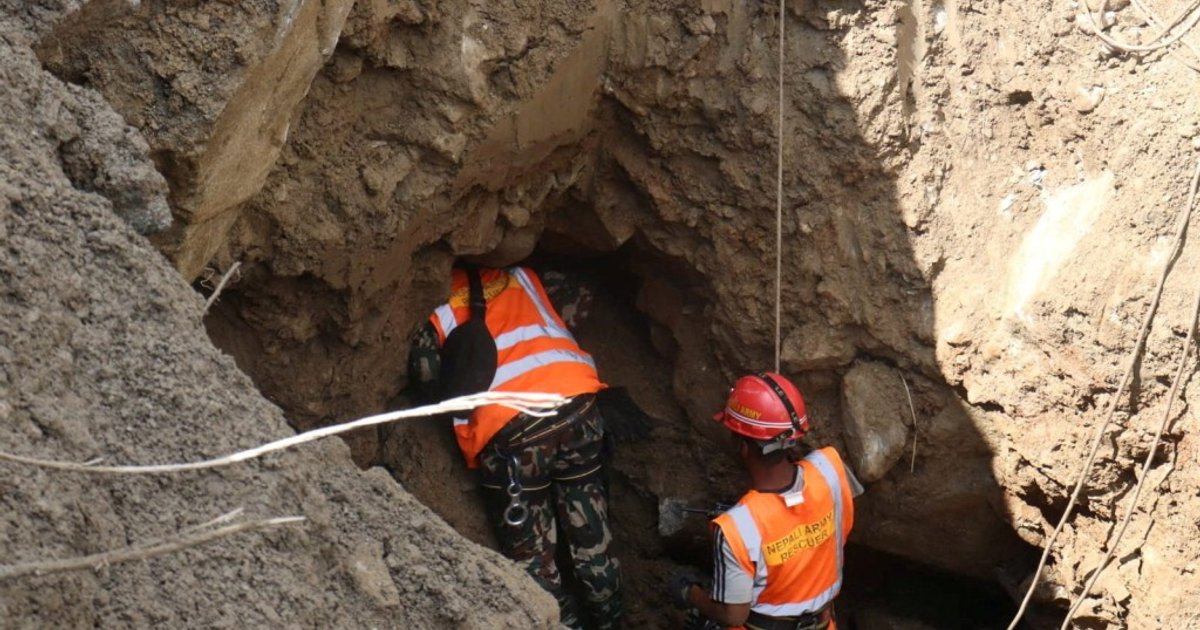
The catastrophic glacial collapse and landslide that struck the China-Nepal border on August 26 has killed over 960 people, with more than 4,500 still missing across both countries. A memorial ceremony was held in Tibet on September 1 as rescue efforts continue. In Nepal, the disaster has overwhelmed morgues and funeral systems, with bodies washing up to 200 kilometres downstream. Rescue operations are concentrated on two hard-hit districts in Nepal—Rasuwa and Nuwakot—where hundreds of hydroelectric workers are feared trapped inside blocked underground tunnels. Nepalese military forces, assisted by specialized teams from China and India, are deploying excavators, spotlights and controlled blasts to break through debris.
Key Points
- Tibet held a memorial ceremony on September 1 at the Gyalsu County Public Security Bureau, with rescue personnel observing a moment of silence before resuming operations
- In Nepal's Chitwan district, bodies have been washing up as far as 200 kilometres downstream, with 233 recovered at the Chitwan Exhibition Centre, of which only 4 have been identified
- The hospital morgue in Bharatpur, originally designed for about 50 bodies, was holding approximately 125, with severe decomposition making identification difficult
- Authorities have established a temporary burial site in Devghat forest, interring 96 unidentified bodies by August 31, with plans to handle over 100 more; each grave is individually numbered with DNA samples collected
- The 216-megawatt Upper Trishuli-1 hydroelectric project is among those with the highest number of missing workers, with the Nepalese military estimating dozens trapped in the Upper Trishuli-3A tunnel, approximately 180 metres inside when disaster struck
Why It Matters
This disaster represents one of the most severe Himalayan geological events in recent history, with the survival of hundreds trapped in underground tunnels depending on the outcome of ongoing high-risk rescue operations involving coordinated international assistance . The parallel humanitarian crisis of managing hundreds of unidentified bodies, with morgues overwhelmed and emergency burial sites created in a UNESCO World Heritage tourism region, underscores the massive scale of the catastrophe affecting both countries' emergency management capabilities .
This disaster represents one of the most severe Himalayan geological events in recent history, with the survival of hundreds trapped in underground tunnels depending on the outcome of ongoing high-risk rescue operations involving coordinated international assistance . The parallel humanitarian crisis of managing hundreds of unidentified bodies, with morgues overwhelmed and emergency burial sites created in a UNESCO World Heritage tourism region, underscores the massive scale of the catastrophe affecting both countries' emergency management capabilities .