Japan PM Offers Shrine Ritual Items Despite China, South Korea Opposition
SingTao · 2 SOURCESabout 3 hours ago4 MIN
Summary
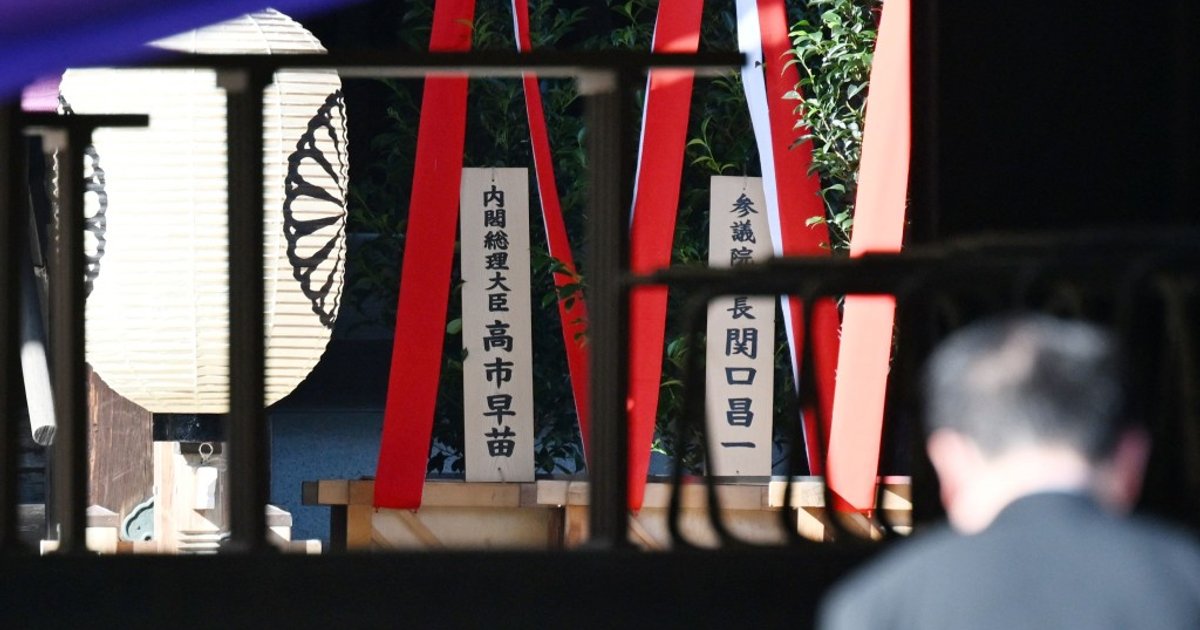
Japanese Prime Minister Sasae Hayashi (高市早苗) on Saturday offered ritual items to Yasukuni Shrine in Tokyo, a site that enshrines 14 Class-A war criminals from World War II, including former Prime Minister Hideki Tojo. The offering was made during the shrine's three-day autumn festival despite strong objections from China and South Korea. Sasae has not physically visited the shrine since October last year, preferring to send offerings to manage diplomatic relations with Beijing and Seoul.
Key Points
- The autumn festival at Yasukuni Shrine began on Saturday, October 17, and runs through Monday, October 19, spanning three days
- Sasae Hayashi offered "masakari" ritual items in the name of "Prime Minister of Japan" despite opposition from China and South Korea
- The shrine in Chiyoda, Tokyo, enshrines 14 Class-A war criminals including Hideki Tojo, a fact that has long drawn international criticism
- Sasae previously visited the shrine annually but has refrained from physical visits since October 2025, prioritizing diplomatic relations with Beijing and Seoul
- House of Representatives Speaker Mori Eisuke, Senate President Sekiguchi Shoichi, Health Minister Ueno Kenichiro, and Growth Strategy Minister Kiuchi Minori also sent ritual offerings
Why It Matters
The offering highlights the ongoing tension between Japan's domestic political considerations and its diplomatic relationships with neighboring countries. China's Foreign Ministry responded sharply, questioning "where is the conscience" of Japanese leaders who worship at what it calls the "war criminals' shrine," reiterating that history cannot be altered and demanding Japan reflect on its wartime aggression .
The offering highlights the ongoing tension between Japan's domestic political considerations and its diplomatic relationships with neighboring countries. China's Foreign Ministry responded sharply, questioning "where is the conscience" of Japanese leaders who worship at what it calls the "war criminals' shrine," reiterating that history cannot be altered and demanding Japan reflect on its wartime aggression .