Xi hosts first-ever China-US-Russia leaders’ meeting
SingTao · 10 SOURCES1 day ago2 MIN
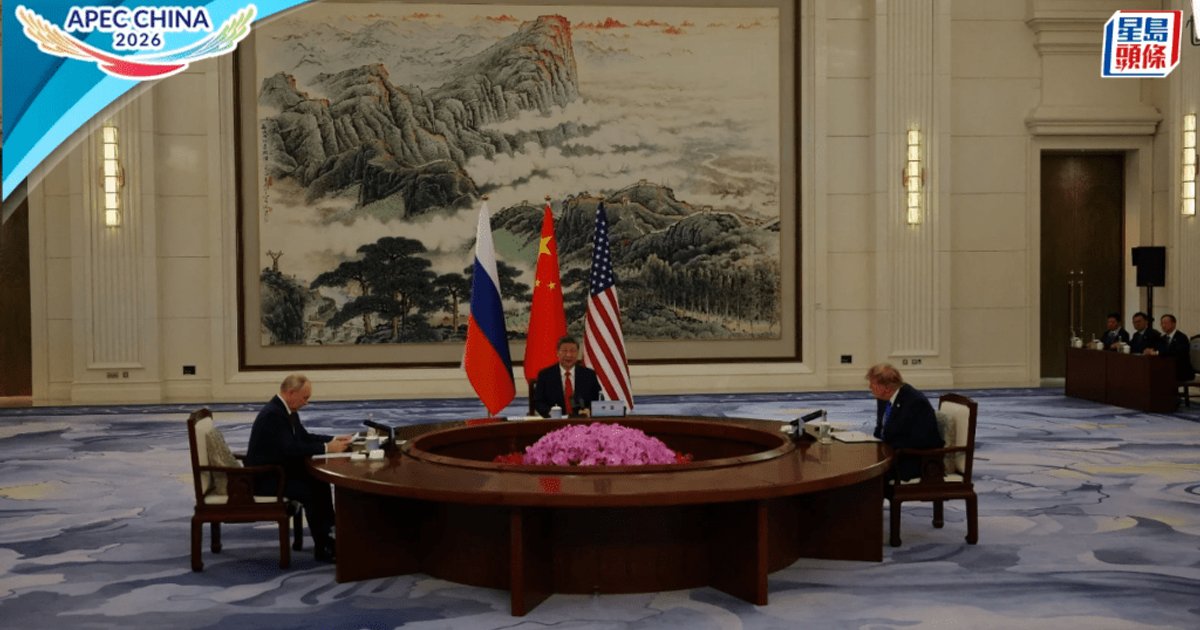
Summary
President Xi Jinping hosted Russian President Vladimir Putin and US President Donald Trump in Shenzhen on November 19 on the sidelines of the 33rd APEC Economic Leaders’ Meeting, marking what China described as the first face-to-face meeting among the leaders of China, Russia and the United States. Beijing said the talks would centre on safeguarding world peace and promoting strategic stability in major-power relations, calling the meeting “groundbreaking”. In opening remarks, Xi said constructive interaction among major powers was not optional but necessary, while Trump said the three countries had a unique advantage in discussing nuclear weapons and Putin said the Ukraine situation would be a key topic. The meeting followed a Xi-Trump bilateral session at Qilin Villa in Shenzhen’s Nanshan district, after Trump had also met Putin earlier in the day.
Key Points
- China’s foreign ministry announced on November 16 that Xi, Putin and Trump would meet in Shenzhen on November 19, describing it as the first in-person trilateral meeting of the three leaders.
- Foreign ministry spokesperson Mao Ning said the three leaders would exchange views in depth on world peace and strategic stability, adding that stronger communication and managed differences served all three countries’ interests.
- At the Shenzhen meeting, Xi said major powers bore special responsibilities and warned that when major powers cooperate the world is stable, but when they clash the world becomes turbulent.
- Trump said the United States, China and Russia had a unique advantage in discussing nuclear weapons, and am730 reported the US side expected talks on arms control and Iran.
- Putin thanked China for arranging the summit, said the three wartime victors had special responsibilities for global peace, and identified Ukraine as a priority issue for discussion.
Why It Matters
For Hong Kong readers, the Shenzhen venue places a major-power diplomatic event directly across the border, underscoring the Greater Bay Area’s growing role in hosting high-level international politics. The emphasis on strategic stability, Ukraine, nuclear risks and Taiwan also matters because any shift in China-US relations can quickly affect regional security sentiment, markets and cross-border business confidence linked to Hong Kong.