New Huanggang crossing lifts weekend cross-border travel
HK01 · 4 SOURCESabout 11 hours ago11 MIN
Summary
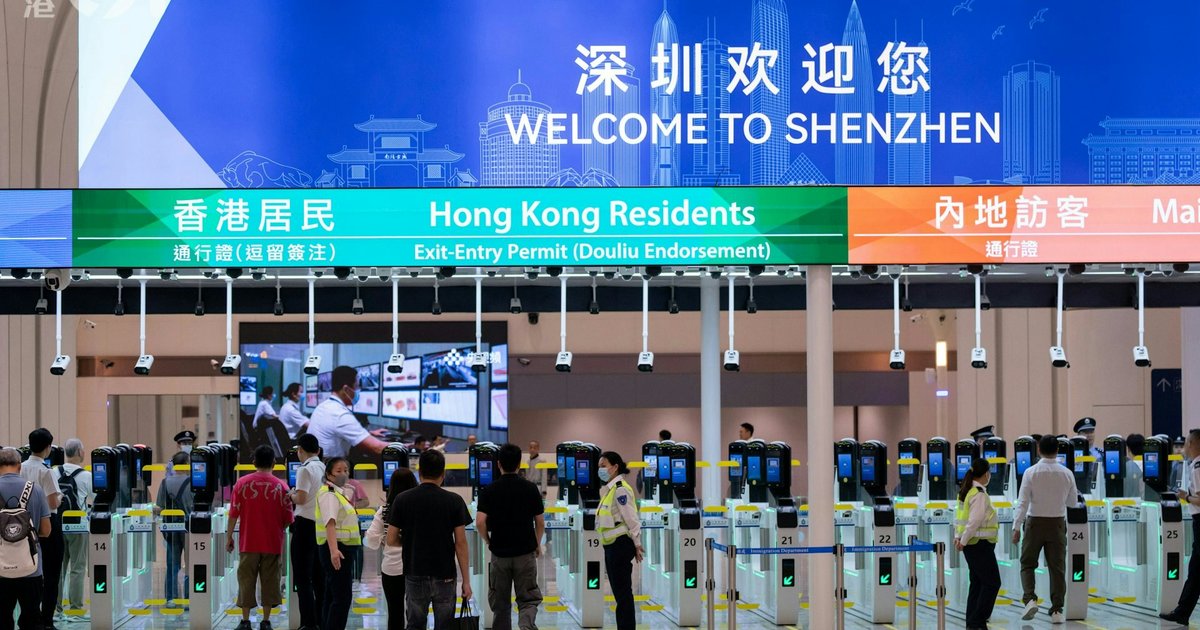
A month after the new Huanggang Port opened on October 12, cross-border traffic has risen not only at the checkpoint itself but across Hong Kong’s land boundary network. Immigration figures cited by Sing Tao show weekend northbound trips by Hong Kong residents and southbound mainland visitor arrivals both posted double-digit year-on-year gains during the first month of operation. At the same time, bus operators are widening feeder services: Citybus said its Huanggang route B14 will be upgraded from peak-only operation to full-day, two-way service from November 16, with a fastest journey time of about 40 minutes from Kai Tak and Sung Wong Toi. Industry representatives say the shorter crossing process and more direct urban bus links are making spontaneous same-day trips more realistic for both Hong Kong and Shenzhen travellers
Key Points
- The new Huanggang Port opened on October 12, and authorities estimated clearance time would fall from about 30 minutes to about five minutes
- In its first month, average Saturday northbound trips by Hong Kong residents via all land crossings reached about 488,000, up 14.8% year on year
- Average Sunday northbound trips reached about 346,000, while average Saturday and Sunday mainland visitor arrivals to Hong Kong were about 171,000 and 117,000 respectively
- At Huanggang itself, weekend Hong Kong outbound traffic was about 56,000 on Saturdays and 49,000 on Sundays, equivalent to 11.5% and 14.1% of land-crossing flows
- Citybus will regularise B14 as a daily full-day service from November 16, operating 8am to 9pm from Kai Tak and 8am to 11pm from Huanggang.
- Tourism Promotion Association executive director Chui Ting-bong (崔定邦) said the new port, together with KMB’s B10 from Kwai Fong, has opened up a new pool of northbound travellers from Tsuen Wan and Sham Shui Po because the trip can take only about half an hour. He said cross-border travel patterns may shift from carefully planned weekend outings to more spur-of-the-moment decisions. Sing Tao also reported residents saying B10 was faster and cheaper than previous rail or coach options, while Kwai Tsing district councillor Lau Mei-lok (劉美璐) said the direct service is friendlier for elderly passengers, families and regular cross-border users
- Citybus said B14 had been popular with Kowloon residents and visitors because of its direct routing, and that earlier trial extensions in service hours were made in response to demand for all-day cross-border travel. From November 16, the route will run daily in both directions instead of only during morning and evening peak periods. The operator said passengers from Tseung Kwan O, Kowloon East and Kowloon Central can use designated interchange routes and pay a combined flat fare of HK$20.8 for two legs to and from Huanggang. The interchange network includes route 793 from Tseung Kwan O and Kowloon Bay business areas, E23 or E23A from Tsz Wan Shan and Wong Tai Sin, route 20 from Tai Kok Tsui, Mong Kok, Yau Ma Tei, Ho Man Tin and To Kwa Wan, and a free same-stop transfer from B14 to 20X for return trips toward Jordan, Tsim Sha Tsui and East Tsim Sha Tsui.
- Hong Kong Federation of Restaurants and Related Trades chairman Leung Hei (梁熙) said Huanggang’s 24-hour operation gives it an advantage over other crossings, and he estimated annual visitor arrivals to Hong Kong could approach 60 million, near the 2018 level. He said October mainland visitor numbers were lifted by the “Huanggang effect” as well as Halloween and concerts, with urban hotel room rates up 50% year on year over the Halloween weekend and Lan Kwai Fong bar business up 30%
Why It Matters
For Hong Kong readers, the immediate consequence is that cross-border travel is becoming easier from more urban districts, not just traditional boundary hubs, which could reshape weekend leisure and spending patterns. The combination of faster clearance and cheaper, more direct bus links may also spread visitor traffic and local business opportunities beyond core tourist areas if travellers start using districts such as Kwai Fong, Tsuen Wan, Kai Tak and Sung Wong Toi as transfer and stopover points