Zhejiang Family Discovers Toxic Mang Grass Hidden in Supermarket Star Anise
SingTao · 3 SOURCESabout 2 hours ago2 MIN
Summary
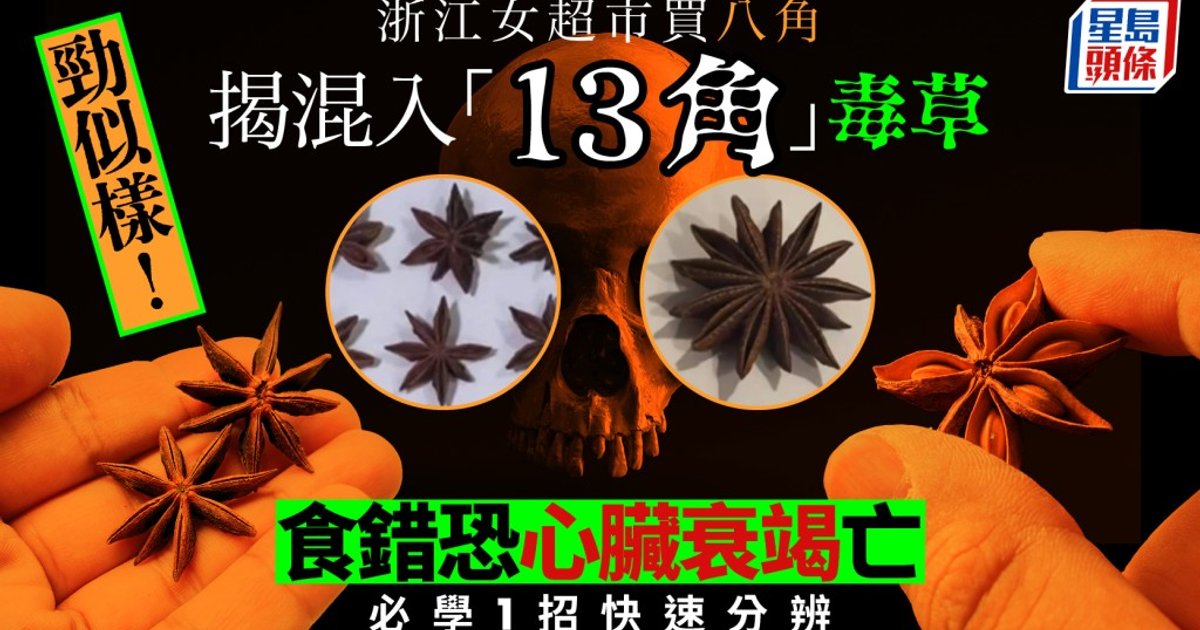
A Zhejiang family narrowly escaped a potential poisoning tragedy when a young child discovered that a spice in their dinner had 13 corners instead of the normal eight. The family had already consumed half a pot of braised beef before the toxic plant was identified. Authorities have warned that the deadly mang grass, which looks nearly identical to edible star anise, can cause heart failure even in small quantities.
Key Points
- Ms. Huang from Lincheng, Zhejiang purchased loose star anise from a supermarket to prepare braised beef for her family
- Her child curiously counted the "star anise" in the dish and found one piece had 13 corners instead of the normal eight
- Ms. Huang used her phone's AI image recognition to identify the spice, consulting experts who confirmed it was highly toxic mang grass
- She immediately discarded the entire pot of beef, though half had already been consumed by family members
- Li Bin, deputy chief pharmacist at the Zhoushan Municipal Food and Drug Testing and Research Institute, warned that mang grass contains powerful toxins that can cause convulsions, foaming at the mouth, and fatal heart failure
Why It Matters
This incident exposes a dangerous gap in food safety for loose spices sold at retail outlets, where toxic look-alike plants can inadvertently mix with edible products . Hong Kong consumers who purchase bulk spices from Asian grocers face similar risks, as star anise and mang grass are difficult to distinguish without careful examination of the number of corners and shape of the tips . The case highlights the importance of verifying spice authenticity and the potential value of AI-powered food identification tools in preventing accidental poisoning.
This incident exposes a dangerous gap in food safety for loose spices sold at retail outlets, where toxic look-alike plants can inadvertently mix with edible products . Hong Kong consumers who purchase bulk spices from Asian grocers face similar risks, as star anise and mang grass are difficult to distinguish without careful examination of the number of corners and shape of the tips . The case highlights the importance of verifying spice authenticity and the potential value of AI-powered food identification tools in preventing accidental poisoning.