AI Robot Wins Gold with 'Shy' Running Style at World Games
Bastillepost · 2 SOURCESabout 2 hours ago2 MIN
Summary
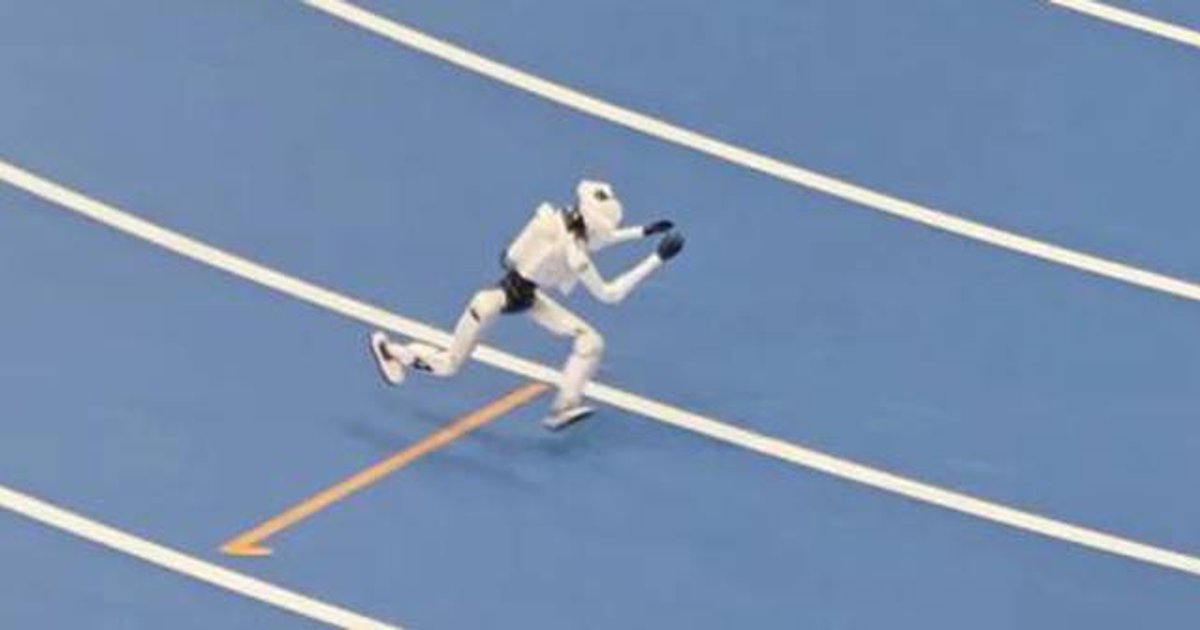
A TianGong Omni humanoid robot claimed gold in the 400m small category at the Second World Humanoid Robot Games on March 23, clocking 45.66 seconds with a distinctive style of running while covering its face with both hands . The quirky gait, which went viral online for resembling a comedic character from the film "Kung Fu Hustle," was not programmed by humans but emerged from AI training that determined it as the most efficient motion . The 135cm, 39kg robot was unveiled at the 2026 World Robot Conference as a home-use humanoid designed for household assistance and elderly care .
Key Points
- The TianGong Omni completed the 400m small category final in 45.66 seconds, securing gold at the Second World Humanoid Robot Games on March 23 .
- The robot stands 135cm tall and weighs 39kg, featuring a unique running style with hands raised to cover the face and pronounced hip movement .
- Engineers set a reward mechanism in simulation where faster running earned points while falling resulted in deductions, letting the AI discover optimal movement patterns .
- The AI determined that swinging arms heavily loaded shoulder motors, causing overheating and energy spikes, making the "face-covering" method more energy-efficient .
- The robot achieves peak speeds near 10 meters per second, with its forward-leaning posture requiring constant stepping to maintain balance .
Why It Matters
The TianGong Omni's self-discovered running style demonstrates how AI can optimize robotic movement beyond human intuition, potentially accelerating the development of more efficient home-service robots . This breakthrough in motion control algorithms, with the robot's open development interfaces for secondary research, could accelerate the practical application of humanoid robots in household tasks such as elderly care and domestic assistance .
The TianGong Omni's self-discovered running style demonstrates how AI can optimize robotic movement beyond human intuition, potentially accelerating the development of more efficient home-service robots . This breakthrough in motion control algorithms, with the robot's open development interfaces for secondary research, could accelerate the practical application of humanoid robots in household tasks such as elderly care and domestic assistance .