Nursing student dies after rare brain cancer battle
SingTao · 1 SOURCESabout 3 hours ago6 MIN
Summary
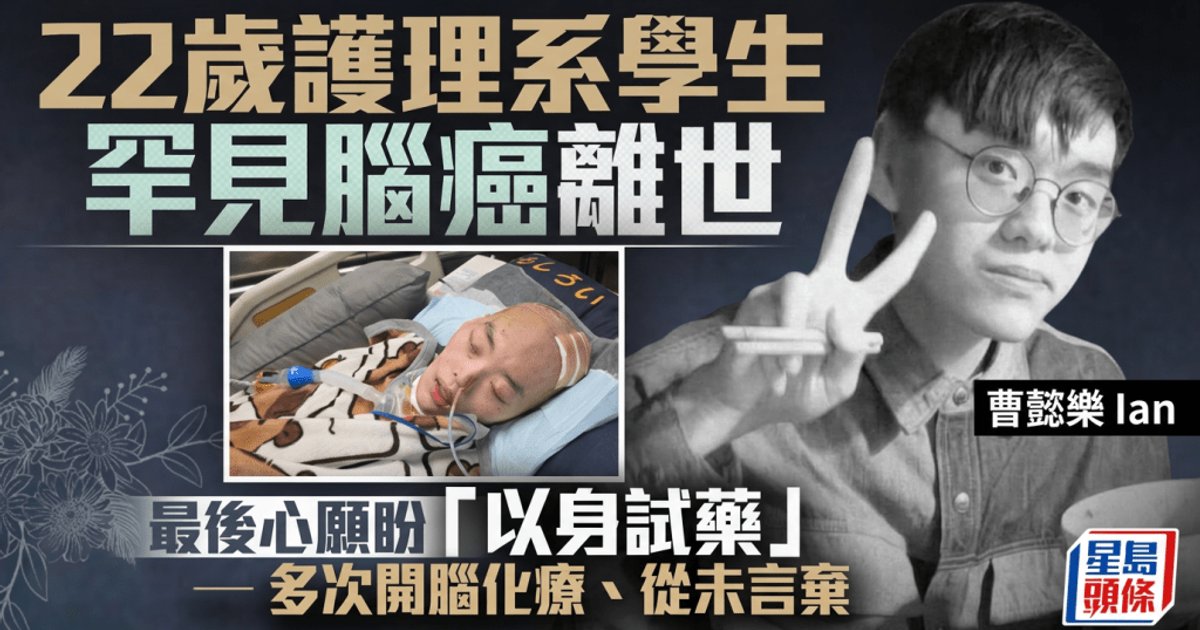
Twenty-two-year-old nursing student Cho Yi-lok (曹懿樂), also known as Ian, died in the early hours of November 25 after a three-year battle with a rare non-gonadal germ cell tumour in the brain. He had undergone multiple brain operations, chemotherapy, whole-ventricle and whole-spine radiotherapy, and a stem-cell transplant, but the cancer relapsed several times. Even in the final stage of his illness, he said his remaining wish was to test new drugs himself so that future rare-cancer patients would not have to endure the same difficult path. His case had drawn wide public attention after fundraising appeals helped him continue treatment that his family could not afford
Key Points
- Cho was diagnosed at 19 while studying nursing, and his goal of becoming a nurse to help others was interrupted by the rare cancer diagnosis
- According to Lifewire, he and his mother Yuki spent three years seeking treatment through repeated surgery, chemotherapy, radiotherapy and stem-cell transplantation
- In September 2025, Gamma Knife treatment reduced his brain tumour from 46cc to 3.6cc, and his physical condition improved for a time
- He later needed targeted therapy costing nearly HK$140,000 a month, a treatment not covered by government funding while the family lived on Comprehensive Social Security Assistance
- Lifewire said more than 6,400 donations raised over HK$1 million, enabling treatment at the Chinese University of Hong Kong Medical Centre and later consultations in Shenzhen
- Last Friday, Cho completed surgery to implant an Ommaya reservoir under the scalp so medication could later be injected into the brain. His condition then deteriorated sharply in the early hours of November 25, and despite resuscitation efforts by his mother and medical staff, he died peacefully. His body was to be returned to Hong Kong later. Doctors had repeatedly asked whether he had any final wish, and his answer remained the same: to try experimental medication. He said he wanted to help others and hoped the next patient would not have to take so many painful and uncertain treatment detours
Why It Matters
Cho’s story has focused attention on the practical barriers facing Hong Kong patients with rare diseases, including limited treatment options, scarce clinical data and the lack of public subsidy for expensive drugs. It also shows how families can become dependent on charity and cross-border medical consultations when standard pathways do not provide enough options