Advocacy Groups Push for Integrated Policy to Boost Inclusive Employment for Hong Kong Youth with SEN
HK01 · 2 SOURCES1 day ago6 MIN
Summary
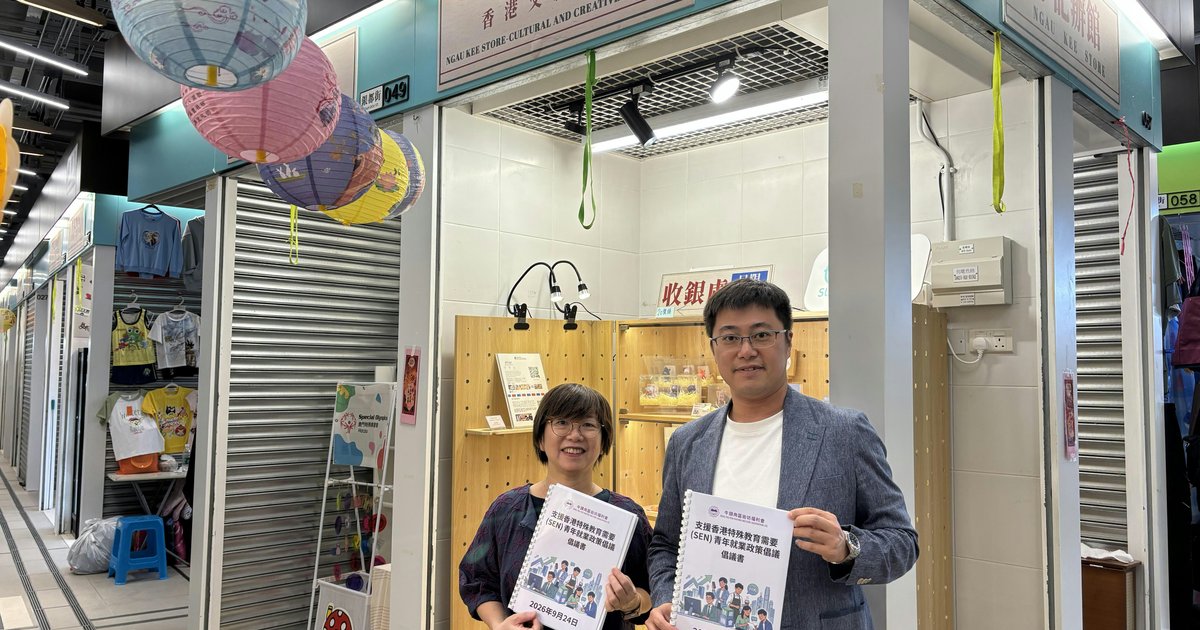
The Ngau Tau Kok District Kaifong Welfare Association, led by former Legislative Council member Ngan Man-yu, has released a policy advocacy paper addressing the employment challenges faced by young people with special educational needs (SEN) in Hong Kong . The advocacy highlights a critical gap in support mechanisms after SEN students leave school, with different government departments handling cases in a fragmented manner . The paper identifies four major difficulties these young people encounter and proposes an "advantage-based" support pathway involving government, businesses, and civil society cooperation . The advocacy also showcases successful case studies of young people with SEN who have demonstrated strong work capabilities in suitable positions .
Key Points
- Ngan Man-yu (顏汶羽) released the advocacy paper on Thursday (September 24), identifying fragmented support as the primary barrier for SEN students after graduation
- The Labour Department's "Disability Employment Programme" only incorporates young people with SEN into general disability frameworks without specialized support
- The advocacy proposes a five-stage "advantage-based" pathway: potential identification, campus skills training, internship with precise job matching, workplace adaptation, and ongoing emotional support
- Suggested measures include allowing Employees' Retraining Board (ERB) courses to operate in schools before graduation and establishing AI-powered employment matching platforms
- Case study: Liu Ying (劉盈), a young woman with mild intellectual disability, successfully memorized all product prices within a week and now works at a French chocolate company
Why It Matters
The advocacy arrives at a time when Hong Kong faces labour shortages in certain industries such as security, bakery, and food service—sectors where young people with SEN could potentially fill gaps if given proper support . By addressing the current fragmented approach and implementing an integrated policy framework, Hong Kong could simultaneously tackle youth unemployment among vulnerable groups and alleviate recruitment difficulties in essential service industries . The proposal emphasizes that with appropriate workplace accommodations, individuals with SEN can demonstrate exceptional performance, making inclusive employment not just a social responsibility but also an economically rational solution .
The advocacy arrives at a time when Hong Kong faces labour shortages in certain industries such as security, bakery, and food service—sectors where young people with SEN could potentially fill gaps if given proper support . By addressing the current fragmented approach and implementing an integrated policy framework, Hong Kong could simultaneously tackle youth unemployment among vulnerable groups and alleviate recruitment difficulties in essential service industries . The proposal emphasizes that with appropriate workplace accommodations, individuals with SEN can demonstrate exceptional performance, making inclusive employment not just a social responsibility but also an economically rational solution .