Musk’s Hong Kong Birthrate Remark Sparks Policy Debate
HK01 · 3 SOURCESabout 12 hours ago3 MIN
Summary
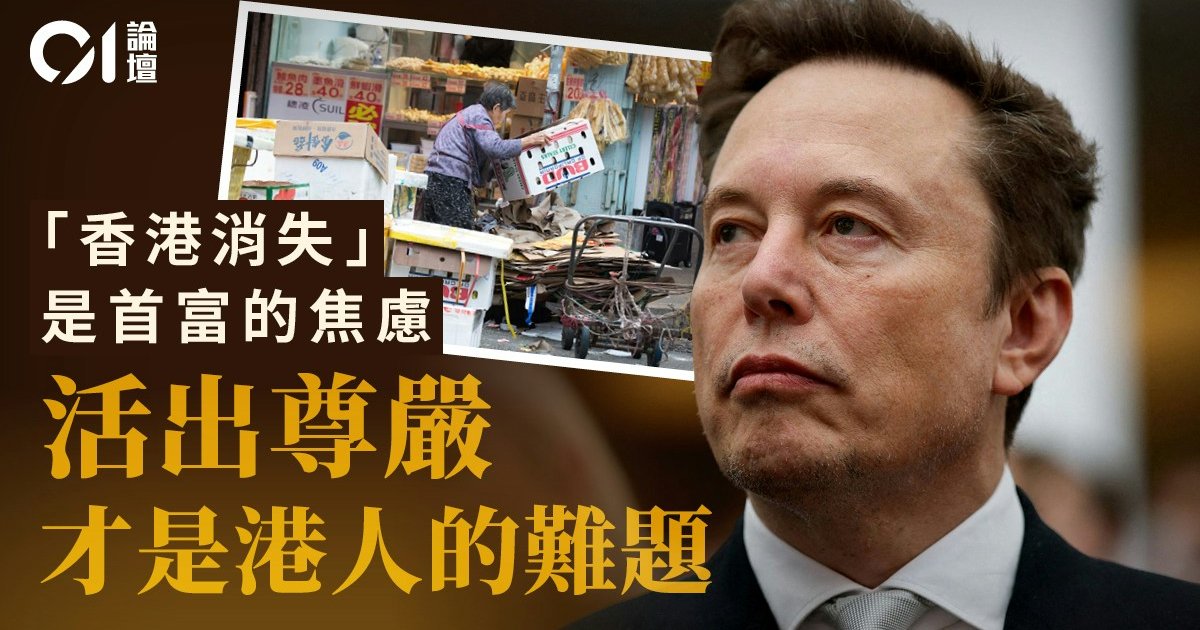
Elon Musk drew attention in Hong Kong after replying on X that, with the city’s birthrate among the world’s lowest, Hong Kong people could “be gone soon” if the trend does not change. The remark prompted responses from lawmakers and commentators, with Legislative Council member Chan Hoi-yan saying the problem is real and increasingly shaped by younger people’s preference against dating, marriage and childbearing. Government efforts since 2023 to encourage births have so far not produced a clear turnaround, and official data cited by HK01 show births in the 12 months to mid-2026 fell below 30,000 for the first time. Commentary in HK01 argued that focusing only on headline fertility figures ignores the cost of raising children, women’s career penalties and Hong Kong’s long history as a migrant city
Key Points
- Musk made the comment while replying to writer John LeFevre’s post about Hong Kong, saying the city’s birthrate has long ranked among the world’s lowest
- Chan Hoi-yan said Musk was stating an obvious demographic reality, adding that among young people, not marrying and not having children are increasingly mainstream choices.
- Official figures cited by HK01 show 29,700 babies were born from mid-2025 to mid-2026, down from about 59,800 a decade earlier
- Chan said current incentives should be part of a broader population strategy with targets and cross-department coordination on healthcare, education, childcare and housing
- She also proposed studying “extraordinary measures”, including legal access to assisted reproduction for unmarried young people and wider discussion of surrogacy
- A second lawmaker, Lam Lam, said Musk’s “gone soon” wording was more a figure of speech, but agreed low fertility is linked to social change and weaker emphasis on lineage and family formation. Lam argued Hong Kong’s education system teaches family values mainly in kindergarten, while later schooling often stresses that students should not date, leaving a gap in family-life education. Chan also said imported talent and their children may boost local consumption, but can intensify education competition and add pressure on local parents already worried about schooling. HK01 commentary countered that low fertility does not automatically mean Hong Kong will “disappear”, because the city has long been shaped by inward migration and population renewal. The same commentary said many residents avoid childbearing not out of indifference, but because of high housing and education costs, limited social mobility and the unequal burden placed on women through “motherhood penalties” at work and at home
Why It Matters
For Hong Kong readers, the debate is no longer only about whether to raise the birthrate, but about what kind of city young adults believe they can afford to build a family in. The discussion also points to a policy choice between relying on inward migration to offset demographic decline and tackling the local pressures that make marriage and parenthood less attractive to many residents.