Observatory Forecasts Normal to Above-Normal Autumn Temperatures as Potentially Record-Strong El Niño Approaches
HK01 · 2 SOURCESabout 3 hours ago2 MIN
Summary
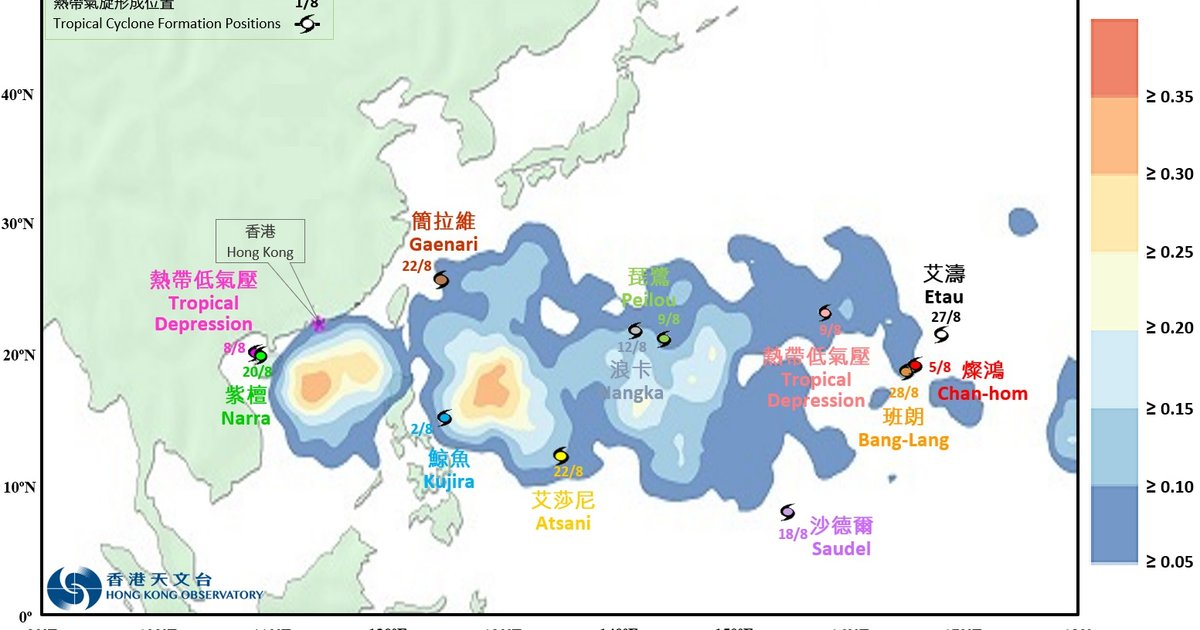
The Hong Kong Observatory has released its autumn weather outlook, warning that El Niño is expected to intensify to super strength and potentially become the strongest on record since 1950. The forecast predicts normal to above-normal temperatures for September to November, with fewer tropical cyclones and less rainfall than usual affecting Hong Kong. Last month set records for tropical cyclone activity, with 13 systems forming in the Western North Pacific and South China Sea, while extreme heat on August 9 saw temperatures reach 36.9 degrees at the Observatory headquarters and 39.8 degrees in Sheung Shui.
Key Points
- El Niño formed in August with sea surface temperature anomalies in the key monitoring region reaching plus 2.5 degrees, with the combined five-month total exceeding plus 4.0 degrees
- The Observatory predicts El Niño will peak in November to December, with anomalies potentially exceeding plus 3.5 degrees, possibly becoming the strongest since 1950
- August 2026 recorded 13 tropical cyclones in the Western North Pacific and South China Sea, with 12 forming within that month alone, breaking the record since 1961
- On August 9, Typhoon WNFC's outer subsidence brought extreme heat, with the Observatory recording 36.9 degrees and Sheung Shui reaching 39.8 degrees—the highest in Hong Kong since the 1980s
- An anti-cyclonic circulation pattern developing over the South China Sea to the Philippines by mid-September will suppress convection, leading to fewer tropical cyclones and reduced rainfall
Why It Matters
The potential super-strength El Niño event underscores the growing influence of climate variability on Hong Kong's weather patterns, with the record-breaking tropical cyclone activity in August and extreme heat events highlighting how global warming amplifies natural climate oscillations. The autumn forecast of warmer temperatures and reduced rainfall could impact water resources, energy demand for cooling, and emergency preparedness planning for the winter season ahead .
The potential super-strength El Niño event underscores the growing influence of climate variability on Hong Kong's weather patterns, with the record-breaking tropical cyclone activity in August and extreme heat events highlighting how global warming amplifies natural climate oscillations. The autumn forecast of warmer temperatures and reduced rainfall could impact water resources, energy demand for cooling, and emergency preparedness planning for the winter season ahead .