UN General Assembly Adopts Equal Earth Map Projection, US Opposes Resolution
SingTao · 2 SOURCESabout 2 hours ago2 MIN
Summary
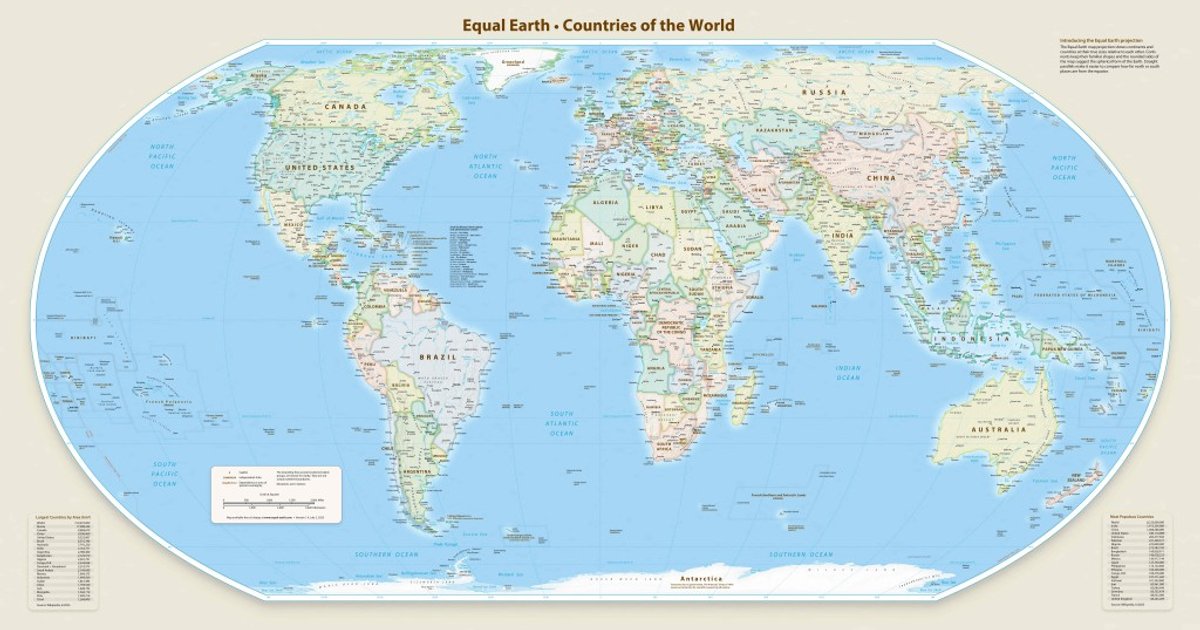
The UN General Assembly on Friday adopted a non-binding resolution encouraging member states to use the Equal Earth projection, a map design that accurately represents the true sizes of continents, replacing the traditional Mercator projection that has been in use since 1569. The vote concluded with 164 countries in favor, the United States opposed, and six nations abstaining. The resolution, initiated by the African nation of Togo, argues that the Mercator projection has distorted perceptions of continental sizes, particularly making Africa appear smaller than it actually is.
Key Points
- The Equal Earth projection, developed in 2018, displays continents according to their actual surface area, unlike the Mercator projection which inflates polar regions .
- Under the Mercator projection, Greenland appears roughly the same size as Africa, though Africa is actually approximately 14 times larger .
- Togo's Foreign Minister Robert Dussey, who championed the resolution, stated that maps guide education and shape collective understanding of the world .
- France announced it would abandon the Mercator projection, with Foreign Minister Jean-Noel Barrot describing the correction as "a truth-seeking action" .
- The United States criticized the resolution, with Deputy Representative Yaryna Ferencevych stating the UN is losing credibility by focusing on 16th-century maps instead of real issues .
Why It Matters
This resolution represents a symbolic but significant challenge to long-standing Western-centric geographic conventions that have shaped global education and perception for centuries. The vote reflects growing African diplomatic influence within international institutions and signals a broader push to address embedded historical biases in global systems .
This resolution represents a symbolic but significant challenge to long-standing Western-centric geographic conventions that have shaped global education and perception for centuries. The vote reflects growing African diplomatic influence within international institutions and signals a broader push to address embedded historical biases in global systems .