Iran's Pezeshkian Slams Trump's 'Bullying' at UN, Vows Never to 'Bend at the Knee'
SCMP · 3 SOURCESabout 3 hours ago2 MIN
Summary
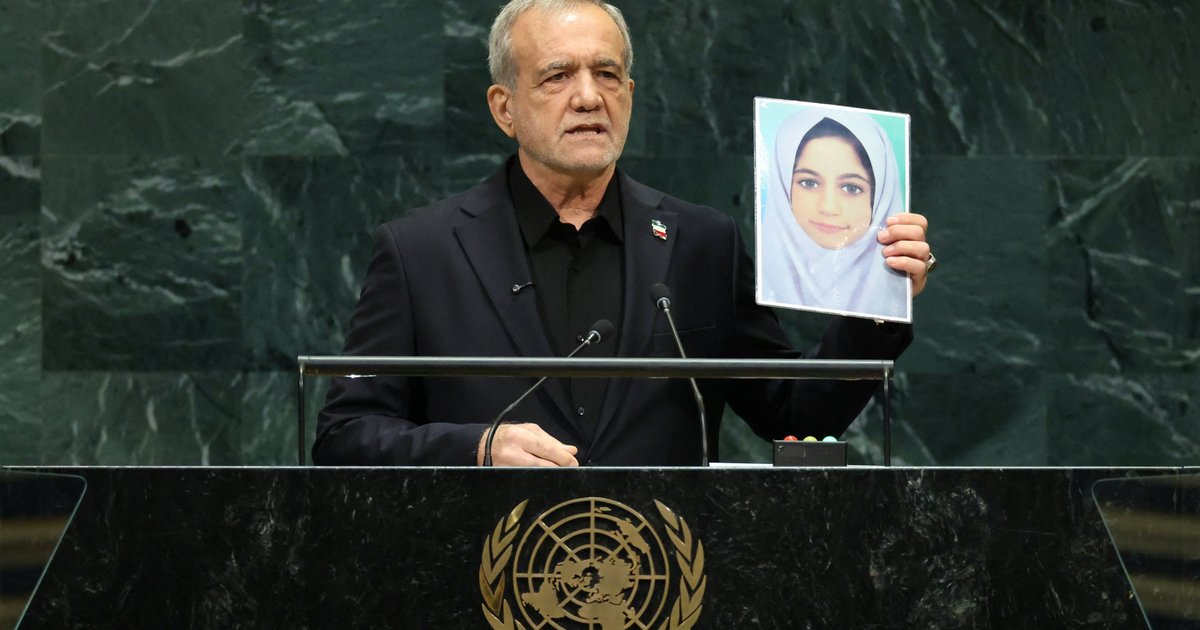
Iranian President Masoud Pezeshkian delivered a defiant wartime address to the United Nations General Assembly on Wednesday, accusing US President Donald Trump of displaying a "bullying mentality" while reiterating that Tehran would never submit to pressure . The speech marked Pezeshkian's first public appearance at the world body since the all-out war with the United States and Israel began seven months ago, following Israeli and US attacks on Iran in late February . The US delegation walked out at the start of his remarks, according to reports . In his address, Pezeshkian also accused Washington of "terrorism" for assassinating former Supreme Leader Ayatollah Ali Khamenei at the conflict's outset, holding up photos of civilian casualties including schoolchildren killed in an attack on a primary school in Minab that claimed more than 175 lives .
Key Points
- Iranian President Masoud Pezeshkian told the 193-member UN General Assembly that Trump's threats reflect a "bullying mentality" and warned that pressure would only harden Iran's resolve
- The US delegation walked out at the start of Pezeshkian's speech at UN headquarters in New York on September 23, 2026
- A missile strike on a primary school in Minab on February 28 killed more than 175 children and teachers during the opening hours of the conflict
- Iran and the United States have held their first known indirect talks since a ceasefire collapsed in July, though both sides remain far apart
- Tehran's peace proposals prioritize lifting the US naval blockade on Iranian ports and reopening the Strait of Hormuz, a waterway that previously carried roughly one-fifth of global oil and LNG shipments
Why It Matters
The confrontation at the United Nations underscores the deepening diplomatic deadlock between Washington and Tehran, with both leaders presenting uncompromising positions while acknowledging ongoing backchannel negotiations . The Strait of Hormuz, which Iran has choked off since the conflict began, has caused global energy prices to spike, making any resolution to the Hormuz dispute critical for world markets . Hong Kong, as a major oil transit hub and financial centre, could face ripple effects from sustained energy price volatility and potential disruptions to global trade routes if the conflict continues to escalate .
The confrontation at the United Nations underscores the deepening diplomatic deadlock between Washington and Tehran, with both leaders presenting uncompromising positions while acknowledging ongoing backchannel negotiations . The Strait of Hormuz, which Iran has choked off since the conflict began, has caused global energy prices to spike, making any resolution to the Hormuz dispute critical for world markets . Hong Kong, as a major oil transit hub and financial centre, could face ripple effects from sustained energy price volatility and potential disruptions to global trade routes if the conflict continues to escalate .