HKU Develops 3D Integrated Power Delivery Technology for AI Chips
AM730 · 1 SOURCESabout 1 hour ago6 MIN
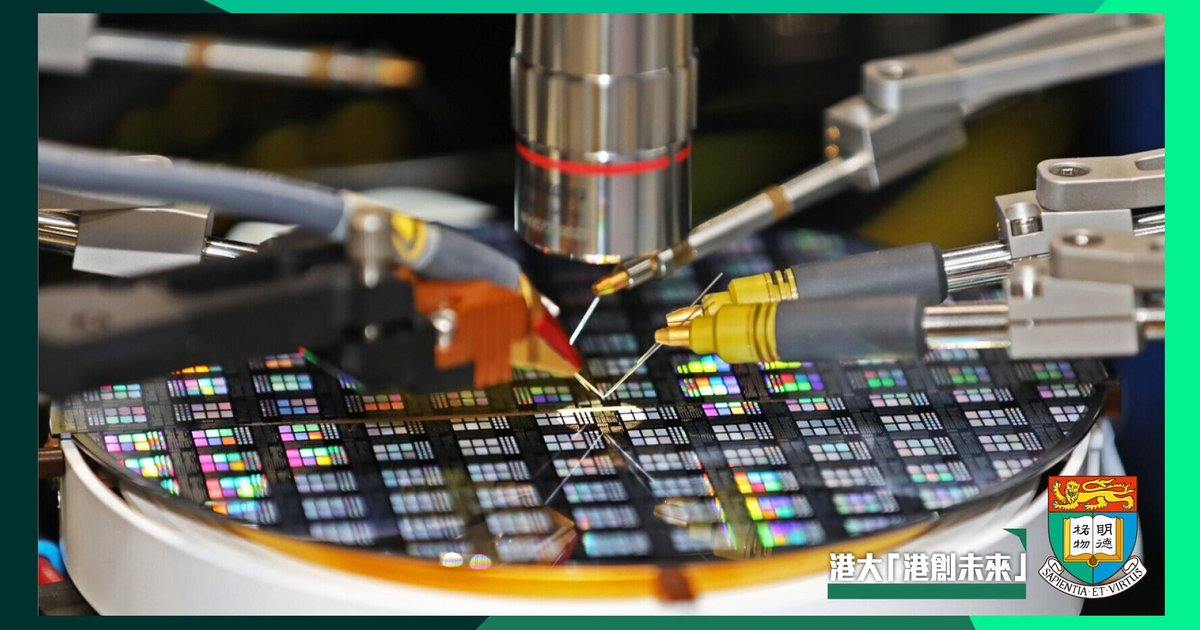
Summary
A research team at the University of Hong Kong (HKU), led by Professor Wang Han, has developed a groundbreaking 3D integrated power delivery technology for next-generation AI computing chips, potentially transforming energy efficiency in data centers worldwide. The innovation aims to boost power delivery efficiency from the current 75% to 95%, reducing power loss by more than tenfold. Funded by the Research Grants Council's Theme-based Research Scheme (16th round), the project addresses the growing energy demands of AI infrastructure as data centers are projected to account for 8% of Hong Kong's total electricity consumption by 2030.
Key Points
- HKU Professor Wang Han (汪涵), Director of the Center for Advanced Semiconductors and Integrated Circuits, leads the research team developing the 3D integrated power delivery technology
- The technology utilizes gallium nitride (GaN) power semiconductors combined with 3D integration architecture, miniaturized passive components, and advanced power electronics
- Current data center power delivery efficiency stands at 75%, with traditional planar lateral designs requiring power transmission paths of 20 to 30 centimeters
- The new 3D vertical architecture reduces transmission distance to centimeter or millimeter levels, targeting 95% efficiency and reducing power loss by over ten times
- Data centers are expected to consume approximately 8% of Hong Kong's total electricity by 2030 as AI applications become more widespread
- The research also develops silicon carbide (SiC) interposer with integrated microfluidic cooling technology to manage heat from high-performance AI chips
- If widely applied globally, the technology could save electricity equivalent to approximately 30 nuclear power plants annually
Why It Matters
The development addresses one of the most critical bottlenecks in AI infrastructure expansion—energy consumption. As Hong Kong positions itself as a hub for AI and microelectronics innovation, particularly in the Northern Metropolis, this breakthrough could attract international semiconductor companies for collaboration and accelerate technology transfer to industrial applications, positioning the city at the forefront of green computing solutions .
The development addresses one of the most critical bottlenecks in AI infrastructure expansion—energy consumption. As Hong Kong positions itself as a hub for AI and microelectronics innovation, particularly in the Northern Metropolis, this breakthrough could attract international semiconductor companies for collaboration and accelerate technology transfer to industrial applications, positioning the city at the forefront of green computing solutions .