MTR-CLP Low-Carbon Rail Project Wins Top International Energy Award
Bastillepost · 2 SOURCES1 day ago2 MIN
Summary
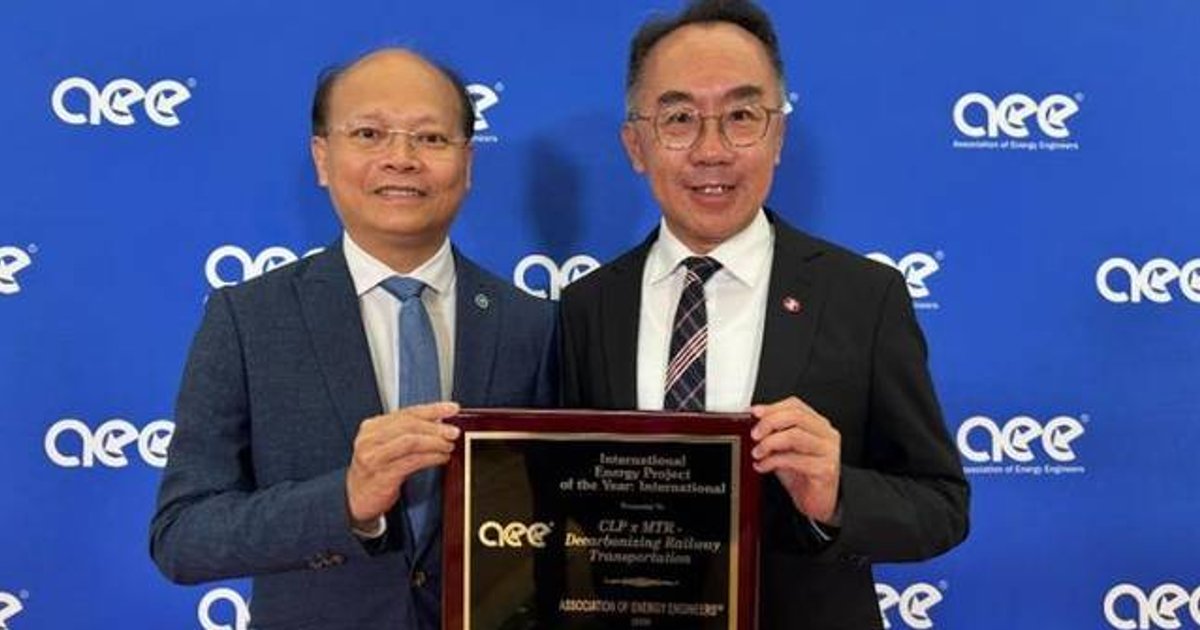
MTR Corporation and CLP Holdings have been honored with the International Energy Project of the Year Award by the American Society of Energy Engineers for their joint low-carbon rail initiative, marking the highest recognition from this professional body . The "CLP x MTR — Low-Carbon Rail Transport System" project implements multiple carbon reduction measures that collectively save nearly 60 million kilowatt-hours of electricity annually while cutting approximately 22,000 tonnes of CO2 emissions per year . The collaboration demonstrates how Hong Kong's rail infrastructure and power sectors can work together to achieve sustainability goals, with both companies committing to further expand their partnership on new railway projects and renewable energy applications .
Key Points
- The award from the American Society of Energy Engineers is one of the highest honors offered by this nonprofit professional organization with over 18,000 members from more than 100 countries
- Annual electricity savings of nearly 60 million kWh are equivalent to the power consumption of approximately 14,000 local households
- Carbon reduction of about 22,000 tonnes equals the annual carbon absorption of over 950,000 trees
- Key measures include upgraded air conditioning systems, LED station lighting, train regenerative braking technology, electric bus fleet deployment, and expanded solar power generation
- CLP supports the initiative through energy audits, the "Green Building Fund" subsidies, and the "Peak Electricity Management Plan" incentives
- MTR's energy consumption represents only 11% of the entire public transport sector, positioning the company as a low-carbon operator
- MTR aims to meet Science Based Targets initiative-approved carbon reduction goals by 2030 and achieve carbon neutrality by 2050
Why It Matters
The award demonstrates that Hong Kong's rail system, responsible for just 11% of public transport energy consumption, can serve as a model for urban transit decarbonization through proven technologies and cross-sector collaboration . As both companies plan to extend their partnership to new railway projects and wider renewable energy applications, this collaboration could accelerate Hong Kong's broader journey toward its 2050 carbon neutrality target .
The award demonstrates that Hong Kong's rail system, responsible for just 11% of public transport energy consumption, can serve as a model for urban transit decarbonization through proven technologies and cross-sector collaboration . As both companies plan to extend their partnership to new railway projects and wider renewable energy applications, this collaboration could accelerate Hong Kong's broader journey toward its 2050 carbon neutrality target .