HK Airport Deploys World's First Automatic Runway Painting Robots
Thestandard · 4 SOURCESabout 14 hours ago2 MIN
Summary
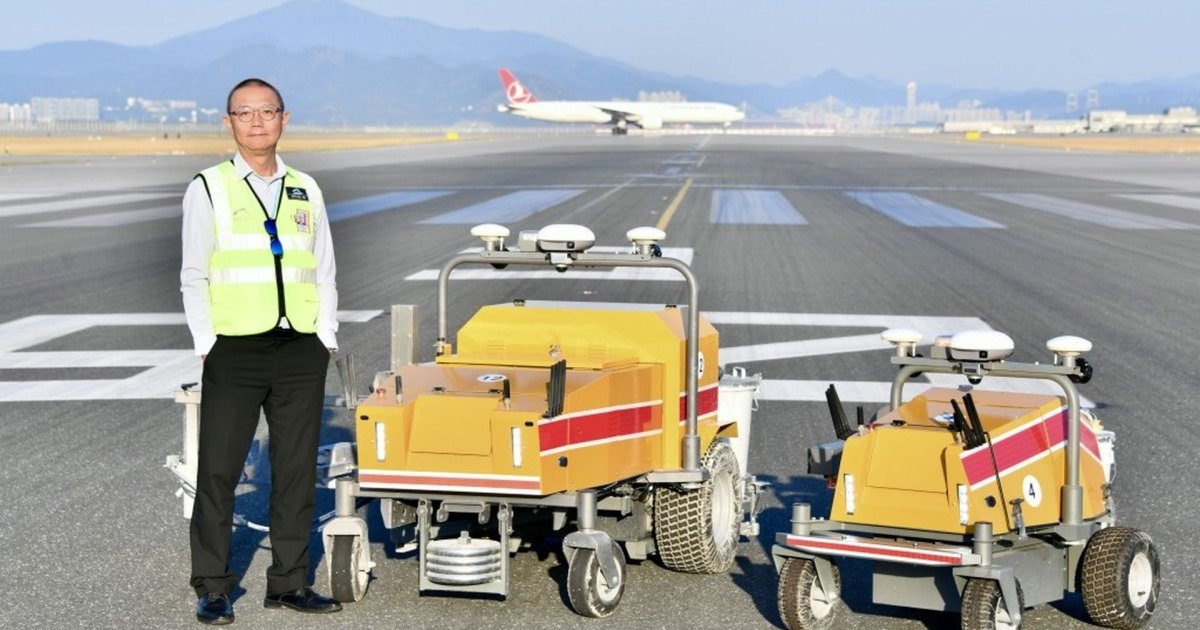
Hong Kong International Airport has emerged as a global pioneer by deploying automatic painting robots to repaint runway markings that guide aircraft during takeoff and landing. The Airport Authority Hong Kong officially launched the two robotic systems in September, marking the first time such technology has been applied at any airport worldwide . The initiative addresses longstanding challenges in runway maintenance, including labour shortages and the demanding nature of overnight outdoor work .
Key Points
- HKIA operates three runways, each measuring 3,800 metres, with various markings including thresholds, aiming points, touchdown zones and centre lines
- The airport partnered with Shenzhen technology firm FJ Dynamics to adapt sports-field line-marking technology for runway use
- The robots utilize signals from four global navigation satellite systems—GPS, China's BeiDou, the EU's Galileo and Russia's GLONASS—with real-time kinematic positioning achieving 1-2 centimetre accuracy
- Previously, more than 20 workers were required for overnight outdoor painting operations, facing harsh weather conditions and skilled staff shortages
- The Airport Authority plans to expand its robot fleet from the current number to six units and will maintain a hybrid model combining robotic and human workers
Why It Matters
The deployment positions Hong Kong at the forefront of airport automation technology, with the Airport Authority believing the approach will become a new industry standard for civil aviation . Beyond operational efficiency, the technology addresses critical workforce challenges in the aviation sector while maintaining the precision essential for flight safety, as runway markings must comply with International Civil Aviation Organization standards .
The deployment positions Hong Kong at the forefront of airport automation technology, with the Airport Authority believing the approach will become a new industry standard for civil aviation . Beyond operational efficiency, the technology addresses critical workforce challenges in the aviation sector while maintaining the precision essential for flight safety, as runway markings must comply with International Civil Aviation Organization standards .