CUHK Pioneers 3D Bone Scan to Track Rheumatoid Arthritis Progression
RTHK · 2 SOURCESabout 2 hours ago2 MIN
Summary
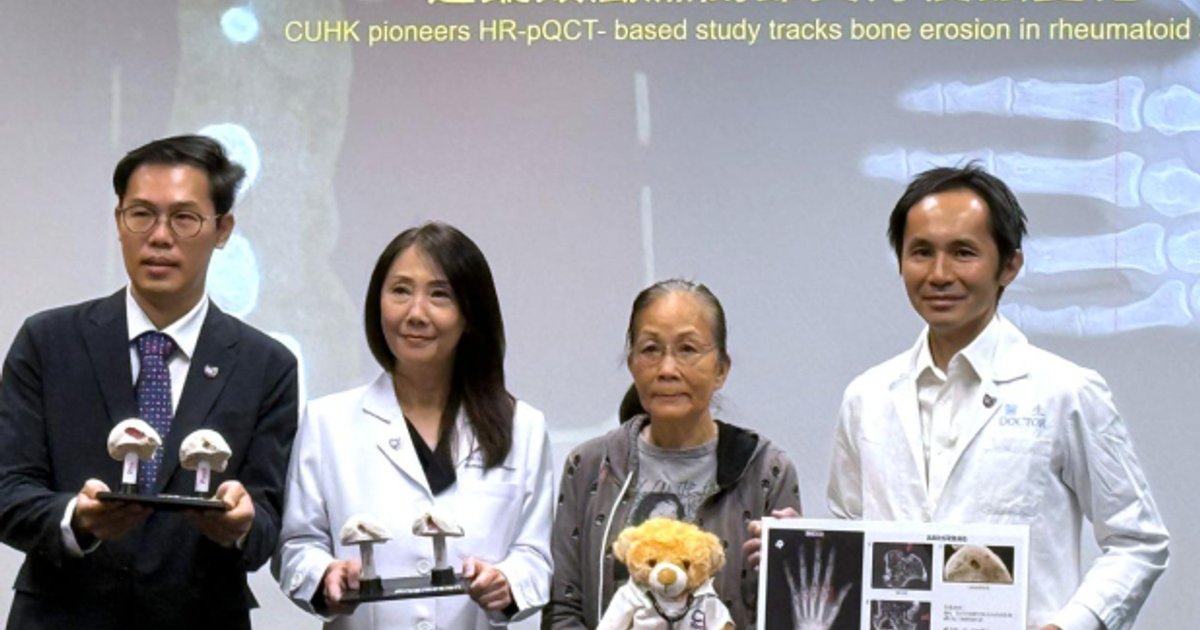
The CUHK Faculty of Medicine has pioneered the use of high-resolution peripheral quantitative computed tomography (HR-pQCT) to track bone erosion changes in rheumatoid arthritis patients. An eight-year longitudinal study involving 247 patients demonstrates this technology can accurately differentiate true inflammatory bone lesions from non-inflammatory conditions, while confirming that early implementation of treat-to-target therapy may reverse or stabilize severe bone erosion in newly diagnosed patients .
Key Points
- HR-pQCT technology provides three-dimensional imaging to analyze bone erosion patterns in 247 rheumatoid arthritis patients over eight years
- The scan accurately excludes small bone erosion caused by non-inflammatory conditions, distinguishing genuine rheumatoid arthritis-related lesions
- Rheumatoid arthritis affects 30,000 people in Hong Kong, causing the immune system to attack joint synovium and destroy cartilage and bone
- The first two years after disease onset represent the critical treatment window before irreversible joint deformation occurs
- Patients with advanced bone erosion who received early treat-to-target therapy showed stabilized or even reversed bone damage
Why It Matters
The research, published in the Annals of the Rheumatic Diseases, establishes HR-pQCT as a more sensitive diagnostic tool than conventional X-rays or CT scans for early bone erosion detection . Professor Tam Lai-shan's team plans to integrate HR-pQCT into early rheumatoid arthritis assessment protocols, potentially enabling identification of high-risk patients before clinical symptoms appear .
The research, published in the Annals of the Rheumatic Diseases, establishes HR-pQCT as a more sensitive diagnostic tool than conventional X-rays or CT scans for early bone erosion detection . Professor Tam Lai-shan's team plans to integrate HR-pQCT into early rheumatoid arthritis assessment protocols, potentially enabling identification of high-risk patients before clinical symptoms appear .