US Faces 'Suez Moment' as Iran Sanctions Strain Treasury Secretary Bessent
HK01 · 1 SOURCESabout 2 hours ago2 MIN
Summary
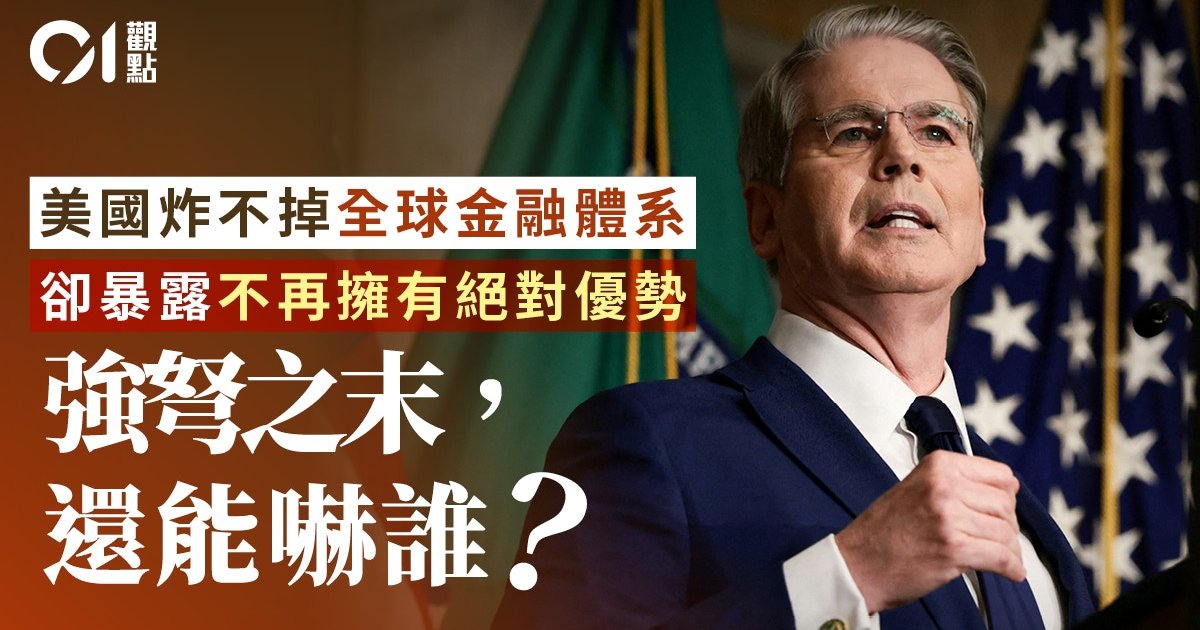
The US Treasury Department announced on August 24 sanctions against two companies—Hong Kong-based Sweet Ocean Industrial Limited and Shenzhen Huamei—for their roles in supporting Iran's procurement of sensitive materials and logistics for missile and nuclear programs . Treasury Secretary Scott Bessent acknowledged the dilemma of secondary sanctions against China-Iran trade, asking rhetorically, "Why would I blow up the global financial system?" . China Foreign Ministry on August 25 rejected unilateral sanctions lacking UN Security Council authorization . The sanctions coincide with US national debt exceeding $40 trillion and long-term bond yields near 20-year highs, raising questions about America's ability to maintain financial hegemony . Oman has signed a maritime agreement with Iran allowing commercial vessels to transit Iranian waters, defying US pressure .
Key Points
- Sweet Ocean Industrial Limited, headquartered in Hong Kong, was sanctioned for facilitating Iran's acquisition of laser optical equipment and other sensitive resources .
- Shenzhen Huamei was targeted for ties to BRE Line, an Iranian logistics company supporting missile and nuclear development programs .
- US national debt has surpassed $40 trillion, with long-term interest rates climbing to levels not seen in nearly two decades .
- Treasury has begun repurchasing long-term bonds to maintain market liquidity and prevent borrowing costs from spiraling further .
- Oman and Iran reached a preliminary accord enabling commercial shipping through Iranian territorial waters, with permanent route negotiations expected within 30-60 days .
Why It Matters
The sanctions highlight a fundamental contradiction in US foreign policy: the Treasury must simultaneously fund escalating defense commitments while managing debt levels that constrain operational flexibility . As digital currencies and alternative payment systems reduce switching costs for cross-border transactions, the dollar's dominance increasingly depends on political trust rather than technical necessity . If secondary sanctions fail to compel compliance, the US risks experiencing its own Suez Moment—the point when coercive financial tools cease to deliver results while exposing underlying hegemonic limitations .
The sanctions highlight a fundamental contradiction in US foreign policy: the Treasury must simultaneously fund escalating defense commitments while managing debt levels that constrain operational flexibility . As digital currencies and alternative payment systems reduce switching costs for cross-border transactions, the dollar's dominance increasingly depends on political trust rather than technical necessity . If secondary sanctions fail to compel compliance, the US risks experiencing its own Suez Moment—the point when coercive financial tools cease to deliver results while exposing underlying hegemonic limitations .