MTR Escalator Etiquette Sparks Debate as Mainland Visitor Questions Right-Side-Only Culture
SingTao · 1 SOURCESabout 3 hours ago2 MIN
Summary
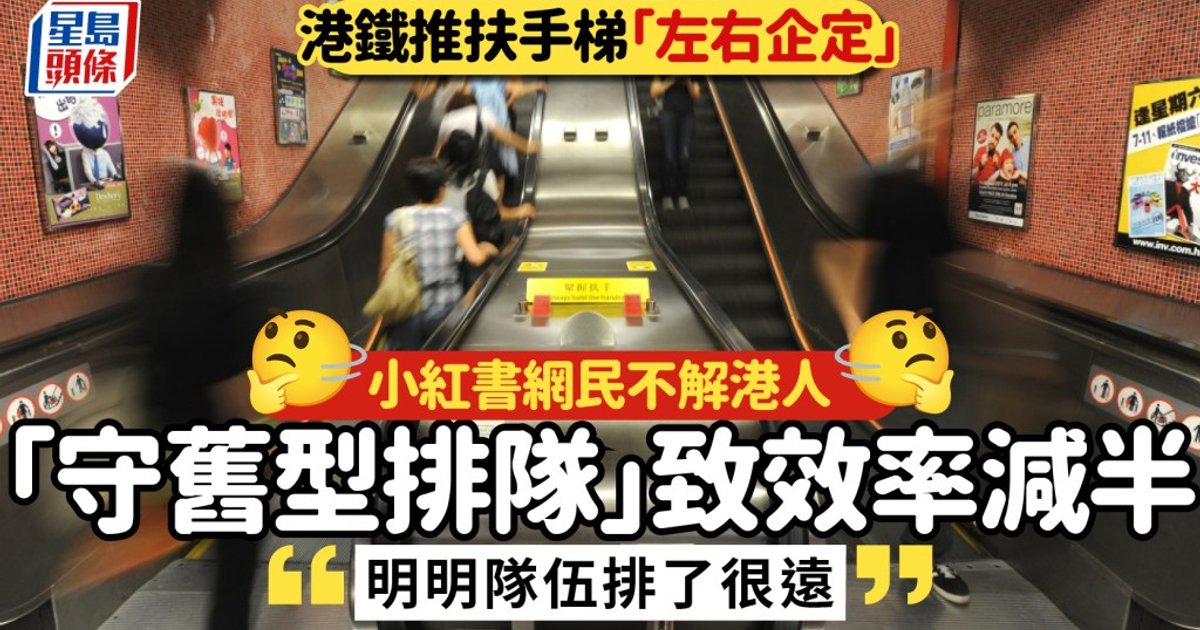
A mainland Chinese visitor has ignited a heated online debate about Hong Kong's escalator etiquette after posting on Xiaohongshu (Little Red Book) questioning why most people insist on standing only on the right side of MTR escalators. Despite persistent MTR broadcasts urging passengers to stand firm on both sides, the visitor observed that the left lane consistently remains empty while a large crowd gathers at the bottom of the escalator. The post quickly attracted responses from both mainland and Hong Kong netizens, with locals defending the practice as an essential fast lane for hurried commuters .
Key Points
- A mainland traveler posted on Xiaohongshu on September 17, 2026, questioning why Hong Kong escalator users stand only on the right side despite MTR announcements
- The poster included photos showing escalator right side packed with passengers while the left side remained completely empty, with people squeezing together below
- Hong Kong netizens defended the practice, stating that the left lane serves as an unofficial fast lane for commuters in urgent situations
- MTR has been actively promoting safety messages including hold the handrail, stand firm on both sides, safety first
- The visitor expressed concern that single-side weight concentration could potentially cause mechanical failure over time
Why It Matters
This debate highlights the clash between efficiency-focused mainland perspectives and Hong Kong's deeply ingrained commuter culture. The escalator standing-on-the-right practice represents more than just a transportation habit—it reflects Hong Kong's unique social etiquette developed in dense urban environments where accommodating rushed workers has become an unspoken civic courtesy . As MTR continues to balance safety promotion with respect for local customs, the discussion underscores broader questions about adapting traditional practices to changing population dynamics and visitor expectations.
This debate highlights the clash between efficiency-focused mainland perspectives and Hong Kong's deeply ingrained commuter culture. The escalator standing-on-the-right practice represents more than just a transportation habit—it reflects Hong Kong's unique social etiquette developed in dense urban environments where accommodating rushed workers has become an unspoken civic courtesy . As MTR continues to balance safety promotion with respect for local customs, the discussion underscores broader questions about adapting traditional practices to changing population dynamics and visitor expectations.