CUHK Study Reveals Elevated Health Risks in Children of PMOS Patients
SingTao · 2 SOURCESabout 2 hours ago2 MIN
Summary
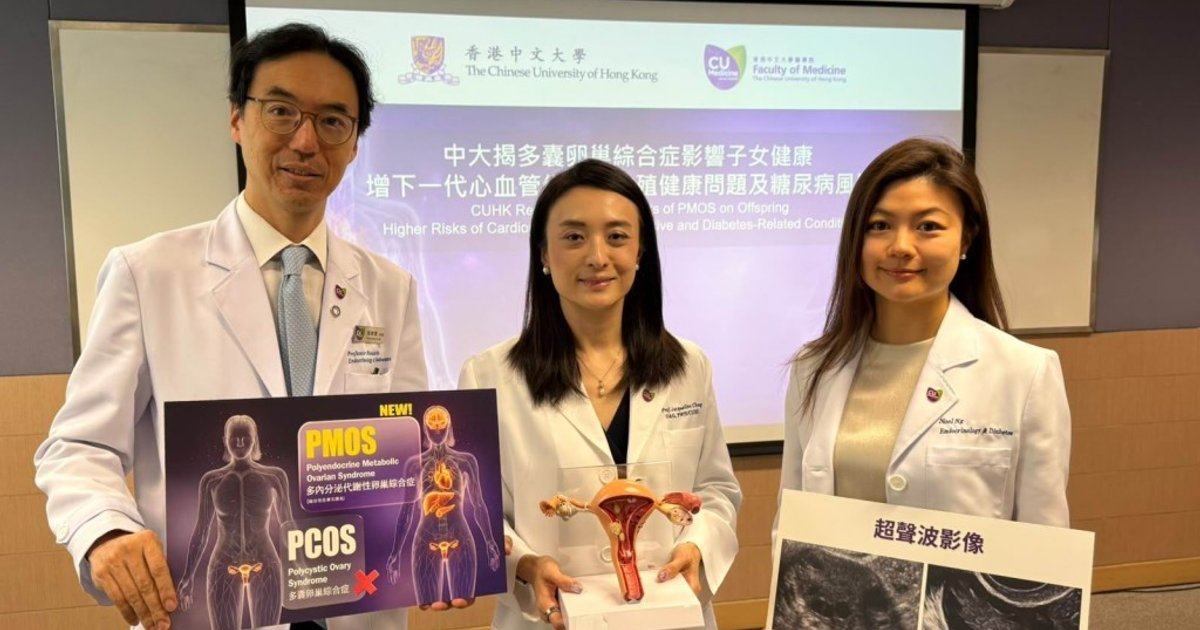
CUHK's Faculty of Medicine released research findings revealing that Polyendocrine Metabolic Ovarian Syndrome (PMOS), recently renamed from Polycystic Ovary Syndrome (PCOS), poses significant health risks not only to patients but also to their offspring. A four-year study tracking 71 PMOS patients and their 86 children aged 15-25 discovered alarming rates of metabolic and reproductive health issues among the younger generation.
Key Points
- PMOS affects approximately 1 in 8 women of reproductive age globally, with 24.9% of patients developing metabolic syndrome and three times higher risk of Type 2 diabetes
- The study, conducted between 2020 and 2024, compared 71 PMOS patients and their 86 children with 506 control families, finding that patients' daughters showed a 3.6-fold higher rate of menstrual irregularities (58.3% vs control)
- Daughters of PMOS patients demonstrated an 11% PMOS diagnosis rate compared to 0% in the control group, with androgen levels nearly twice as high as controls
- Sons of PMOS patients exhibited hypertension and metabolic syndrome rates nearly 4 times higher than the control group, along with lower fasting insulin function indicators
- Researchers recommend that individuals with obesity, diabetes, hypertension, or family history of PMOS should undergo regular screening and health assessments
- 56 global academic, clinical, and patient organizations jointly announced in The Lancet the renaming from PCOS to PMOS to better reflect the condition's systemic nature; updated international guidelines are expected by 2028
Why It Matters
The research demonstrates that PMOS exerts a generational impact, with patients' children already showing early signs of cardiovascular-metabolic and reproductive health issues upon entering adulthood. With children's waist circumference averaging 3.67cm larger than controls and insulin sensitivity declining faster, these findings underscore the urgent need for early intervention strategies targeting at-risk youth in Hong Kong to prevent chronic diseases like diabetes and cardiovascular disorders from an early age .
The research demonstrates that PMOS exerts a generational impact, with patients' children already showing early signs of cardiovascular-metabolic and reproductive health issues upon entering adulthood. With children's waist circumference averaging 3.67cm larger than controls and insulin sensitivity declining faster, these findings underscore the urgent need for early intervention strategies targeting at-risk youth in Hong Kong to prevent chronic diseases like diabetes and cardiovascular disorders from an early age .