CUHK Study Reshapes Understanding of Mercury's Geological Evolution
Thestandard · 1 SOURCES1 day ago2 MIN
Summary
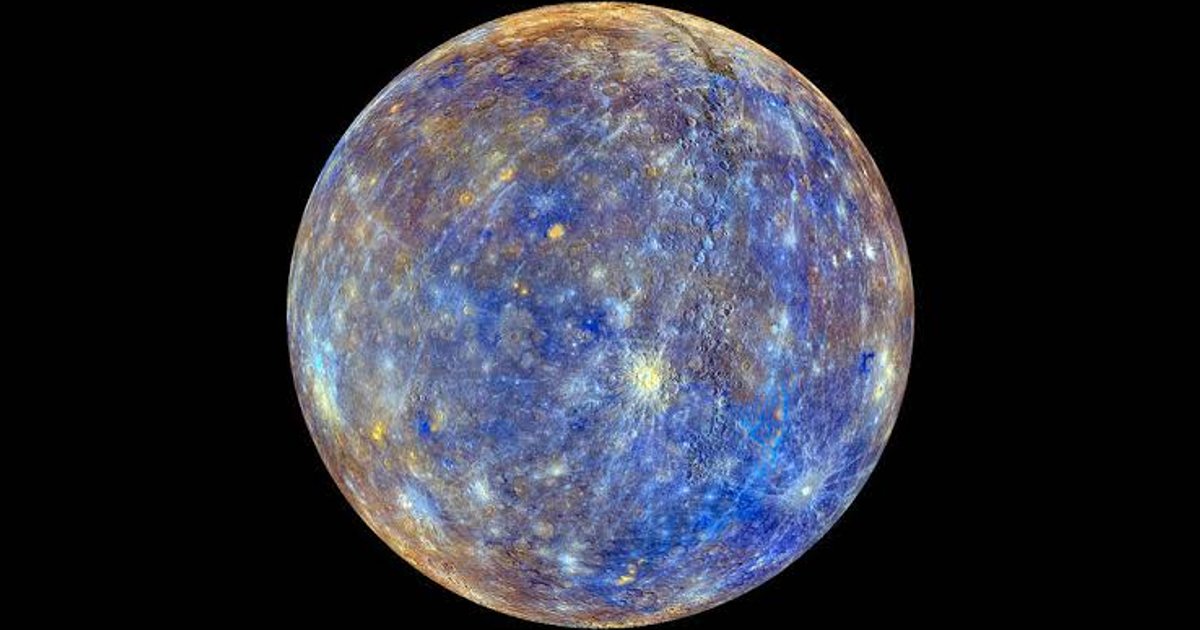
The Chinese University of Hong Kong has spearheaded groundbreaking research that overturns decades of scientific consensus about Mercury's geological development. A study published in the prestigious journal Nature Communications demonstrates that Mercury's Northern Smooth Plains—covering approximately seven percent of the planet's surface—exhibit the most extensive contractional deformation on Mercury, contradicting established theories about when the planet's shrinking occurred. Rather than being primarily caused by cooling and contraction of the planet's interior, the deformation appears linked to a plume of hot, buoyant rock rising from the deep mantle, which pushed up a central bulge known as the Northern Rise while compressing the surrounding terrain.
Key Points
- The Northern Smooth Plains, representing roughly seven percent of Mercury's surface, display the heaviest wrinkle patterns on the planet, despite being geologically young .
- Scientists previously believed most of Mercury's contraction occurred before the Northern Smooth Plains formed, yet the new findings reveal the opposite to be true .
- The deformation traces to a plume of hot, buoyant rock rising from Mercury's deep mantle, which created the Northern Rise and compressed the surrounding plains .
- Carnegie Rupes, a cliff nearly 2 km tall, cuts through a crater measuring 105 km in diameter, providing clear evidence of ongoing geological activity .
- Residual stresses and slopes from the cooled rock mass continued fracturing Mercury's surface long after initial formation, explaining why some surface features appear remarkably fresh .
Why It Matters
The findings fundamentally challenge how scientists understand planetary evolution, suggesting that the interior and surface of rocky planets like Mercury remain dynamically connected far longer than previous models indicated. This research offers a new analytical framework that could help explain tectonic features not only on Mercury but potentially on other terrestrial planets and moons throughout the solar system, reshaping fundamental assumptions about planetary geology .
The findings fundamentally challenge how scientists understand planetary evolution, suggesting that the interior and surface of rocky planets like Mercury remain dynamically connected far longer than previous models indicated. This research offers a new analytical framework that could help explain tectonic features not only on Mercury but potentially on other terrestrial planets and moons throughout the solar system, reshaping fundamental assumptions about planetary geology .