MTR Fare Saver Review Sparks Concerns Over Digital Divide and Grassroots Impact
HK01 · 1 SOURCESabout 4 hours ago2 MIN
Summary
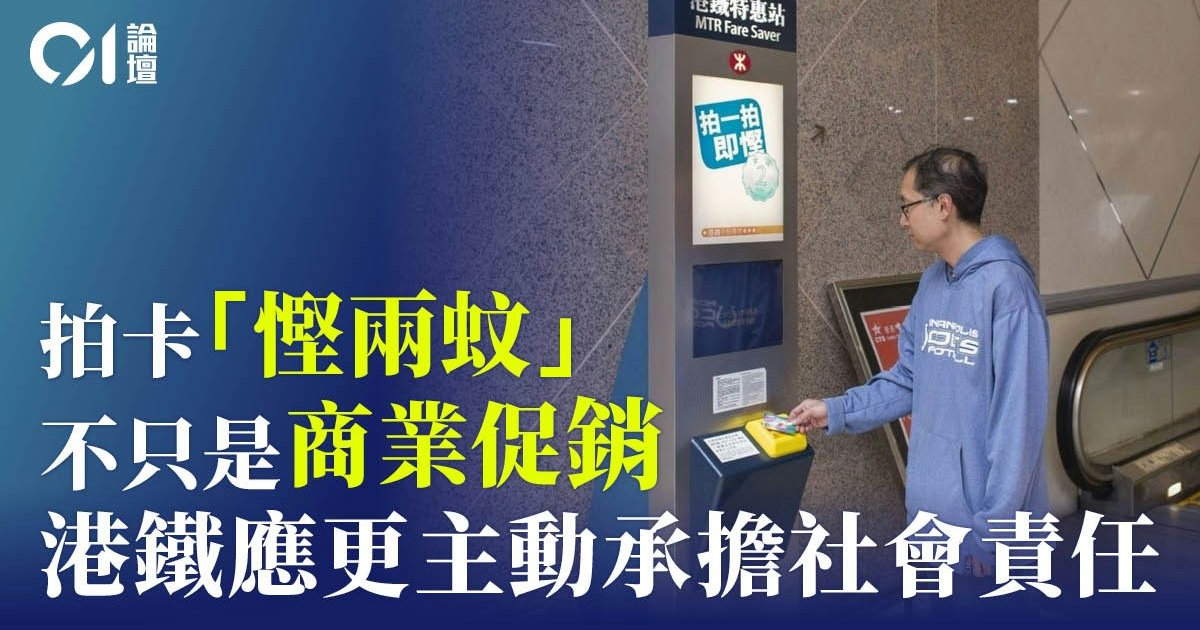
MTR Corporation has ignited public debate by announcing it is reviewing the sustainability of its Fare Saver programme, which has provided direct fare discounts since 2002 for passengers living within 500 metres of stations. The company's tone has shifted significantly—from promoting a "win-win" scenario in 2016 to a more cautious approach in recent years. Critics argue that MTR, as a transport operator holding a dominant position in Hong Kong's rail network and majority-owned by the government, should prioritise its corporate social responsibility and maintain accessible discount options for grassroots passengers.
Key Points
- MTR first signalled a review of the Fare Saver programme in its response to a Tai Po District Council proposal to add new locations, marking the first public acknowledgement of such an internal assessment
- The Fare Saver programme was launched in 2002 by the former MTR Corporation to capture the "last mile" of commuters living 500 metres or more from stations, using the transport economics concept of "Generalised Cost" to incentivise walking to rail networks
- In 2016, MTR told Islands District Council (Document IDC 46/2016) that Fare Savers created a "win-win" situation by offering promotions while expanding the passenger base
- By 2024, MTR told Sai Kung District Council (Document SKDC(TTC) 47/24) that with Hong Kong's maturing transport infrastructure, the utility of Fare Savers has "fundamentally changed," signalling the review had already begun at least two years earlier
- Transport economists argue that Fare Savers reduce the "psychological penalty" of walking to stations by offering direct fare discounts, making rail travel more attractive compared to buses and minibuses serving the same areas
Why It Matters
The potential phasing out of Fare Savers in favour of app-based promotions could exacerbate social inequality in Hong Kong. Elderly passengers and grassroots communities who depend on straightforward tap-and-go discounts may find themselves excluded from future savings, creating a "digital divide" in public transport access. As MTR operates Hong Kong's only heavy rail network and is majority-owned by the government, the corporation carries an obligation to ensure its pricing policies do not disproportionately burden vulnerable segments of society during periods of economic recovery.
The potential phasing out of Fare Savers in favour of app-based promotions could exacerbate social inequality in Hong Kong. Elderly passengers and grassroots communities who depend on straightforward tap-and-go discounts may find themselves excluded from future savings, creating a "digital divide" in public transport access. As MTR operates Hong Kong's only heavy rail network and is majority-owned by the government, the corporation carries an obligation to ensure its pricing policies do not disproportionately burden vulnerable segments of society during periods of economic recovery.