China Rebukes Japan Over Call to Delete UN 'Enemy State Clause' at UN General Assembly
On.cc · 2 SOURCESabout 3 hours ago2 MIN
Summary
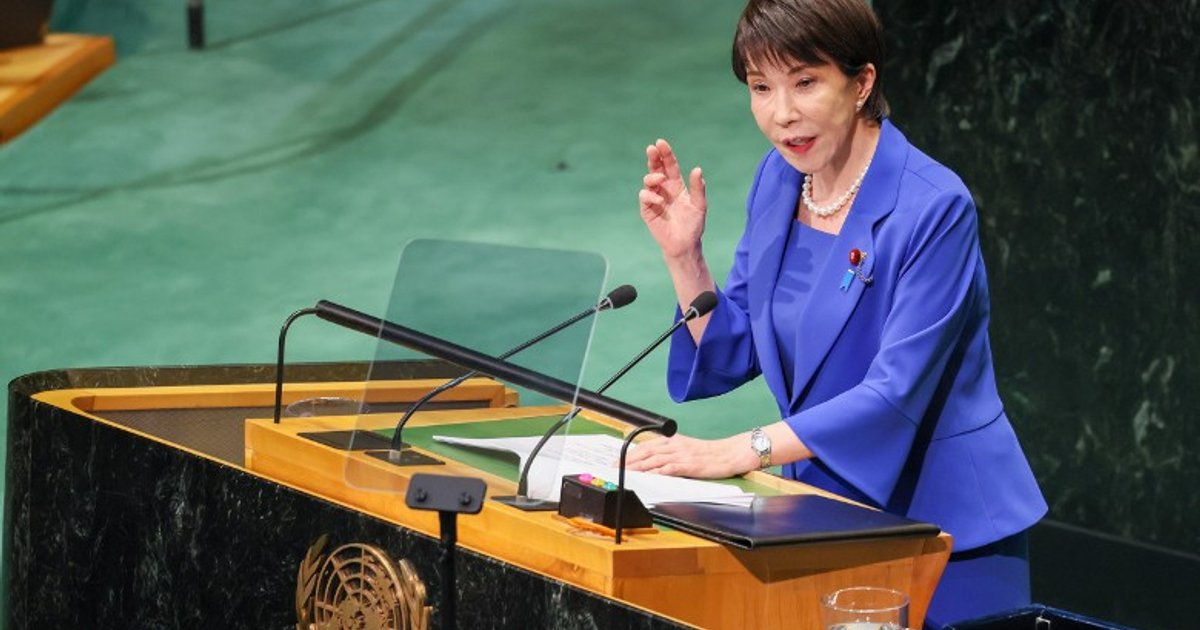
Chinese Foreign Ministry spokesperson Guo Jiakun delivered a sharp rebuke on Wednesday to Japanese Prime Minister Takada Sanaye's address at the UN General Assembly, in which she called for deleting the "enemy state clause" from the UN Charter . Guo stated that the provision, designed to prevent the resurgence of fascism and militarism, remains critically relevant today and provides an essential institutional safeguard for maintaining the post-war international order . The spokesperson emphasized that the international community watches what Japan does, not what it says . Guo accused Japan's current administration of denying its history of aggression, beautifying war crimes, and pursuing accelerated remilitarization . He pointed out that Japan is attempting to abandon the "three non-nuclear principles," amend its peace constitution, and has become a destabilizing factor in regional peace and stability .
Key Points
- Takada Sanaye spoke at the UN General Assembly claiming Japan adheres to an exclusively defensive defense policy and contributes to international peace and prosperity .
- Guo Jiakun (Guo Jiakun) responded on Wednesday (September 23, 2026) that the enemy state clause provides institutional protection for the post-war order and retains important practical significance today .
- This year marks the 81st anniversary of the UN's founding and the 80th anniversary of the Tokyo Trials, underscoring the historical context of Japan's obligations .
- Guo accused Japan of attempting to abandon the "three non-nuclear principles" and seeking to revise its post-war peace constitution .
- Beijing urged Tokyo to take actual steps to earn trust from Asian neighbors and the international community through genuine historical reflection .
Why It Matters
The dispute strikes at the heart of the post-World War II international legal framework, which was specifically designed to prevent the return of fascism and militarism . Japan's push to remove the clause, coupled with its ongoing military modernization and constitutional revision efforts, signals a potential shift in regional security dynamics that directly affects all Asia-Pacific nations . The timing—coinciding with the 80th anniversary of the Tokyo Trials—underscores ongoing tensions over historical accountability and the future of the liberal international order.
The dispute strikes at the heart of the post-World War II international legal framework, which was specifically designed to prevent the return of fascism and militarism . Japan's push to remove the clause, coupled with its ongoing military modernization and constitutional revision efforts, signals a potential shift in regional security dynamics that directly affects all Asia-Pacific nations . The timing—coinciding with the 80th anniversary of the Tokyo Trials—underscores ongoing tensions over historical accountability and the future of the liberal international order.