Starbucks HK Implements 90-Minute Dine-In Limit to Tackle Seat-Hogging
SingTao · 1 SOURCESabout 3 hours ago2 MIN
Summary
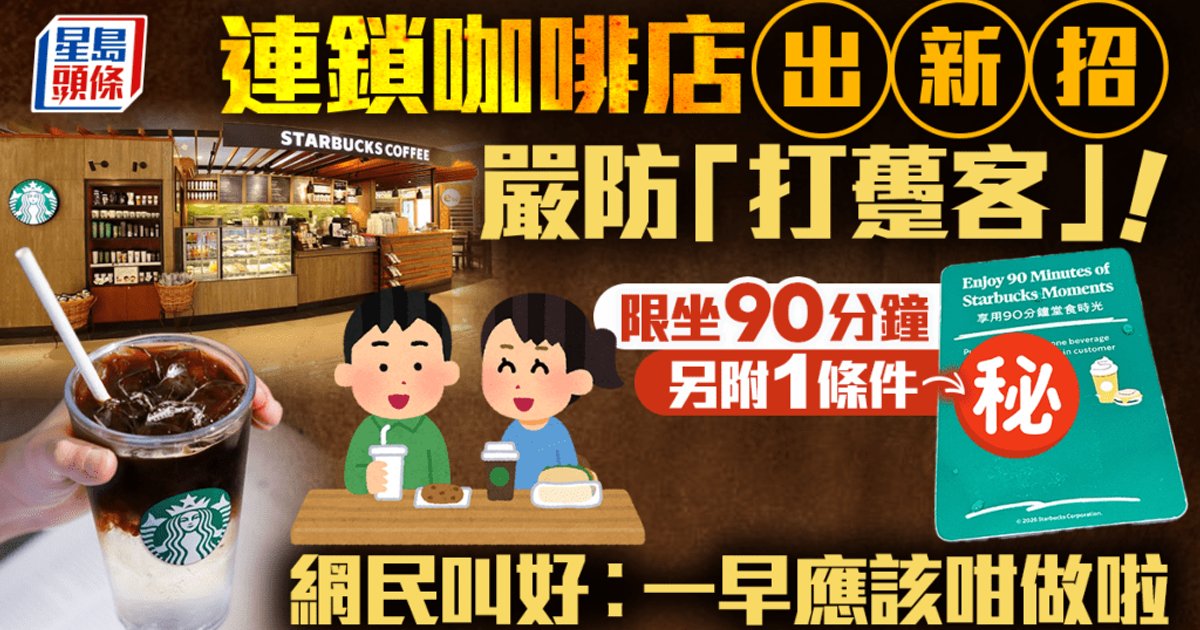
Starbucks Hong Kong has implemented a 90-minute time limit for dine-in customers at select locations, in a bid to address the widespread issue of "seat-hoggers" who occupy tables for extended periods without making purchases. The new policy, observed by netizens on social media platform Threads, requires each dine-in customer to purchase at least one drink or food item . The company has responded to public inquiries, stating its commitment to providing a comfortable in-store environment while acknowledging that individual stores may adapt their approach based on local conditions .
Key Points
- A Threads user posted a photo of a Starbucks store's new seating rule, noting it took effect "from 11:00" with the comment "This should have been done a long time ago"
- The store provides dine-in customers with a "time limit card" indicating a 90-minute window for in-store seating
- Each dine-in customer must purchase a minimum of one beverage or food item to occupy a seat under the new policy
- Some netizens suggested the policy could be strengthened by having staff guide customers to seats upon entry
- Critics pointed out a contradiction: Gold-tier loyalty members receive 24-hour WiFi access yet are still subject to the 90-minute seating restriction
- Similar time-limit practices have existed in Japan at Starbucks locations in high-traffic areas such as train stations and busy commercial districts
- Starbucks told Sing Tao that staff are trained to assist customers with seating and to introduce menu options when needed
- The company stated it will continue reviewing its operations to improve the in-store customer experience
Why It Matters
This policy reflects a broader trend among Hong Kong food and beverage operators seeking to balance customer comfort with commercial viability amid intense competition for dining space. If successful, similar measures could spread to other chains, potentially reshaping the territory's café culture and setting new standards for seat management in public dining establishments .
This policy reflects a broader trend among Hong Kong food and beverage operators seeking to balance customer comfort with commercial viability amid intense competition for dining space. If successful, similar measures could spread to other chains, potentially reshaping the territory's café culture and setting new standards for seat management in public dining establishments .