Record Heat Sparks Surge in Electricity Use; Expert Warns Overnight Fan Use Risks Short Circuit
SingTao · 2 SOURCESabout 2 hours ago2 MIN
Summary
Hong Kong sizzled under record-breaking heat as temperatures hit 36.9 degrees Celsius on July 9, the highest ever documented. The extreme weather, attributed to the outer descending airflow of tropical cyclone Dolphin, pushed residents to heavily rely on electrical cooling devices, sending household electricity consumption soaring. Social media platforms buzzed with users sharing shockingly high utility bills, while authorities warned of fire hazards associated with prolonged appliance use.
Key Points
- Hong Kong Observatory recorded 36.9°C on July 9, the highest temperature in the city's history, linked to tropical cyclone Dolphin's influence
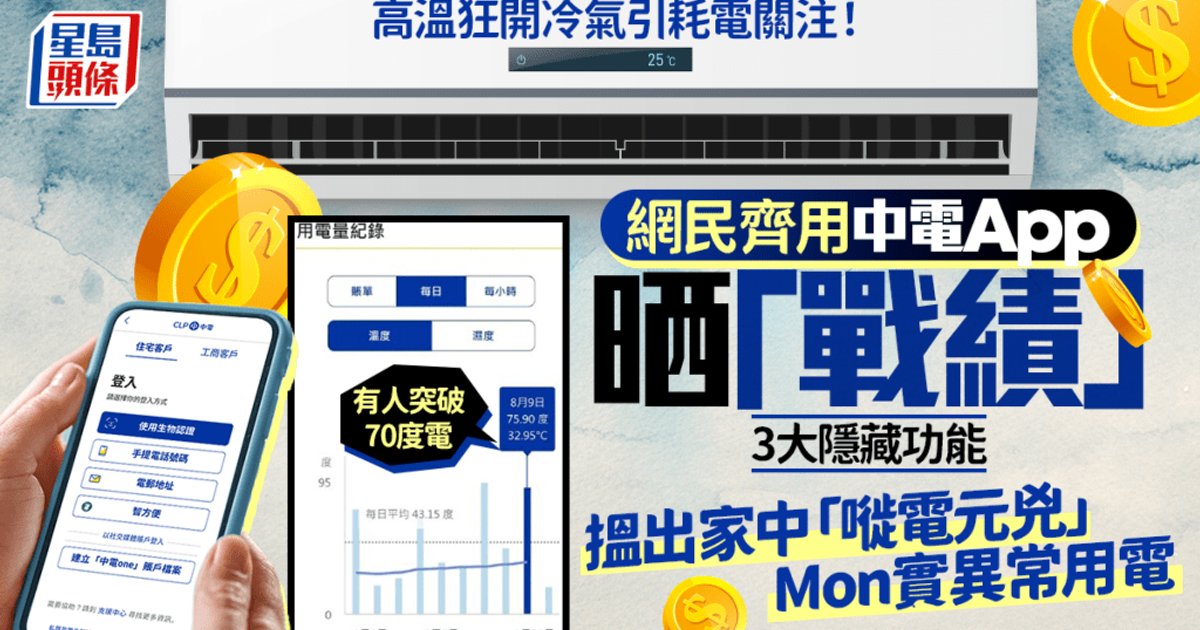
- Residents posted on Threads showing daily electricity consumption of 45, 60, and even 70 kilowatt-hours, with one user describing having air conditioning running for 9 hours in the living room and non-stop in three bedrooms
- CLP Power's smartphone application enables users to track hourly electricity usage over the past 90 days and receive alerts when consumption exceeds 30% above the 10-day average, helping identify abnormal spikes
- A fire erupted at a high-floor unit in Heng Tai House, Taikoo Shing on July 8, with 16 people sent to hospital after an air conditioning unit's wiring allegedly short-circuited
- Wan Guanxin, President of the Hong Kong and Kowloon Electrical Trades Workers' Union, warned that leaving fans running overnight is extremely dangerous as dust accumulation impairs heat dissipation and increases short-circuit risk
- According to Wan, air conditioning units contain styrofoam insulation materials that can ignite rapidly when motor sparks occur, producing thick black smoke
- Experts recommend cleaning air conditioning units at least once annually and consulting the Electrical and Mechanical Services Department's household appliance safety guidelines
Why It Matters
As climate change drives more frequent extreme heat events, the twin challenges of managing soaring electricity costs and preventing electrical fires become critical public safety concerns. The Taikoo Shing incident underscores how everyday appliances can pose serious fire risks when operated beyond design limits or without proper maintenance, making public education on electrical safety essential for every household.
As climate change drives more frequent extreme heat events, the twin challenges of managing soaring electricity costs and preventing electrical fires become critical public safety concerns. The Taikoo Shing incident underscores how everyday appliances can pose serious fire risks when operated beyond design limits or without proper maintenance, making public education on electrical safety essential for every household.