Japanese Media Shadows Foreign Self-Drivers Near Mt. Fuji as Rental Car Accidents Surge
AM730 · 1 SOURCESabout 2 hours ago2 MIN
Summary
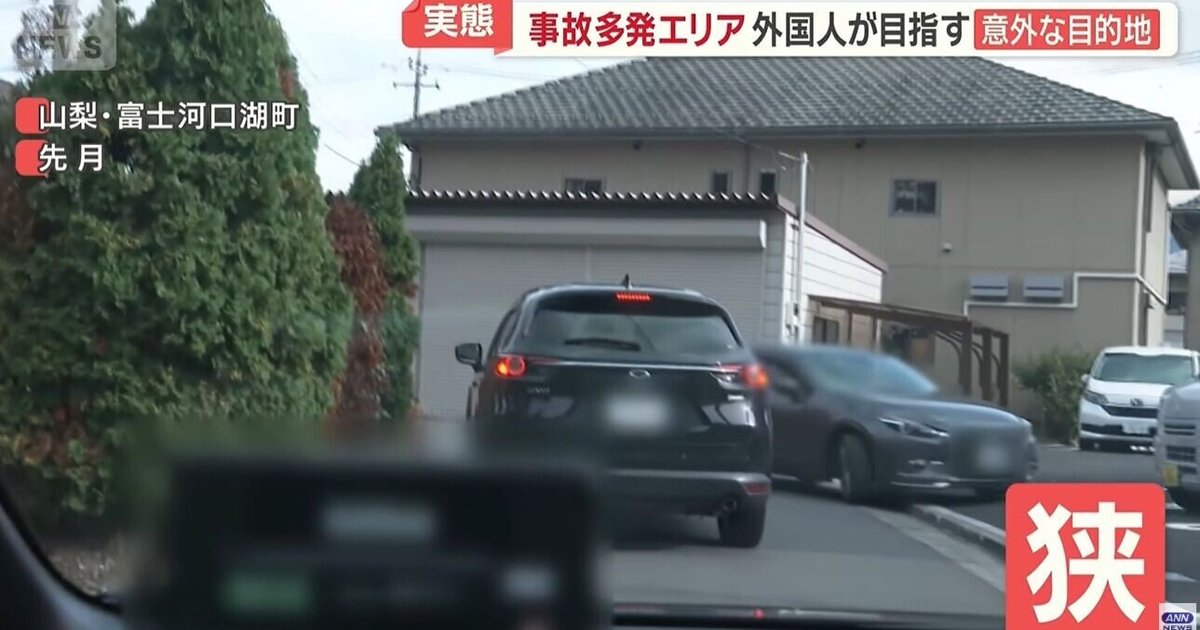
Asahi Television (ANN News Channel) shadowed foreign self-driving tourists near Mount Fuji this month, documenting how unfamiliarity with Japan's right-hand drive system and navigation apps leading tourists onto narrow roads are contributing to a sharp rise in rental car accidents. Yamanashi Prefecture police data shows accidents involving foreign visitors doubled from 461 to 1,047 over two years, prompting local residents to call for better driver education.
Key Points
- Yamanashi Prefecture police recorded 1,047 rental car accidents involving foreign tourists last year, up from 461 three years earlier, a more than twofold increase
- This year's figures through May already exceed 600 incidents, suggesting the upward trend is continuing
- A house in Fuji-Kawaguchiko Town was struck four times last year, including by foreign-operated rental vehicles whose drivers struggled with narrow streets and oncoming traffic
- Taiwanese drivers filmed by Asahi Television repeatedly veered too far left, hugged the center line, and made sudden left turns despite passengers' verbal warnings
- A Hong Kong family following Google Maps was directed into a narrow residential alley where they nearly collided head-on with another vehicle
- On July 20 this year, a Hong Kong family of four was involved in a head-on collision in Furano, Hokkaido; a 53-year-old Hong Kong woman sitting in the passenger seat died
- Fuji-Kawaguchiko's residential areas have seen a proliferation of homestay accommodations, forcing rental cars to navigate narrow lanes where collisions are more likely
Why It Matters
Hong Kong and Taiwanese tourists are among the most frequent self-driving visitors to Japan, yet the combination of opposite-side driving conventions and smartphone navigation apps that ignore road width creates a dangerous knowledge gap. With inbound tourism rebounding strongly, Yamanashi authorities are urging foreign visitors to study Japanese traffic rules before driving, and rental companies may face pressure to provide more comprehensive guidance to non-Japanese speakers .
Hong Kong and Taiwanese tourists are among the most frequent self-driving visitors to Japan, yet the combination of opposite-side driving conventions and smartphone navigation apps that ignore road width creates a dangerous knowledge gap. With inbound tourism rebounding strongly, Yamanashi authorities are urging foreign visitors to study Japanese traffic rules before driving, and rental companies may face pressure to provide more comprehensive guidance to non-Japanese speakers .