SpaceX Starship Completes 14th Test Flight, Achieves First Earth Orbit
SingTao · 2 SOURCES1 day ago2 MIN
Summary
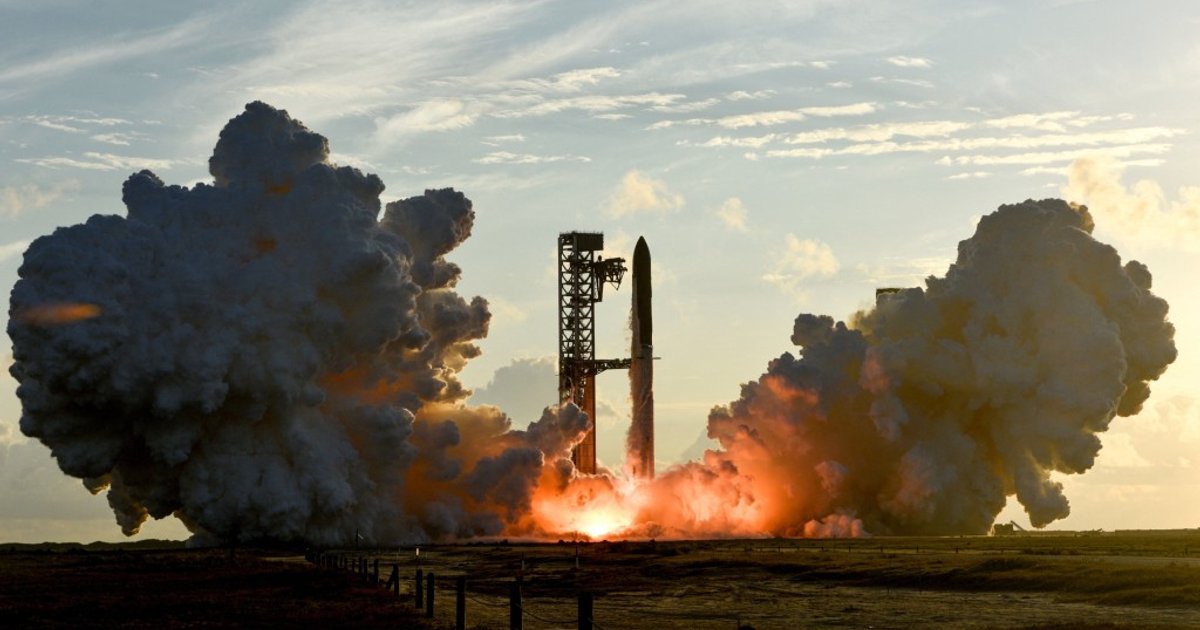
SpaceX achieved a historic milestone on Monday as its Starship rocket successfully entered Earth's orbit for the first time during its 14th test flight. The approximately 40-story-tall vehicle launched from the company's Starbase facility near Brownsville, Texas, deploying 26 next-generation Starlink satellites at an altitude of 269 kilometers before splashing down in the Pacific Ocean west of Chile roughly three hours after liftoff. The mission nearly encountered disaster when one of the three Raptor engines shut down prematurely during ascent, prompting initial doubt about whether the spacecraft could achieve orbit.
Key Points
- Starship launched from SpaceX's Starbase near Brownsville, Texas on Monday at approximately 7 a.m. local time, standing roughly 40 stories tall
- One of the three Raptor engines shut down earlier than planned during ascent, leading a company spokesperson to announce on the live stream that the rocket could not enter orbit
- Engineers quickly determined the spacecraft could attempt a re-ignition using remaining capability, ultimately confirming successful orbit entry within minutes
- The Super Heavy booster successfully completed a controlled sea landing in the Gulf of Mexico, marking the first such landing after two consecutive hard landings
- Twenty-six next-generation V3 Starlink satellites were deployed at 269 kilometers altitude, with the mission originally planned for 10 hours and 6 orbits but shortened to 3 hours
- SpaceX invested over $15 billion in the Starship program over approximately a decade, with Elon Musk aiming for hundreds or thousands of launches annually
Why It Matters
The successful orbital insertion and controlled landing demonstrate Starship's viability as a fully reusable heavy-lift system, bringing SpaceX closer to regular commercial launches and NASA's Artemis lunar missions. The V3 Starlink satellites, with roughly ten times the data processing capacity of current models, could generate hundreds of millions of dollars in additional revenue for SpaceX's core business, with Starship eventually capable of launching approximately 60 satellites per mission compared to the current 20-30 per Falcon 9 launch .
The successful orbital insertion and controlled landing demonstrate Starship's viability as a fully reusable heavy-lift system, bringing SpaceX closer to regular commercial launches and NASA's Artemis lunar missions. The V3 Starlink satellites, with roughly ten times the data processing capacity of current models, could generate hundreds of millions of dollars in additional revenue for SpaceX's core business, with Starship eventually capable of launching approximately 60 satellites per mission compared to the current 20-30 per Falcon 9 launch .