Osaka Danjiri Festival Cart Crashes Kill 2, Injure 16
SingTao · 2 SOURCESabout 6 hours ago6 MIN
Summary
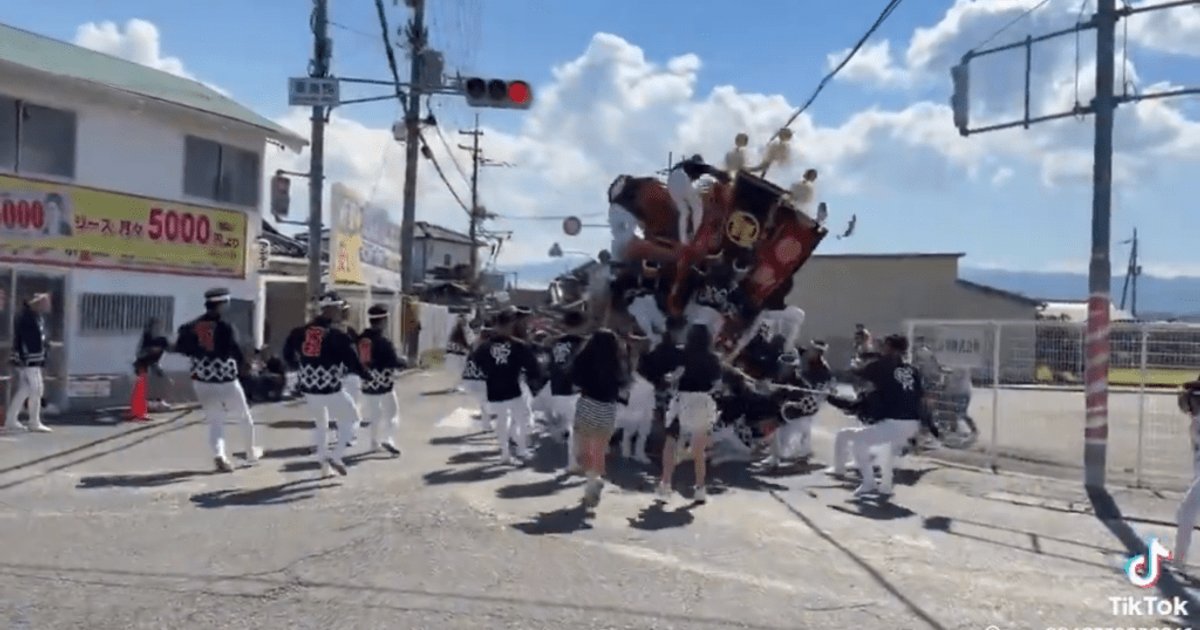
Two people died and at least 16 others were injured in two separate wooden festival cart accidents during Osaka's autumn danjiri (地車祭) on Saturday. The first incident struck Izumisano City around 11am, when a massive wooden cart overturned at a busy intersection while making a high-speed right turn. A 51-year-old local resident, Okitaka Hiroshi, was killed instantly, with two others suffering fractures and five sustaining minor injuries. Approximately two hours later, a second identical accident occurred in neighboring Izumiotsu City around 1:20pm, killing a man in his late 40s and leaving nine others wounded. Both deceased were serving as "counterweight personnel"—riders who cling to the sides of these massive vehicles during sharp maneuvers to help stabilize their balance.
Key Points
- The first crash occurred in the Nagatani district of Izumisano City around 11am on Saturday when the danjiri cart overturned while executing a high-speed right turn at an intersection .
- Okitaka Hiroshi (51), a resident of Izumisano City, was pronounced dead at hospital after being struck by the fallen cart; two others sustained fractures while five had minor injuries .
- The second accident took place in Izumiotsu City at approximately 1:20pm, killing a 48-year-old male participant and injuring nine others .
- Both deceased were "counterweight personnel" (takarri in Japanese), whose role is to ride on the cart's sides during rapid turns to physically maintain the vehicle's center of gravity .
- The autumn danjiri festival dates back to the mid-Edo period over 300 years ago as a harvest thanksgiving ritual, and has a documented history of similar deadly accidents involving overturned carts .
Why It Matters
These tragic accidents expose the persistent dangers inherent in a centuries-old tradition that pits human bodies against multi-ton wooden vehicles executing extreme maneuvers. For Hong Kong readers, the incident serves as a stark reminder that cultural preservation and public safety can exist in tension, prompting reflection on how traditional events adapt—or fail to adapt—modern safety standards while maintaining their historical essence.
These tragic accidents expose the persistent dangers inherent in a centuries-old tradition that pits human bodies against multi-ton wooden vehicles executing extreme maneuvers. For Hong Kong readers, the incident serves as a stark reminder that cultural preservation and public safety can exist in tension, prompting reflection on how traditional events adapt—or fail to adapt—modern safety standards while maintaining their historical essence.