Nagoya Asian Games: Hong Kong's Sibling and Couple Athletes Gear Up for Competition
SingTao · 1 SOURCESabout 2 hours ago5 MIN
Summary
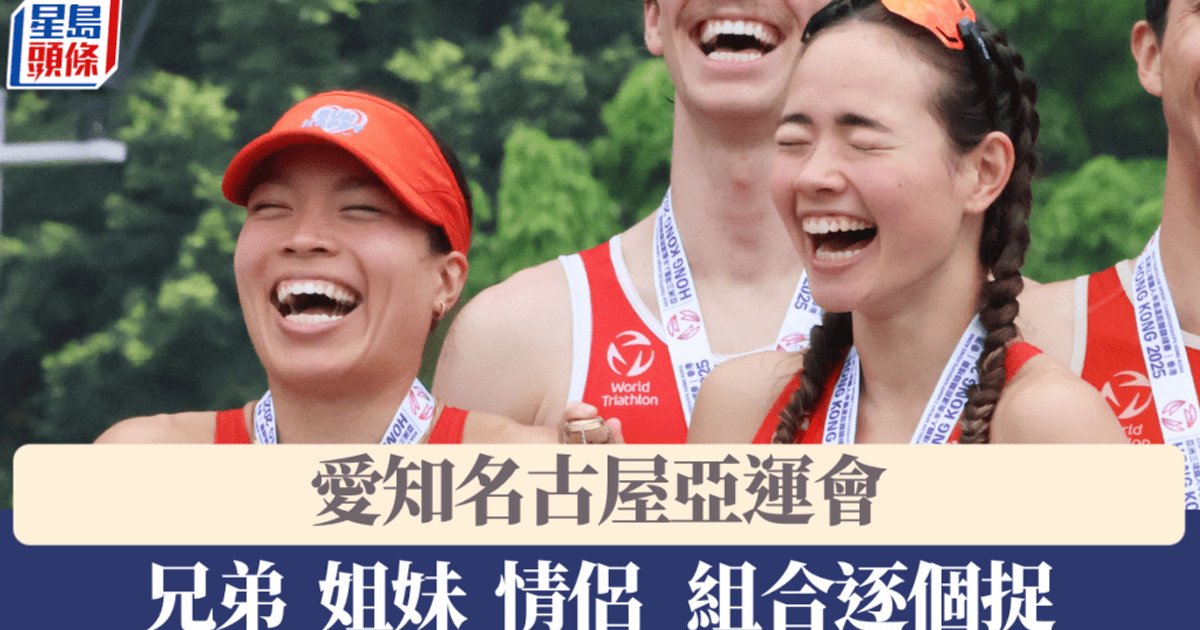
Hong Kong athletes are preparing to compete at the Nagoya Asian Games with an unprecedented number of sibling and romantic partnerships within the team. The Liang brothers — Tianqing in sabre and Qianyu in foil — represent the first fencing sibling duo in eight years, echoing the previous success of the Lin siblings who competed together from 2010 to 2018. Among the notable pairs are twins Wei Qi and Wei Ti, three-time veteran Ma Junzheng seeking her first gold, and multiple couples across different sports.
Key Points
- The Liang brothers (梁天晴 and 梁千雨) earned their Nagoya Asian Games spots together, making them fencing's first sibling pair since the Lin siblings competed in 2010, 2014, and 2018
- Twin sisters Wei Qi (韋祺) and Wei Ti (韋禔), 23-year-old mixed Chinese-British Hong Kongers, will make their Asian Games debut with Wei Ti in individual events and Wei Qi in the mixed relay
- Karateka Deng Yuxuan (鄧宇軒) returns for his second Asian Games team kata competition while his girlfriend Li Kaimin (李凱敏) competes in her first, joining women's doubles with Su Zitong (蘇籽童)
- Windsurfer Ma Junzheng (馬君正), a three-time Asian Games veteran with two silvers (2018 mixed RS:One and 2023 iQFoil), aims for her first gold at Nagoya
- Table tennis player He Zile (何子樂), ranked world 39th, brings 1 gold, 1 silver, and 1 bronze from past Asian Games while her boyfriend Yang Songxi (楊頌熹) makes his debut after winning world games gold
Why It Matters
The concentration of sibling and couple partnerships within the Hong Kong team reflects both the rigorous demands of elite sports training and the emotional support system athletes rely on during major competitions. For Ma Junzheng, who has accumulated silver medals but not yet gold, this could represent a pivotal moment in her career legacy .
The concentration of sibling and couple partnerships within the Hong Kong team reflects both the rigorous demands of elite sports training and the emotional support system athletes rely on during major competitions. For Ma Junzheng, who has accumulated silver medals but not yet gold, this could represent a pivotal moment in her career legacy .