Zhu Rongji Cremated in Beijing as Leaders Pay Tribute
SingTao · 2 SOURCESabout 2 hours ago2 MIN
Summary
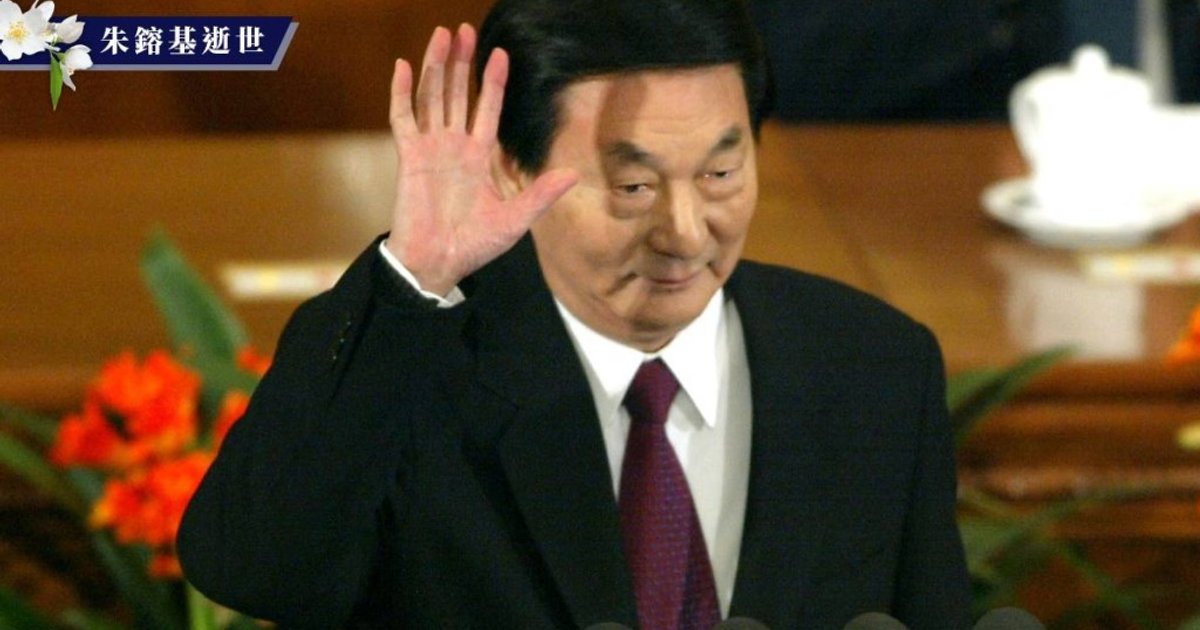
Former State Council premier Zhu Rongji was cremated in Beijing on August 18, six days after his death from illness in the capital at the age of 98. President Xi Jinping, Premier Li Qiang and other senior Chinese leaders attended a farewell ceremony at Babaoshan Revolutionary Cemetery, while former president Hu Jintao sent a wreath in mourning. Authorities ordered flags flown at half-mast at major state sites in Beijing, across provincial-level party and government compounds, in Hong Kong and Macau government headquarters, at border crossings and external sea and air ports, and at Chinese embassies and consulates abroad. Official obituaries praised Zhu as an outstanding party member, revolutionary and statesman, while public remembrance has also focused on his role in market reforms, anti-corruption efforts and China’s entry into the World Trade Organization.
Key Points
- Zhu Rongji died of illness in Beijing on August 12 at the age of 98, and his remains were cremated in the capital on August 18.
- At about 9:30am, Xi Jinping, Li Qiang, Zhao Leji, Wang Huning, Cai Qi, Ding Xuexiang, Li Xi and Han Zheng paid their respects.
- At the Babaoshan Revolutionary Cemetery hall, a black banner mourning Zhu hung above his portrait, while his body lay beneath a red Communist Party flag.
- Hu Jintao sent a wreath to express condolences, while the attending leaders observed silence, bowed three times and greeted Zhu’s family members.
- Zhu served as premier from 1998 to 2003 and was widely known for tax-sharing reform, state-owned enterprise restructuring and WTO accession.
Why It Matters
For Hong Kong readers, the half-mast arrangements at the SAR government headquarters and ports show how state mourning protocols extend directly to the city’s official institutions and gateways. Zhu’s policy legacy also matters locally because his reform era helped shape the mainland’s rapid economic rise, which has long been closely tied to Hong Kong’s role as a financial and trading hub.